
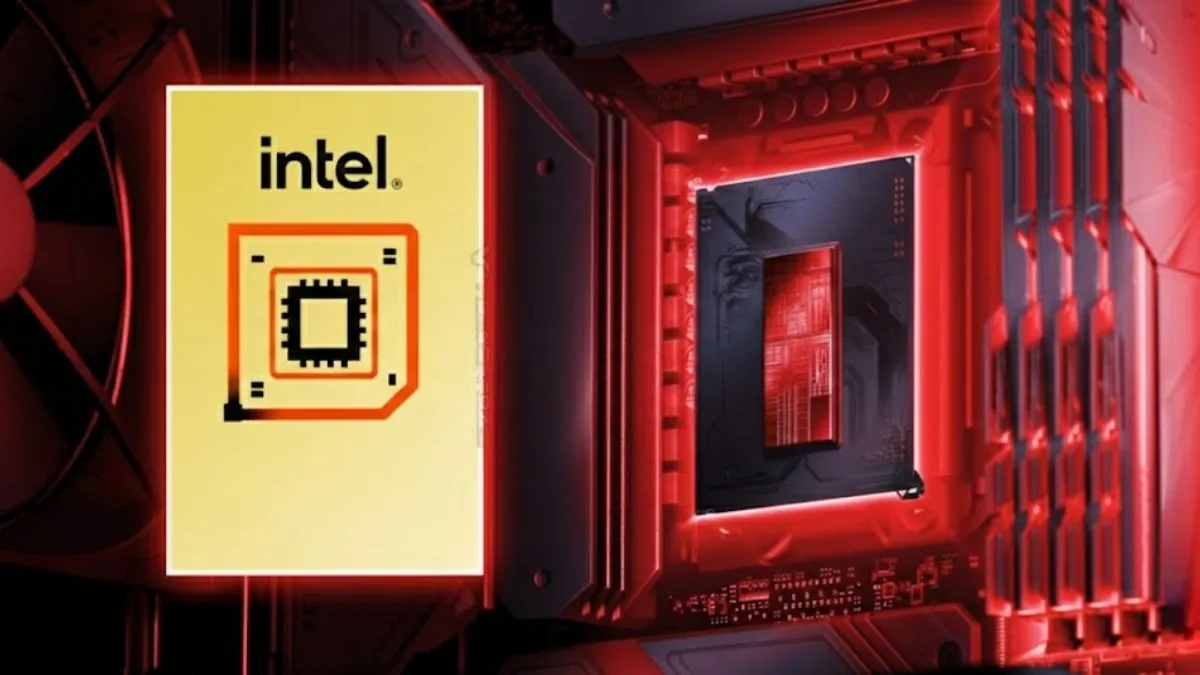
A newly leaked specification table for Intel’s upcoming 900-series desktop chipsets gives the clearest view so far of how the company plans to divide its next-generation Nova Lake-S desktop platform. The leak, shared by hardware leaker Jaykihn and later reported by several technology outlets, outlines five chipsets: B960, Z970, Z990, Q970, and W980. All are expected to launch alongside Nova Lake-S desktop processors later in 2026 and use a new LGA-1954 socket.
The information looks like a normal generational update with more PCIe lanes and faster connections. A closer look shows something more important. Intel appears to be creating much clearer separation between mainstream, gaming, business, and workstation systems. The leak also suggests Intel has removed the traditional entry-level H-series chipset entirely.
One key detail is that the entire 900-series platform appears to support only DDR5 memory. There is no sign of DDR4 support on any chipset. This means Nova Lake-S desktops will require newer memory and will not work with older DDR4 modules. Intel seems to be fully moving away from legacy memory as storage speeds, graphics cards, and system bandwidth demands continue to increase.
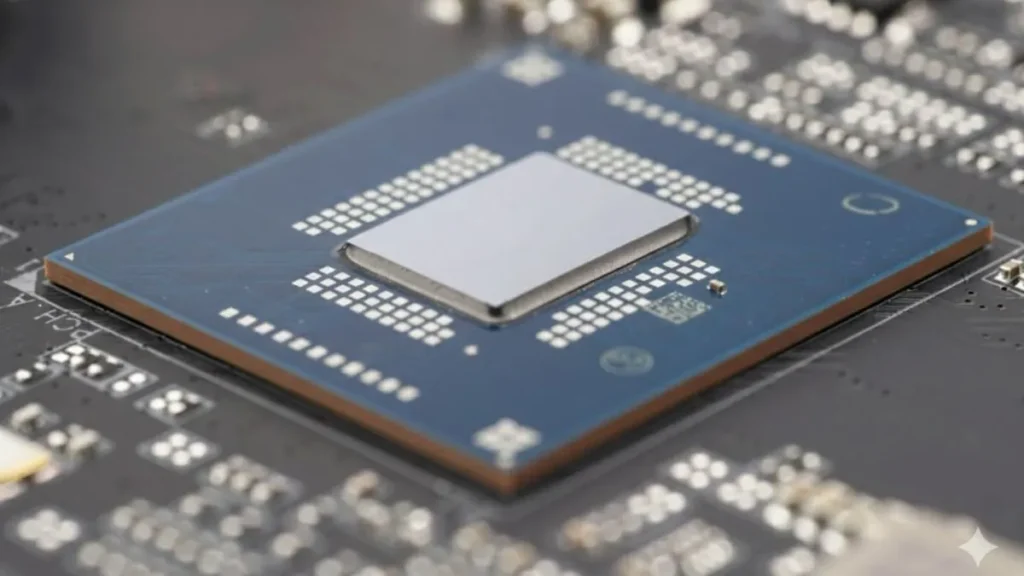
Credit: PCVenus Team
The two lowest chipsets, B960 and Z970, appear nearly identical in hardware. Both list the same total PCIe lane count, the same DMI Gen5 x2 connection to the CPU, and the same number of PCIe Gen4 and SATA ports. Both also allow memory overclocking. The main difference is CPU tuning. Z970 supports CPU overclocking, while B960 does not. This strongly suggests Intel is using feature restrictions rather than separate physical chip designs to divide these two platforms.
The higher-end chipsets represent a larger step forward. Z990, Q970, and W980 all use a faster DMI Gen5 x4 link and offer more PCIe lanes overall. These chipsets also add PCIe Gen5 lanes directly from the chipset itself, not just from the CPU. If accurate, this would be the first Intel desktop platform where PCIe Gen5 expansion is available beyond CPU-connected lanes.
Overclocking support is also much more tightly controlled than before. Z990 is the only chipset that supports full CPU overclocking, base clock tuning, and memory overclocking together. Z970 allows CPU and memory overclocking but drops base clock tuning. B960 removes CPU overclocking entirely. Q970 disables all overclocking features and focuses on business stability, while W980 allows memory overclocking but blocks CPU tuning.
Q970 includes Intel vPro and management features designed for business PCs but does not support ECC memory. W980 is the acknowledges as the workstation chipset. It is the only one listed with ECC memory support and also includes vPro, making it suitable for professional workloads that require higher reliability.
Intel 900-Series Chipset Specifications
| Feature | B960 | Z970 | Z990 | Q970 | W980 |
|---|---|---|---|---|---|
| Total PCIe lanes (up to) | 34 | 34 | 48 | 44 | 48 |
| Processor TB4 / USB4 ports | 1 | 1 | 2 | 2 | 2 |
| DMI Gen5 lanes | 2 | 2 | 4 | 4 | 4 |
| Chipset PCIe 5.0 lanes | 0 | 0 | 12 | 8 | 12 |
| Chipset PCIe 4.0 lanes | 14 | 14 | 12 | 12 | 12 |
| SATA 3.0 (6 Gb/s) ports | 4 | 4 | 8 | 8 | 8 |
| USB 2.0 ports | 12 | 12 | 14 | 14 | 14 |
| USB 3.2 (20 Gb/s) ports | ~2 | ~2 | ~5 | ~4 | ~5 |
| USB 3.2 (10 Gb/s) ports | ~4 | ~4 | ~10 | ~8 | ~10 |
| USB 3.2 (5 Gb/s) ports | ~6 | ~6 | ~10 | ~10 | ~10 |
| CPU multiplier overclocking (IA OC) | No | Yes | Yes | No | No |
| Base clock overclocking (BCLK OC) | No | No | Yes | No | No |
| Memory overclocking | Yes | Yes | Yes | No | Yes |
| CPU PCIe 5.0 slot configuration | 1×16 | 1×16 | 1×16 + 1×4 or 1×8 + 2×4 or 2×8 or 4×4 | Same as Z990 | Same as Z990 |
| CPU PCIe 5.0 storage configuration | 1×4 | 1×4 | 1×8 or 2×4 | 1×8 or 2×4 | 1×8 or 2×4 |
| ECC memory support | No | No | No | No | Yes |
| Simultaneous displays supported | 4 | 4 | 4 | 4 | 4 |
| PCIe RAID 0/1/5/10 | No | No | Yes | Yes | Yes |
| SATA RAID 0/1/5/10 | Yes | Yes | Yes | Yes | Yes |
| Intel vPro + standard manageability | No | No | No | Yes | Yes |
Another important difference notes is USB4 and Thunderbolt support. Higher-end chipsets are expected to support more CPU-attached USB4 or Thunderbolt ports, which matters for users who rely on fast external storage, professional displays, or capture hardware. Lower-tier chipsets are likely to offer fewer high-speed ports.
The absence of any H-series chipset is also notable. Intel has traditionally offered a fully locked option for budget desktops, but the leak suggests that even entry-level systems are now expected to support faster storage, better connectivity, and memory tuning. Instead of pushing features downward, Intel appears to be raising the baseline.
Also Read: Intel Ends Pay-to-Unlock CPU Features Quietly for Xeon Servers
Intel has not officially confirmed the chipset lineup shown in the leak. Details such as official DDR5 speed limits, motherboard designs, and final lane routing remain unknown. As with any early leak, specifications should be treated as provisional until Intel makes a formal announcement.
Intel Consumer Z-Series Chipset Comparison
| Feature | Z990 (Upcoming) | Z890 | Z790 | Z690 |
|---|---|---|---|---|
| Launch | 2027 (expected) | Q2 2024 | Q4 2022 | Q4 2021 |
| Socket | LGA-1954 | LGA-1851 | LGA-1700 | LGA-1700 |
| DDR5 memory support | DDR5 (speed not disclosed) | DDR5-5600+ | DDR5-5600 | DDR5-4800 |
| DDR4 memory support | No | No | DDR4-3200 | DDR4-3200 |
| Supported CPU families | Nova Lake-S | Meteor Lake-S, Arrow Lake-S | Alder Lake-S, Raptor Lake-S, Raptor Lake-Refresh | Alder Lake-S, Raptor Lake-S, Raptor Lake-Refresh |
| CPU PCIe Gen5 lanes (CPU + chipset) | 20 + 12 | 16 + 4 | 16 + 0 | 16 + 0 |
| CPU PCIe Gen4 lanes (CPU + chipset) | 0 + 14 | 4 + 24 | 4 + 20 | 4 + 12 |
If the information proves accurate, Intel’s 900-series chipsets represent more than a small upgrade. They show Intel redefining how each desktop platform tier is meant to be used. Enthusiast systems get a single clear flagship. Mainstream systems keep most modern features without full CPU tuning. Business and workstation users finally get platforms designed specifically for their needs without consumer-focused compromises.
That clearer separation may matter more than raw numbers when Nova Lake-S desktops finally arrive.
Source: Jaykihn