
Apple’s next OLED MacBook Pro could bring the biggest design change in over ten years. In his latest Power On newsletter, Bloomberg’s Mark Gurman says Apple is working on a major MacBook Pro update. This update may include an OLED display, touchscreen support, an adaptive macOS interface, a thinner body, and next-generation Apple Silicon.
If this report is correct, the new MacBook Pro would be the first touchscreen Mac in Apple’s 42-year history. This would be a major change in how professional users work on macOS, both in the United States and around the world.
Moving to OLED would replace the mini LED displays used in the current 14-inch and 16-inch MacBook Pro models. OLED offers deeper blacks, better contrast, faster response times, and more even screen lighting compared to mini LED. For creative professionals working on HDR video, photography, and color-sensitive design, this could mean better color accuracy, clearer shadow details, and improved overall display quality.
OLED screens are also thinner than mini LED panels. This could help Apple make the MacBook Pro slimmer and lighter without reducing display performance. A thinner design could also impact Apple’s production strategy and pricing in the US laptop market.
The biggest change, however, could be the addition of touchscreen support. Apple has always said that vertical laptop touchscreens are not ideal for long-term use and has promoted the iPad Pro as its main touch device. Adding touch to the MacBook Pro would be a big shift in Apple’s strategy.
Reports say Apple is not turning macOS into a full touch-based system. Instead, macOS may adjust depending on how you use it touch, trackpad, or mouse. For example, certain controls could appear when you tap the screen, while normal pointer-based use would stay the same. This would be different from many Windows laptops that combine tablet and laptop modes into one system.
Apple is also not expected to turn the MacBook Pro into a convertible device. Touch would simply be an added input option, while macOS would still focus on desktop-style use.
For professional users, touchscreen support could improve workflows. Video editors could move through timelines by touching the screen. Photographers could zoom in and edit images directly. Music producers using Logic Pro could adjust controls with their fingers. Developers testing iOS apps could tap directly on simulators. In all these cases, touch would support, depending on whether you use touch, trackpad, or mouse.
Another possible change is a Dynamic Island-style cutout, similar to newer iPhone models. On the MacBook Pro, this cutout would likely include a front camera but not Face ID. Users would probably continue using Touch ID for security. This would follow Apple’s pattern of bringing design ideas from iPhone to Mac.
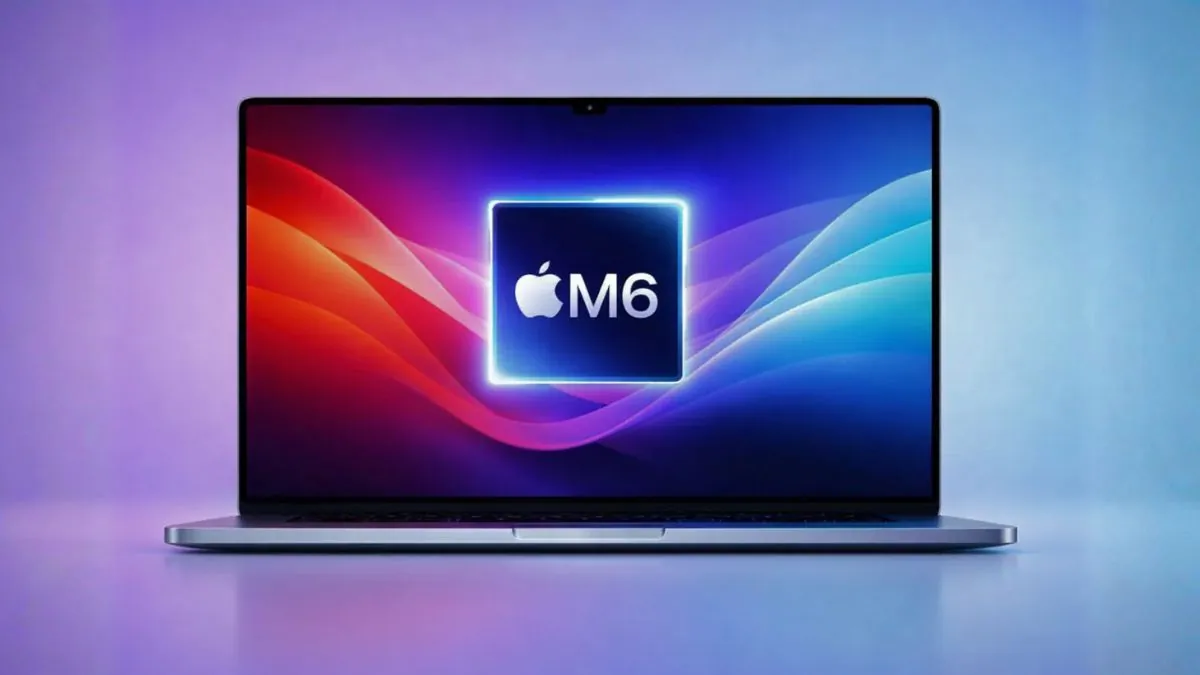
Inside, the new MacBook Pro is expected to use next-generation Apple Silicon, possibly from the M6 MacBook Pro lineup. The report comes as Apple’s broader Mac roadmap continues to evolve, with recent references in macOS 26.3 hinting at a cheaper MacBook model in development.
Since moving from Intel to Apple Silicon in 2020, Apple has improved power efficiency and performance. A thinner MacBook Pro with M6 chips would show how far Apple’s performance-per-watt advantage has come, especially during heavy tasks like video editing, coding, and 3D work.
Switching to OLED could also affect battery life. OLED uses different amounts of power depending on screen brightness and colors shown. Apple would need smart power management and protection against screen burn-in to meet the reliability standards expected by professional users.
It may also signal further convergence between macOS and iPadOS at the interface level. Apple already uses the same silicon architecture in Macs and iPads. Adding adaptive touchscreen behavior to macOS could be the next step in connecting the two platforms, while still keeping them separate systems.
Apple has not officially confirmed this OLED MacBook Pro. However, combining OLED display, touchscreen support, adaptive macOS features, a Dynamic Island-style cutout, and M6 Apple Silicon.
If Apple introduces it at its usual October Mac event, the update would represent one of the most significant design revisions to the MacBook Pro since the transition to Apple Silicon.
After years of steady performance upgrades, this new generation may shape the future of the MacBook Pro for professional users.
Source: Mark Gurman via Bloomberg