
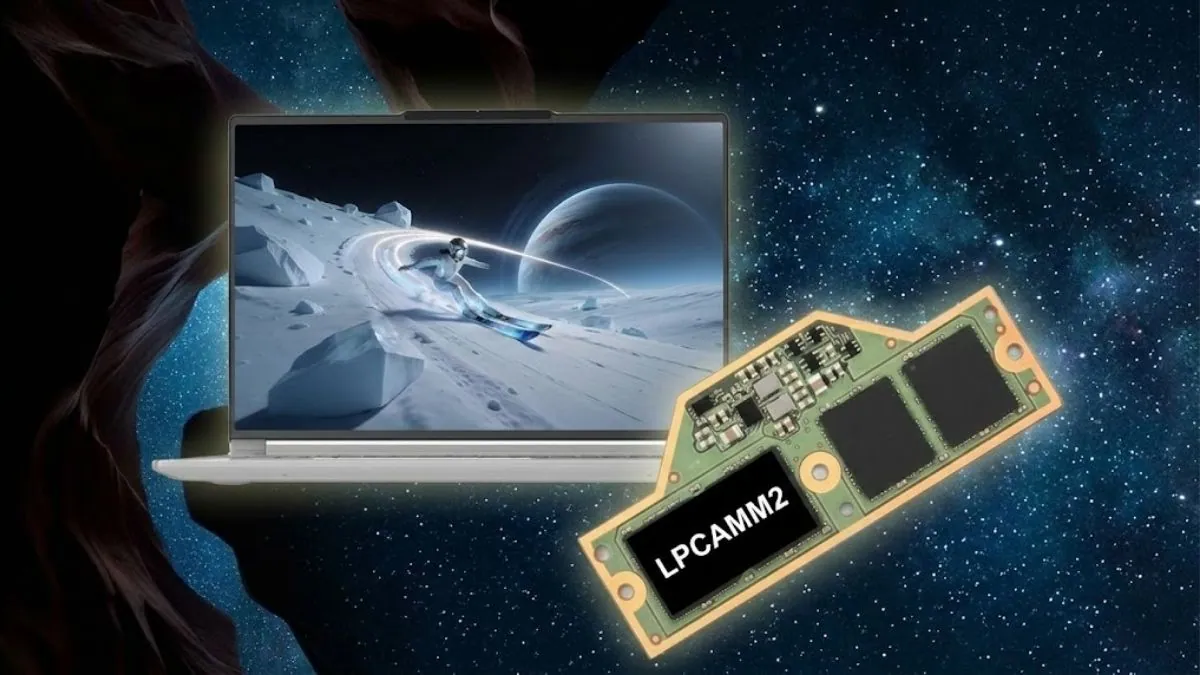
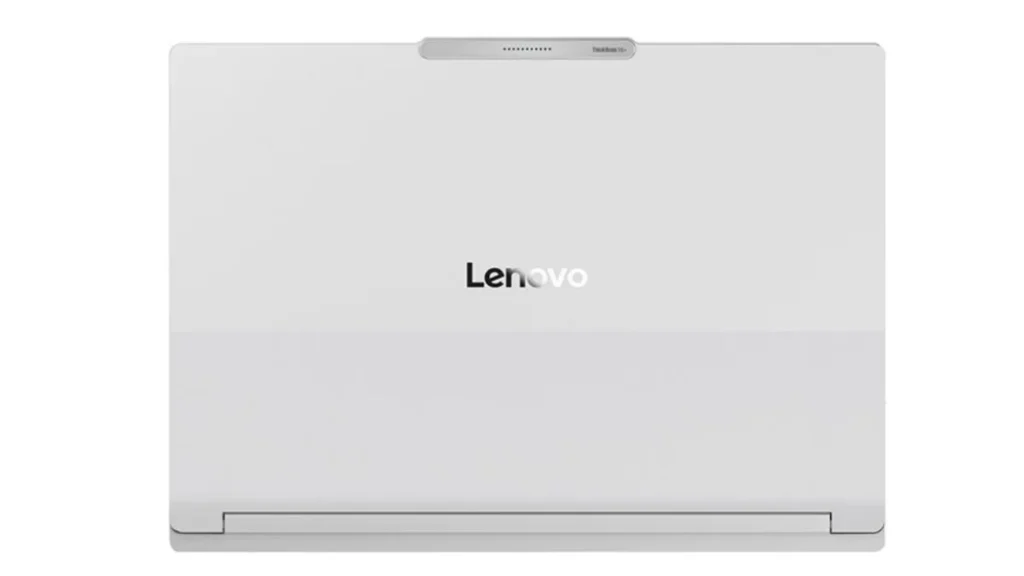
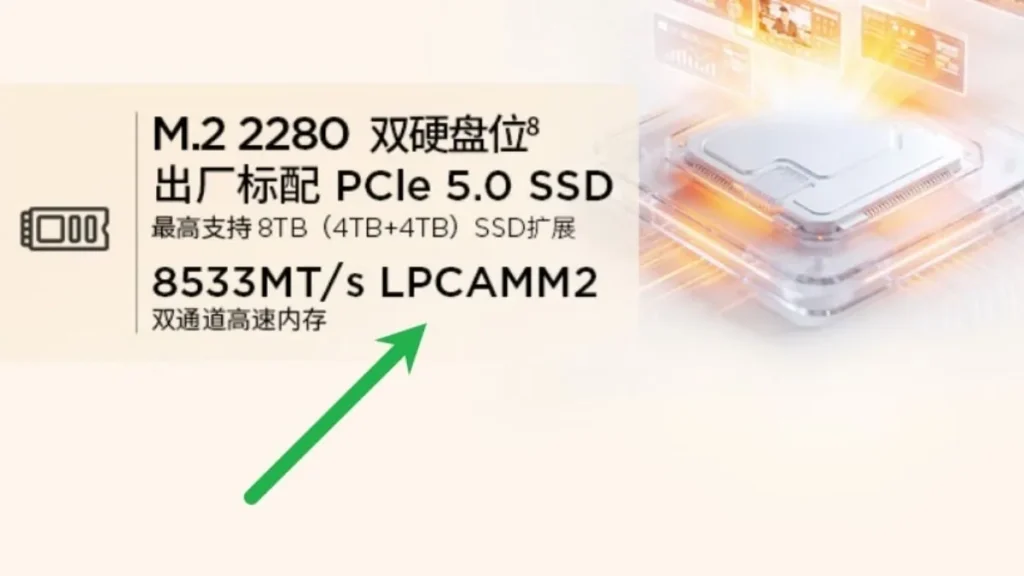
Lenovo has launched the new ThinkBook 14+ and ThinkBook 16+ (2026) models in China. These laptops are the first mainstream consumer systems to use LPCAMM2 memory with LPDDR5X-8533 speeds. They are powered by Intel Core Ultra Series 3 processors based on the Panther Lake architecture.
LPCAMM2 memory was first seen in high-end workstation laptops. Now it is moving into a mainstream ThinkBook model that is designed for everyday productivity and creator work. This is important because it changes how memory works in thin laptops.
For many years, buyers had to choose between two options. One option was DDR5 SO-DIMM memory, which can be upgraded but is slower. The other option was LPDDR memory, which is faster but soldered to the motherboard and cannot be upgraded. LPCAMM2 combines both advantages. It delivers LPDDR5X speeds while remaining user-replaceable.
Below is the platform information confirmed so far.
| Category | ThinkBook 14+ / 16+ (2026) |
|---|---|
| Processor | Intel Core Ultra Series 3 |
| Architecture | Panther Lake |
| Expected SKUs | Core Ultra 5 338H, Core Ultra 7 300H |
| Integrated Graphics | Xe3 iGPU |
| Memory Type | LPCAMM2 LPDDR5X |
| Memory Speed | Up to 8533 MT/s |
| Memory Upgrade | User replaceable module |
| Storage Slots | Dual M.2 2280 |
| SSD Support | PCIe 5.0 |
| Max Storage | Up to 8TB total |
Lenovo has not yet shared full details about display resolution, refresh rate, battery size, thickness, or weight. Those specifications are expected to be confirmed later.
The biggest change in this generation is memory bandwidth. The 2025 ThinkBook models used DDR5-5600 SO-DIMM memory. The 2026 models move to LPDDR5X-8533 through LPCAMM2.
Below is a comparison between the 2025 and 2026 models.
| Feature | ThinkBook 2025 | ThinkBook 2026 |
| CPU | Earlier Core Ultra H series | Core Ultra Series 3 |
| Memory Type | DDR5-5600 SO-DIMM | LPDDR5X-8533 LPCAMM2 |
| Upgradeable | Yes | Yes |
| SSD Interface | PCIe 4.0 | PCIe 5.0 |
| Max Storage | Lower capacity | Up to 8TB |
DDR5-5600 offers around 89.6 GB/s of theoretical bandwidth in dual channel mode. LPDDR5X-8533 can reach around 136 GB/s, assuming a 128-bit interface. That is more than a 50 percent increase in bandwidth.
LPDDR memory usually has slightly higher latency than standard DDR5. However, for modern laptops that use integrated graphics, bandwidth matters more than latency. The Xe3 integrated GPU shares system memory. When running games at 1080p, editing video, rendering 3D scenes, or using AI tools, higher memory bandwidth can improve performance because the GPU gets data faster.

This means the new ThinkBook models may show better results in graphics-heavy tasks compared to older DDR5 systems. Final performance numbers will depend on thermal design and real-world testing.
The laptops include two M.2 2280 slots and support PCIe 5.0 SSDs. Total storage can reach up to 8TB using two 4TB drives. That capacity is usually found in higher-end creator laptops.
LPCAMM2 modules are currently more expensive than standard SO-DIMM memory. Because this is a new standard, availability may be limited at first. Over time, more module options are expected, including higher capacity versions. Industry roadmaps already show larger LPCAMM2 modules entering production, which could allow higher memory ceilings in future configurations.
Pricing for global markets has not been announced yet. The new memory technology may increase the starting price compared to the 2025 models. Buyers who are focused only on basic tasks like web browsing and office work may not see a large difference. Users who rely on integrated graphics, AI tools, or creative workloads are more likely to benefit from the higher bandwidth.
The value of these laptops depends on how long you plan to keep your device. If you like to upgrade memory later, LPCAMM2 offers flexibility that soldered LPDDR systems do not provide. If you never upgrade memory, the benefit is mainly in performance rather than flexibility.
Also Read: Lenovo Yoga Book Pro 3D Leak – Glasses-Free 3D Laptop at MWC 2026
Lenovo’s move shows that LPCAMM2 is no longer limited to workstation laptops. Bringing it into a mainstream ThinkBook model signals that the memory standard is becoming more mature. If more manufacturers adopt LPCAMM2 in 2026 and 2027, thin laptops may no longer need to rely on permanently soldered LPDDR memory.
More details including final SKUs, maximum supported memory capacity, battery specifications, and official pricing are expected soon. Independent testing will show how much real-world performance improves under sustained workloads.
For now, the ThinkBook 14+ and 16+ (2026) stand out because they combine three major upgrades at once: Intel Core Ultra Series 3 processors, LPDDR5X-8533 bandwidth through LPCAMM2, and PCIe 5.0 storage expansion. That combination makes this launch more important than a simple yearly refresh.
Source: @realVictor_M on X