
Consumer SSD prices from Samsung and Western Digital are rising fast in South Korea, and this increase may not stay local for long. Buyers in the US could start noticing higher prices soon as well.
Several high-performance NVMe SSDs are already being listed at noticeably higher rates across both official stores and major retailers. This suggests that the global NAND flash market could be shifting, rather than just reacting to a short-term fluctuation, similar to trends seen in PC price hikes, power GPU, SSD memory.
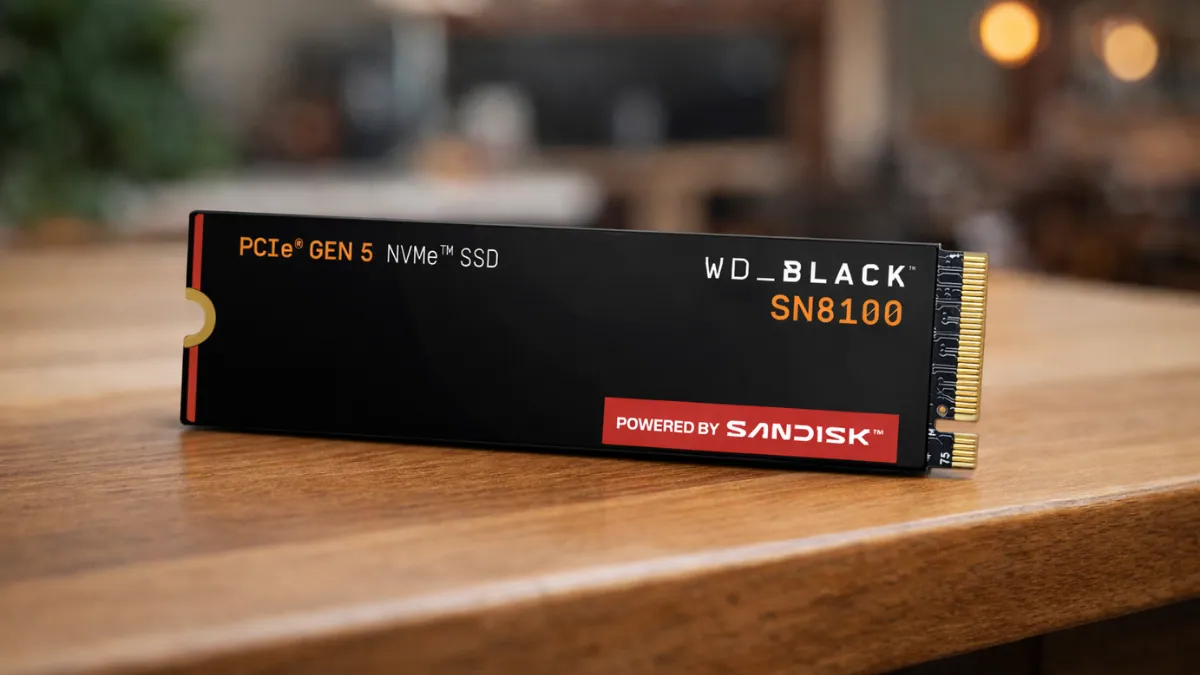
Recent listings show that Western Digital’s WD Black SN850X series has gone up sharply in price across every storage option. The 1TB model is now selling for around ₩600,000 (about $440), while the 2TB and 4TB versions have climbed to roughly ₩1,200,000 ($880) and ₩2,200,000 ($1,600).
The biggest jump is seen in the 8TB variant, which is now close to ₩4,500,000 (around $3,300). This kind of increase is unusual and stands out as one of the sharpest price spikes in the consumer PCIe Gen4 SSD market in recent times, similar to developments in Micron ships first PCIe 6.0 SSD with 28GB/s speeds aimed at AI data centers.
Samsung’s premium SSD lineup is also seeing similar price increases. The Samsung 990 PRO 1TB is currently listed at around ₩470,000 (about $345), while high-capacity models like the 9100 PRO 8TB are now approaching ₩4,000,000 (roughly $2,900). Because Samsung relies on a distributor-based pricing system in South Korea, prices can change quickly and are not always consistent across sellers. Even so, the trend is clearly moving upward rather than being a one-off spike.
What stands out here is that these price hikes aren’t coming from just one place. Retail listings, early data from industry trackers, and even discussions on social media are all pointing in the same direction.
In some cases, SSD prices in Korea have nearly doubled. A recent post on X (formerly Twitter) by known hardware tracker harukaze5719 also highlights these rising SSD prices, further supporting the trend seen across retail channels. When multiple sources show the same pattern like this, it usually means something bigger is happening in the market, not just a short-term spike.
One of the main reasons behind this price surge is the shift happening in the global NAND flash market, also reflected in the framework DDR5 RAM prices rise laptop PC costs. Over the past year, manufacturers have intentionally reduced production to stop prices from falling further. At the same time, demand has picked up quickly, driven by AI data centres, large-scale cloud infrastructure, and increasing enterprise storage requirements, as seen in NVIDIA RTX 50 GPU supply cut 2026 memory constraints. With supply tightening and demand rising, SSD prices are now moving up, especially for high-end PCIe Gen4 and Gen5 drives.
Another reason behind the price increase is the growing demand for larger storage options. Gamers, professionals, and even regular users are now opting for 2TB, 4TB, and even 8TB SSDs, whether it’s for handling AI workloads, storing big game libraries, or content creation. These higher-capacity drives depend on more advanced and denser NAND technology, which is currently in tighter supply. As a result, prices in this segment are rising faster than usual.
For buyers in the US, this could be an early warning sign of what’s coming next. South Korea is often one of the first places where memory pricing trends show up, and those changes usually don’t stay limited to one region. If the current trend continues, prices on platforms like Amazon, Newegg, and Best Buy could start moving up over the next few weeks or months.
Put simply, upgrading to a high-performance NVMe SSD, especially flagship or higher-capacity models, could soon become more expensive. Gamers, PC builders, and creative professionals are likely to feel this first, particularly those planning to move to next-generation PCIe Gen5 storage, similar to options highlighted in the SanDisk Extreme Pro portable SSD 8TB 4000MBps.
SSD prices may stay a bit unpredictable. A lot will depend on how quickly companies like SK hynix and Micron ramp up production, and whether demand from AI continues at the same pace. If supply doesn’t improve anytime soon, the price surge seen in South Korea could turn into a broader global rise in storage costs.
All of this highlights how quickly the storage market can react to changes in supply and new technology trends. With both Samsung and Western Digital increasing prices across major SSD models, high-performance storage may be moving into a more expensive phase globally.
Source: Harukaze(x)