
NVIDIA has taken a major step beyond graphics cards with the introduction of RTX Spark, a new Arm-based processor platform built for AI workloads, content creation, and gaming. Announced during Computex 2026 and GTC Taipei, RTX Spark combines a custom CPU developed alongside MediaTek with Blackwell-based RTX graphics in a single package, marking NVIDIA’s first serious push into the mainstream PC processor market.
The move places NVIDIA directly against Qualcomm’s Snapdragon X family, Apple’s M-series processors, and AMD’s Ryzen AI Max lineup. Unlike previous Windows on Arm platforms that focused primarily on battery life and thin-and-light notebooks, RTX Spark is aimed at users who need substantial GPU performance, local AI processing, and creator-focused capabilities in one device.
NVIDIA Combines Grace CPU and Blackwell Graphics
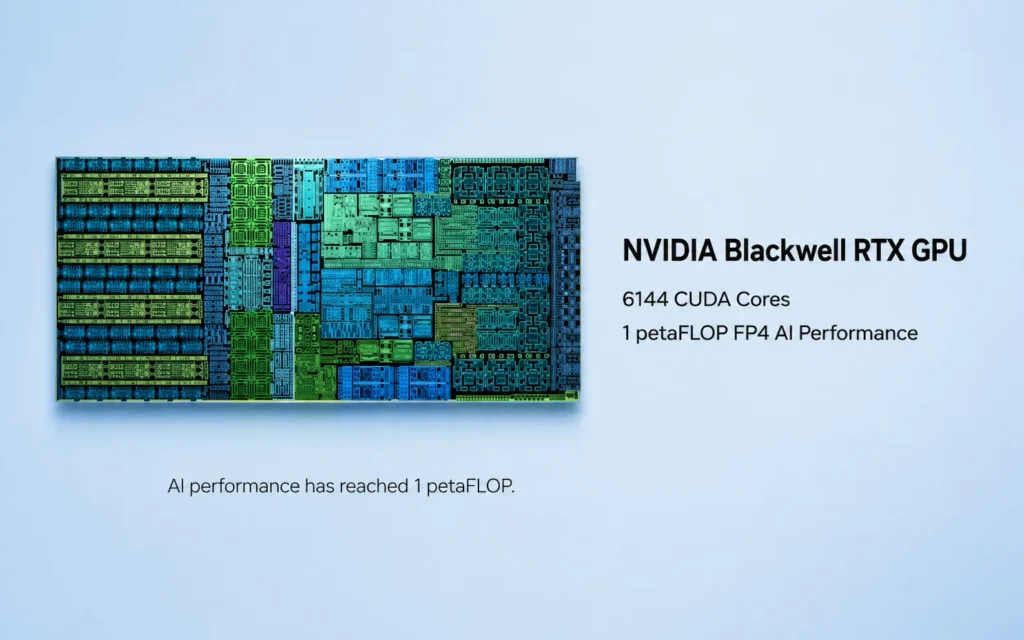
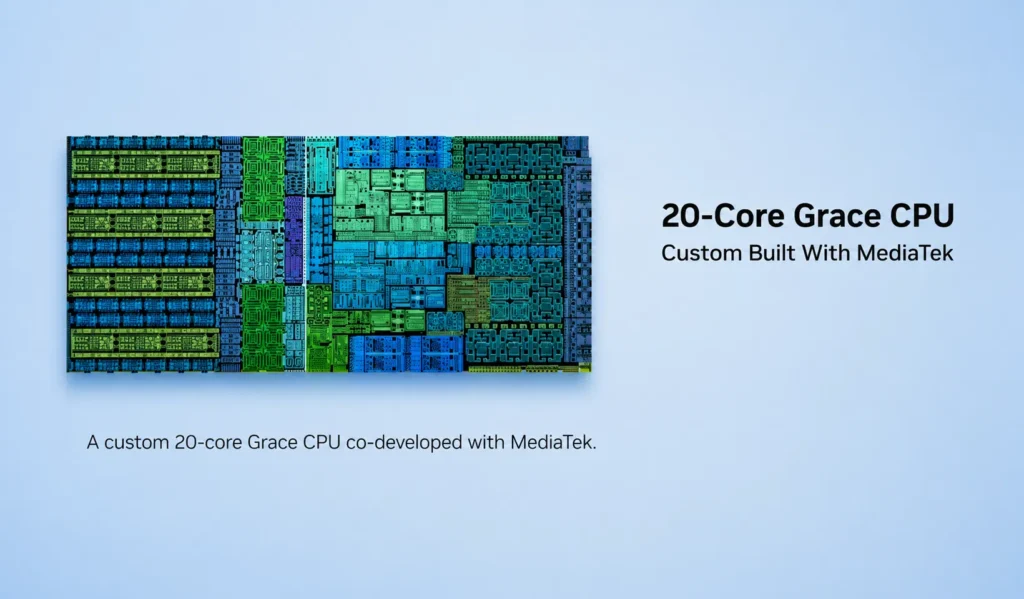
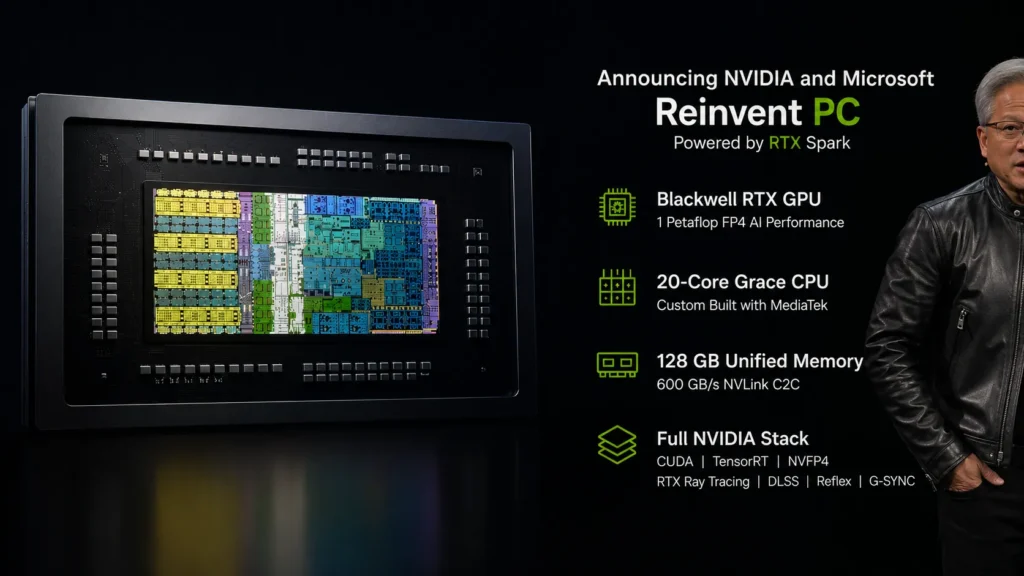
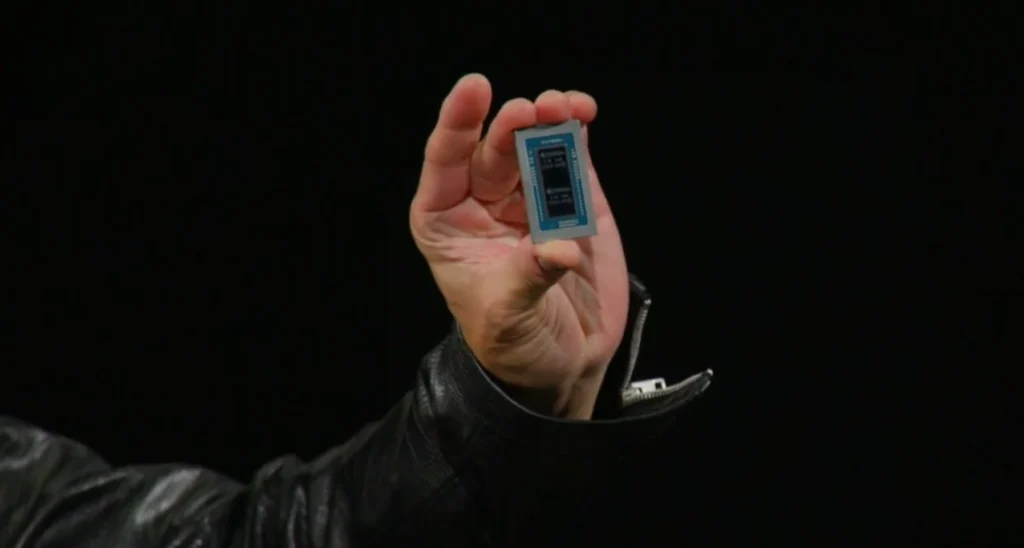
At the center of RTX Spark is a 20-core Grace processor paired with Blackwell graphics carrying 6,144 CUDA cores. NVIDIA claims the platform can deliver up to one petaFLOP of AI performance, a figure that places it far beyond traditional laptop processors and much closer to workstation-class hardware.
The company is taking technology originally developed for its Grace Blackwell AI infrastructure products and adapting it for consumer PCs. Instead of separating CPU and GPU resources across multiple chips, RTX Spark combines them within a tightly integrated design optimized for AI acceleration, graphics workloads, and content creation.
NVIDIA demonstrated a wide range of workloads during its presentation, ranging from AI image generation and coding assistants to simulation workloads and large-scale content creation projects. The company clearly wants RTX Spark to be viewed as more than another Windows on Arm processor.
Up to 128GB Unified Memory Changes What a Laptop Can Run
Memory capacity is one of the areas where RTX Spark stands apart from most consumer laptops currently available.
The platform supports up to 128GB of LPDDR5X unified memory, allowing the CPU and GPU to access the same memory pool. This approach eliminates many of the limitations found in traditional laptop designs where memory must be copied between different components before workloads can be processed.
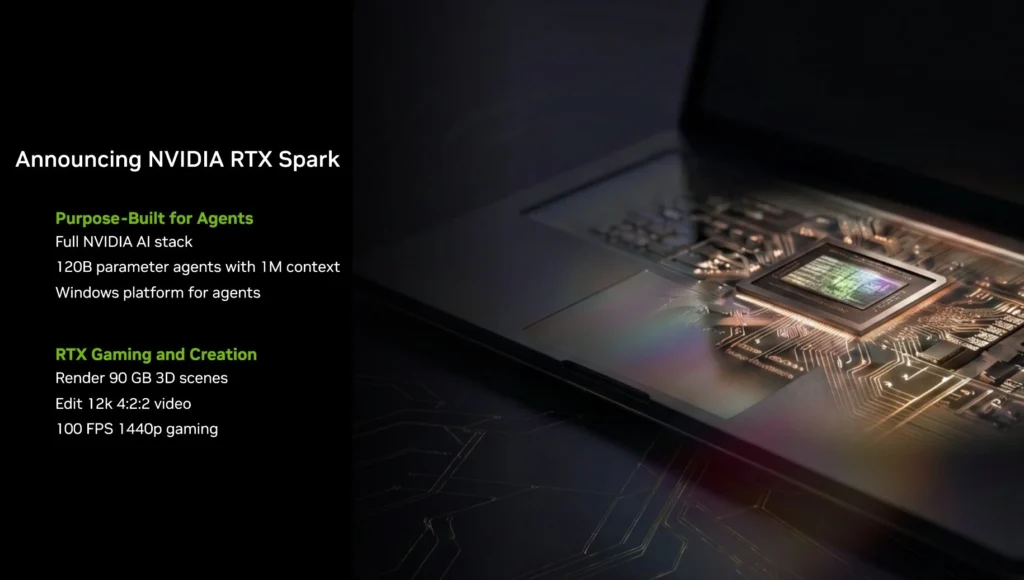
According to NVIDIA, the platform can run AI models with up to 120 billion parameters locally while supporting context windows of up to one million tokens. Those figures move RTX Spark beyond the capabilities typically associated with mainstream notebooks.
To demonstrate the platform’s capabilities, NVIDIA showcased 90GB 3D rendering projects, 12K 4:2:2 video editing workloads, AI video generation, and advanced AI assistants running directly on-device. These are tasks that often require workstation hardware or cloud resources.
RTX Gaming Remains a Core Part of the Experience
Despite the heavy focus on AI, NVIDIA is not treating gaming as an afterthought.
RTX Spark supports DLSS 4.5, RTX ray tracing, Reflex, G-SYNC, CUDA, TensorRT, and the broader RTX software ecosystem. That gives developers and gamers access to the same technologies that have become standard across GeForce graphics products.
NVIDIA claims RTX Spark systems can deliver AAA gaming at 1440p while exceeding 100 FPS in supported titles. The company further indicated that graphics performance can approach GeForce RTX 5070 Laptop GPU levels in certain workloads.
If those claims hold up in independent testing, RTX Spark could become the most powerful gaming-focused Arm platform introduced so far.
Adobe, Blender, DaVinci Resolve and More Are Already On Board
Software support has historically been one of the biggest hurdles for Windows on Arm devices.
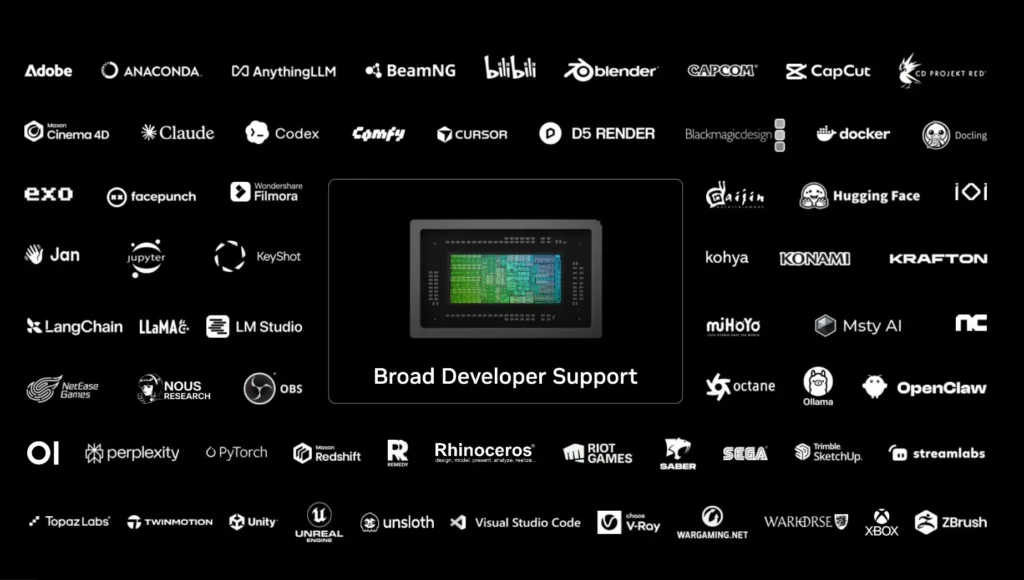
NVIDIA appears determined to avoid the compatibility issues that affected earlier Arm-based PC platforms. The company has been working closely with Microsoft and major software developers to optimize applications for RTX Spark before the first devices reach consumers.
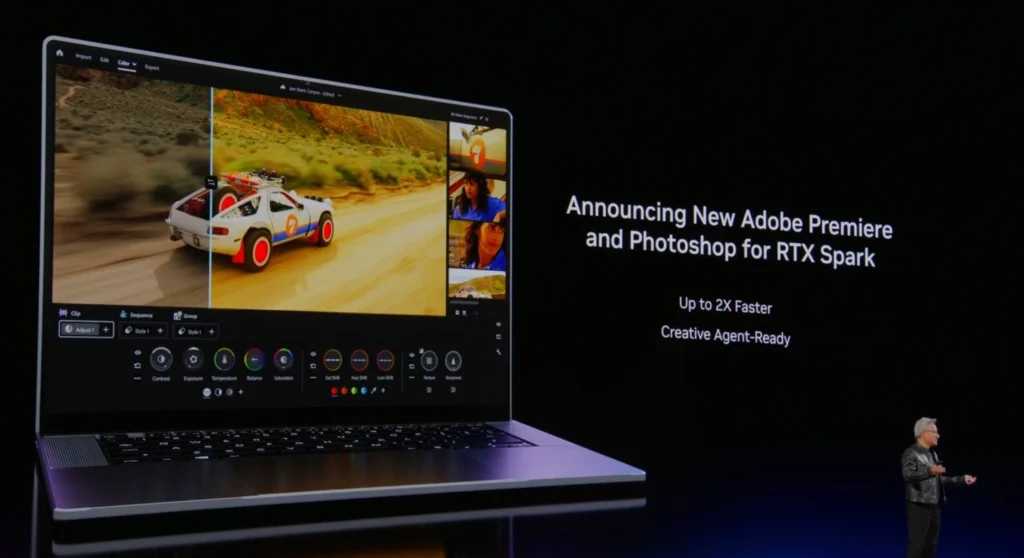
Adobe is redesigning parts of Photoshop and Premiere Pro around the platform’s AI and graphics capabilities. NVIDIA has confirmed support from Blender, DaVinci Resolve, Cinema 4D, Redshift, Affinity, CapCut, Cubase, Bitwig Studio, and Topaz Photo AI.
For creators, that software support may prove just as important as the hardware specifications.
First Devices Coming From ASUS, Dell, HP, Lenovo and Microsoft
NVIDIA already has strong support from PC manufacturers.
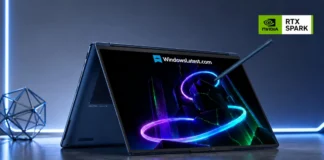
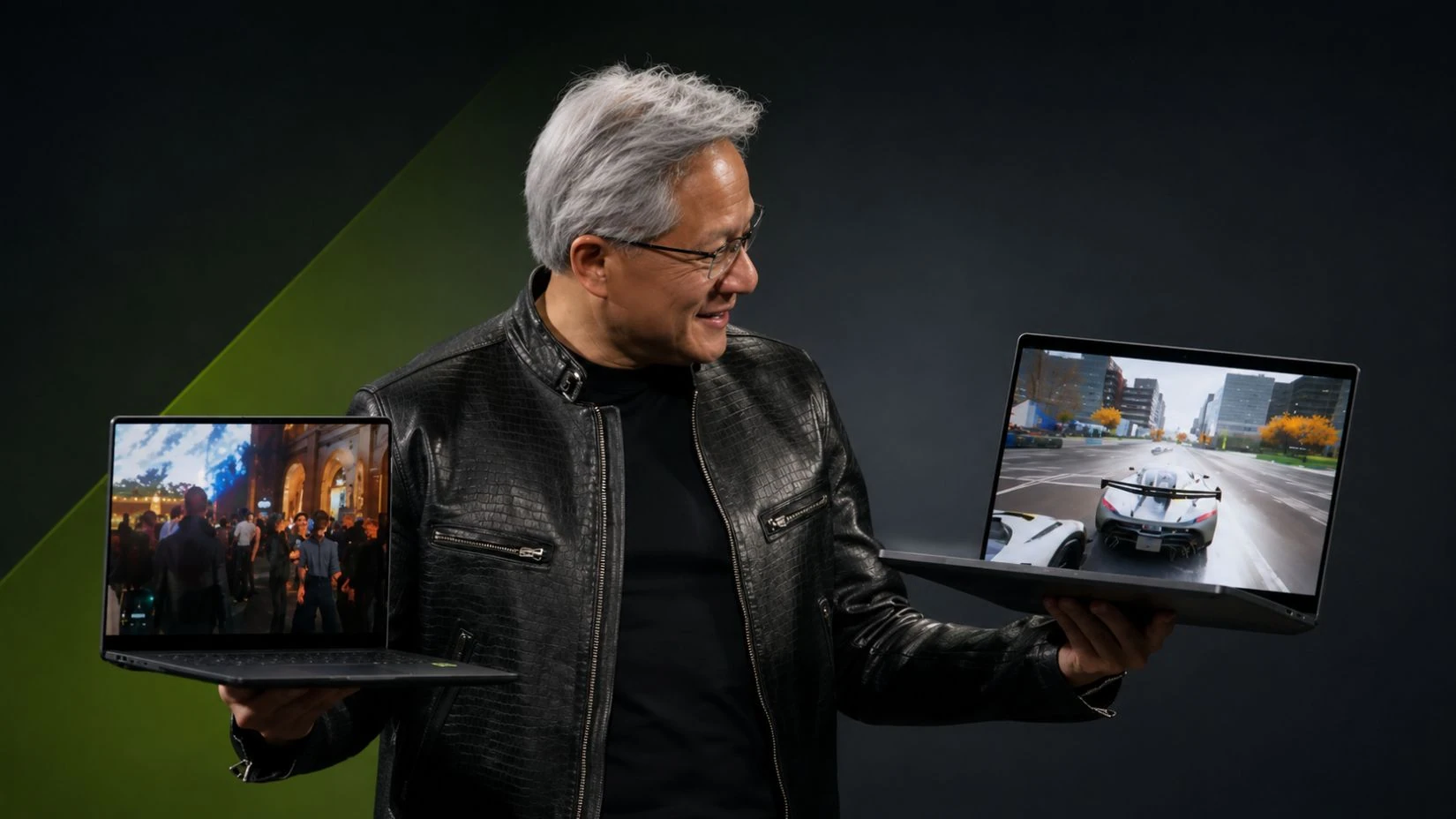
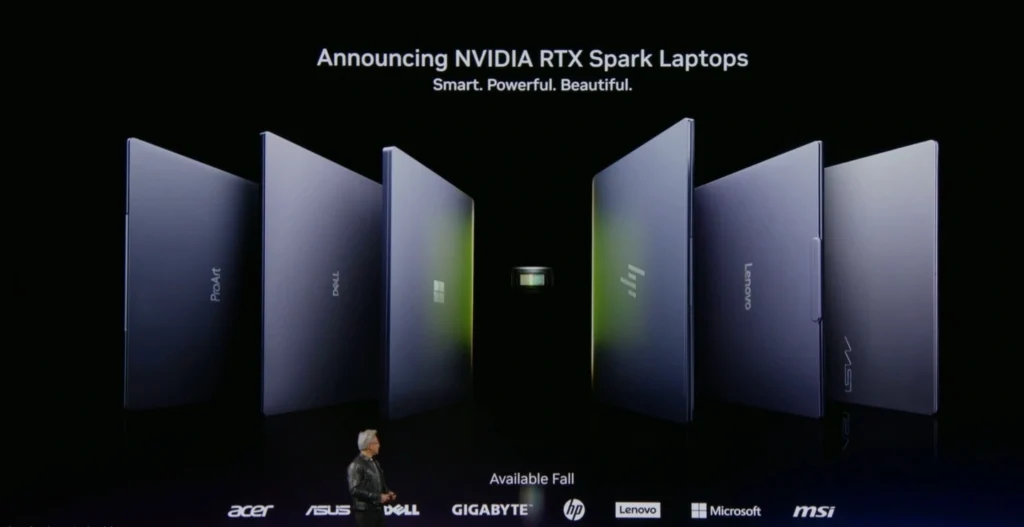
The first RTX Spark laptops will come from ASUS, Dell, HP, Lenovo, Microsoft Surface, and MSI. Confirmed products include the ASUS ProArt P14 and ProArt P16, Dell XPS 16, HP OmniBook Ultra 16, Lenovo Yoga Pro 9N, Surface Laptop Ultra, and MSI Prestige N16 Flip AI.
Most of these systems target the premium segment with OLED displays, USB4 connectivity, RTX gaming features, and thin-and-light designs.
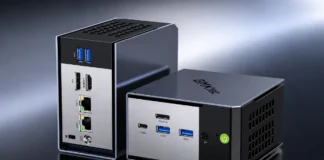
NVIDIA is not limiting the platform to notebooks. Acer, ASUS, Dell, Gigabyte, HP, Lenovo, and MSI are preparing compact desktop systems powered by RTX Spark. These mini PCs are aimed at creators, AI developers, and professional users who need powerful local AI processing without moving to a large workstation.
NVIDIA’s Biggest PC Expansion Yet
RTX Spark represents one of NVIDIA’s most ambitious hardware projects in years. Rather than supplying only graphics hardware, the company is now delivering the CPU, GPU, AI acceleration, memory architecture, and software stack as a complete computing platform.
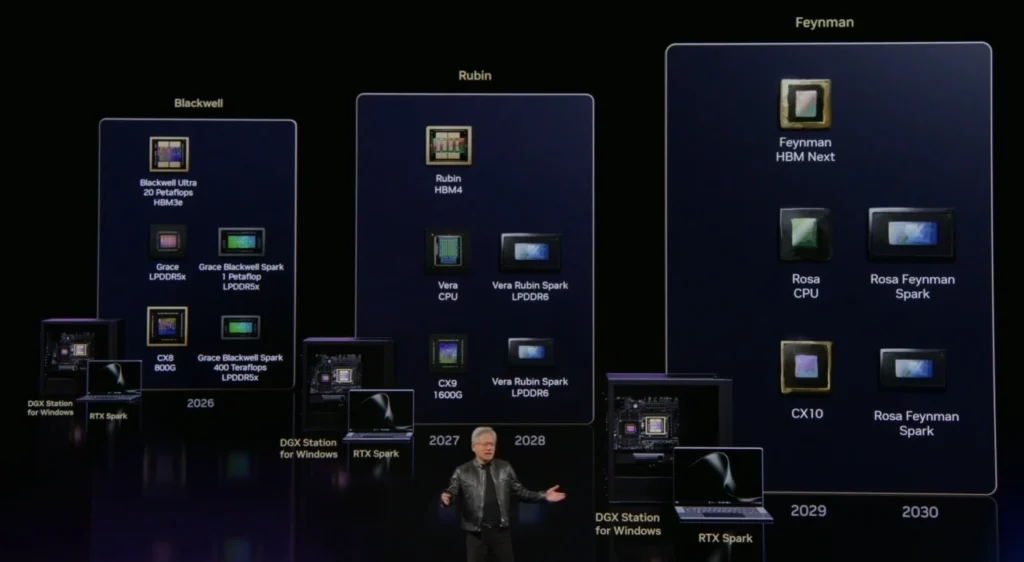
The company has already confirmed future generations based on its upcoming Rubin and Feynman GPU architectures, indicating that RTX Spark is intended to become a long-term part of NVIDIA’s product roadmap.
Pricing has not yet been announced, but RTX Spark laptops and compact desktops are scheduled to arrive in fall 2026. With a 20-core Grace CPU, Blackwell graphics, up to 128GB of unified memory, and support from nearly every major PC manufacturer, NVIDIA is making its strongest attempt yet to reshape what a Windows PC can be.
Source: NVIDIA