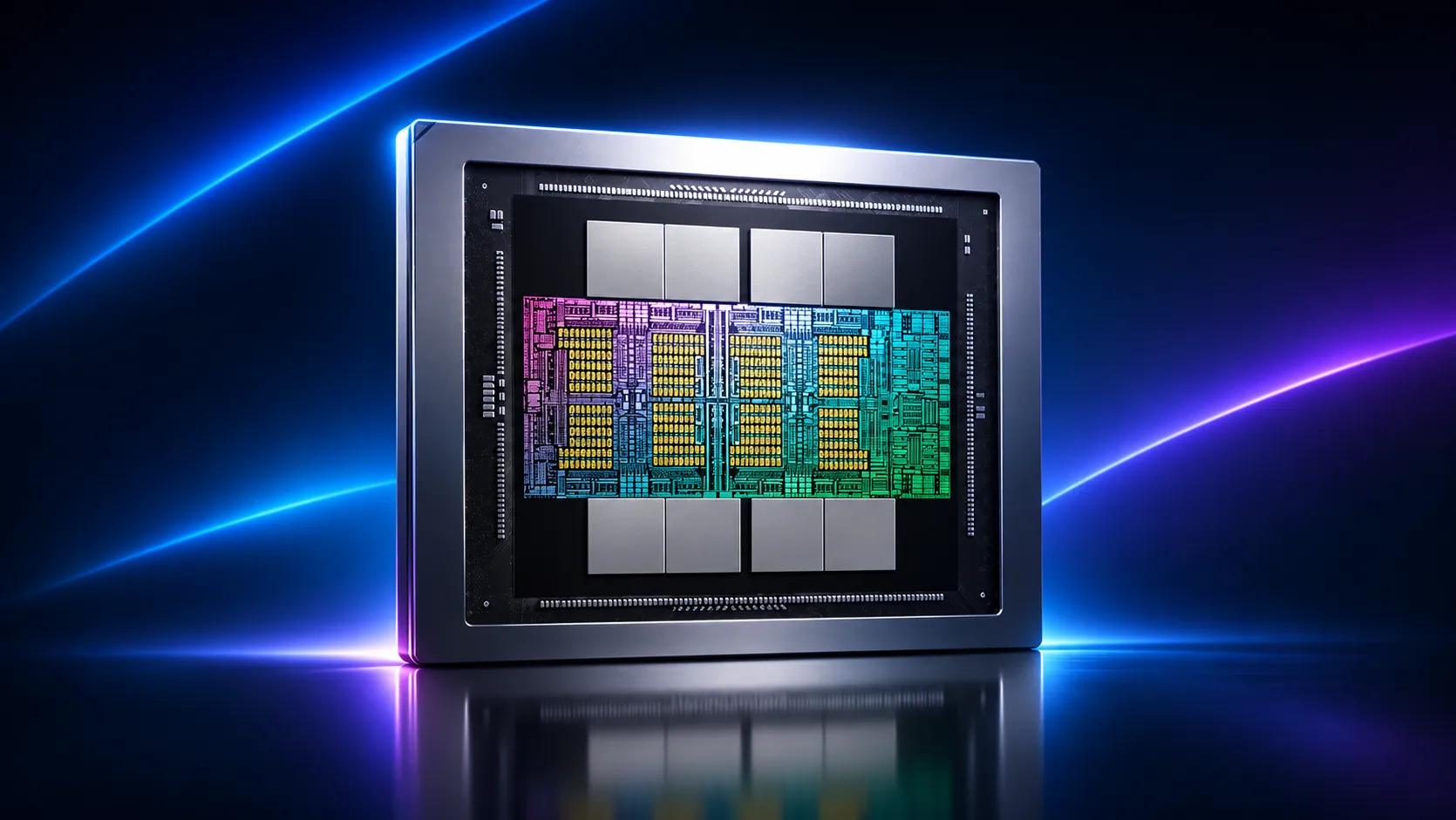
NVIDIA has announced Rubin HPC, a new GPU designed for scientific computing, engineering simulations, and data analytics. Unveiled at the SC26 supercomputing conference on November 16, 2026, the accelerator will join the NVIDIA Vera Rubin platform.
The new GPU features more than 50,000 CUDA cores on a single chip. For comparison, NVIDIA’s GeForce RTX 5090 has 21,760 CUDA cores. This gives Rubin HPC almost three times as many cores, although it is designed for a different class of workloads rather than consumer gaming.
Rubin HPC targets simulations involving materials, molecules, climate systems, and industrial designs. NVIDIA says the GPU will help researchers test more ideas through AI agents, reducing the time needed to evaluate potential designs before moving to physical experiments.
Sparse data acceleration is one of its key characteristics. Small amounts of information must frequently be repeatedly retrieved from big datasets for scientific purposes. Rubin HPC is built to manage these tasks more effectively by continuously supplying data to its processing cores rather than making them wait.
The GPU supports workloads such as sparse matrix operations, stencil computations, sorting, and reduction tasks. NVIDIA says its balanced architecture improves data movement alongside computing performance, which is important for large-scale scientific calculations.
For communication between multiple GPUs, Rubin HPC uses seventh-generation NVIDIA NVLink technology. This is designed to improve GPU-to-GPU connectivity when simulations are distributed across larger computing systems.
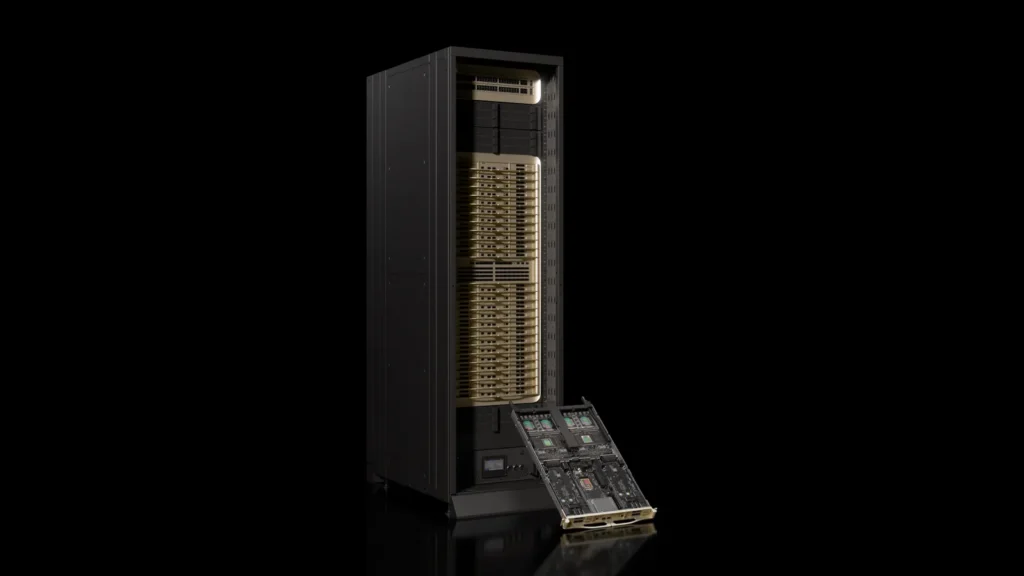
NVIDIA will also combine the accelerator with its CUDA-X libraries, which provide optimized implementations of algorithms used in scientific research, simulation, and analytics. These tools are intended to help AI agents run simulations and evaluate results more quickly.
Despite its large CUDA core count, Rubin HPC is not intended to replace consumer graphics cards. Its focus is high-performance computing, where researchers and engineers need to process complex datasets and run demanding simulations.
Its true performance advantage needs to be investigated separately, though. Independent benchmark data demonstrating how much faster particular workloads will perform have not yet been released by NVIDIA. The software, machine configuration, and workload will all affect the outcome.
NVIDIA expects Rubin HPC to become available in 2028. This means organizations will have to wait before they can evaluate its performance in deployed systems.
Source: NVIDIA