

Intel has reportedly decided not to release the Core Ultra 9 290K Plus desktop processor ahead of its upcoming Arrow Lake Refresh lineup, a move that trims the company’s high-end desktop offerings and signals a tighter focus on clearer product segmentation and execution.
The Core Ultra 9 290K Plus was never formally announced by Intel, and the company has not issued an official cancellation statement. However, multiple industry reports indicate the SKU has been dropped internally after Intel determined that the chip would offer only marginal performance gains while overlapping heavily with existing Arrow Lake desktop processors.
The canceled Core Ultra 9 290K Plus was expected to sit above current Arrow Lake Refresh CPUs with slightly higher boost clocks, but sources familiar with the plans suggest the processor would have delivered only modest real-world improvements. Early benchmark leaks pointed to performance gains in the 5–10% range over the Core Ultra 9 285K, increases that would likely be difficult to notice outside synthetic workloads, especially given similar power limits and platform costs.
Launching another near-identical flagship would have left Intel with multiple high-end SKUs competing for the same buyers. Instead of expanding the stack at the top, Intel appears to have opted for consolidation.
Based on partner materials and pre-launch specifications shared with motherboard vendors, Intel’s revised Arrow Lake Refresh desktop lineup is now expected to focus on three primary models:
| Processor | Core Configuration | Max Boost Clock | Memory Support | Market Position |
|---|---|---|---|---|
| Core Ultra 9 285K | 8P + 16E | Up to ~5.7 GHz | DDR5-7200 | Flagship |
| Core Ultra 7 270K Plus | 8P + 16E | Up to ~5.5 GHz | DDR5-7200 | High-end refresh |
| Core Ultra 5 250K Plus | 6P + 12E | Up to ~5.3 GHz | DDR5-7200 | Upper mid-range |
By keeping the Core Ultra 9 285K as the top Arrow Lake Refresh SKU, Intel avoids internal competition while simplifying upgrade decisions for enthusiasts and system builders.
Dropping the 290K Plus also protects Intel’s existing pricing structure. Introducing another premium SKU with limited differentiation could have forced price cuts on the Core Ultra 9 285K, squeezing margins at a time when desktop CPU demand remains uneven and competition from AMD is intense.
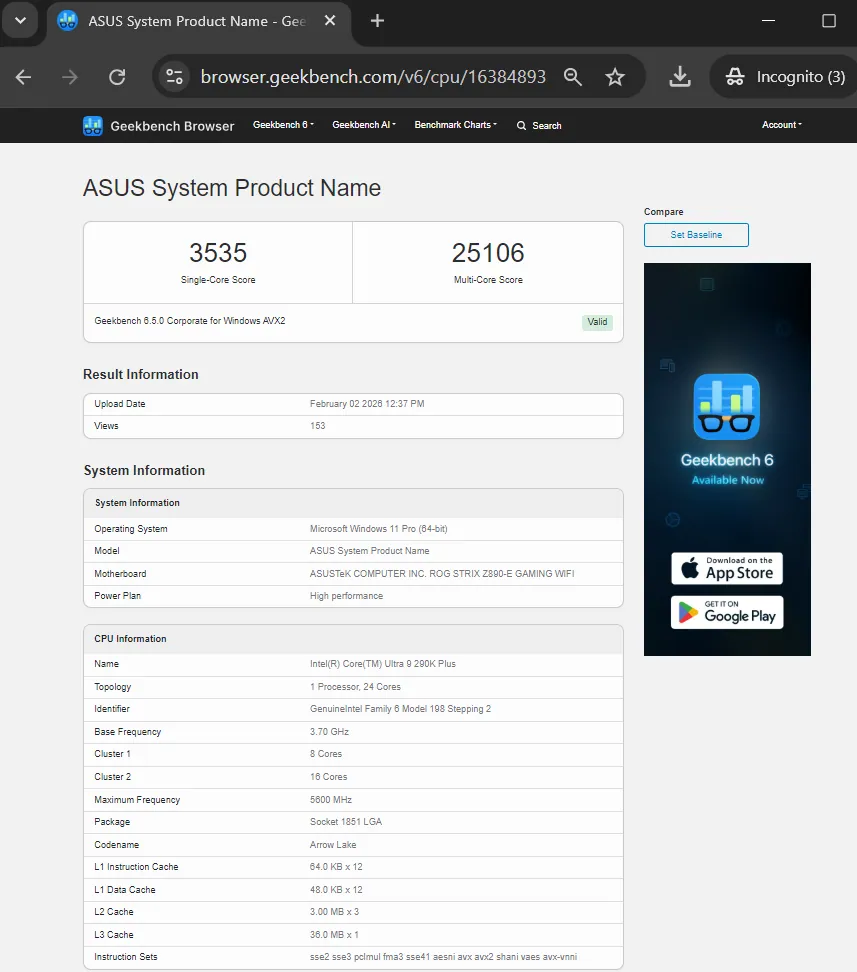
The DIY desktop segment has cooled, while prebuilt systems have regained momentum. In this environment, launching a low-volume halo processor with minimal differentiation carries more risk than reward, particularly as high-speed DDR5 memory and premium LGA1851 motherboards continue to push total platform costs higher.
With AMD’s Ryzen 9000 series already offering clearer tier separation at the high end, Intel appears unwilling to introduce a marginal flagship that could blur its own product stack.
The move also points to greater internal discipline ahead of Intel’s next major architectural shift. With Nova Lake expected later this year, trimming unnecessary Arrow Lake Refresh SKUs allows Intel to conserve engineering, validation, and supply-chain resources for a more consequential launch rather than spreading effort across incremental parts.
Avoiding three near-identical high-end desktop SKUs, preserving Core Ultra 9 285K pricing, reducing validation and inventory complexity, and freeing resources for the Nova Lake rollout all appear to be central factors behind the decision.
Rather than chasing marginal clock-speed increases, Intel’s Arrow Lake Refresh strategy now emphasizes cleaner segmentation and easier buying decisions. For most users, the absence of the Core Ultra 9 290K Plus removes confusion without eliminating a meaningful upgrade path.
Also Read: Best Intel Ultra 9 Laptops
As Arrow Lake Refresh CPUs move closer to launch, attention is shifting away from missing SKUs and toward whether Intel can strike the right balance between performance, pricing, and platform cost before Nova Lake reshapes the desktop CPU landscape later this year.
Source: Videocardz