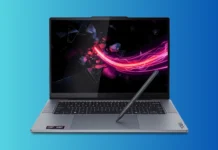
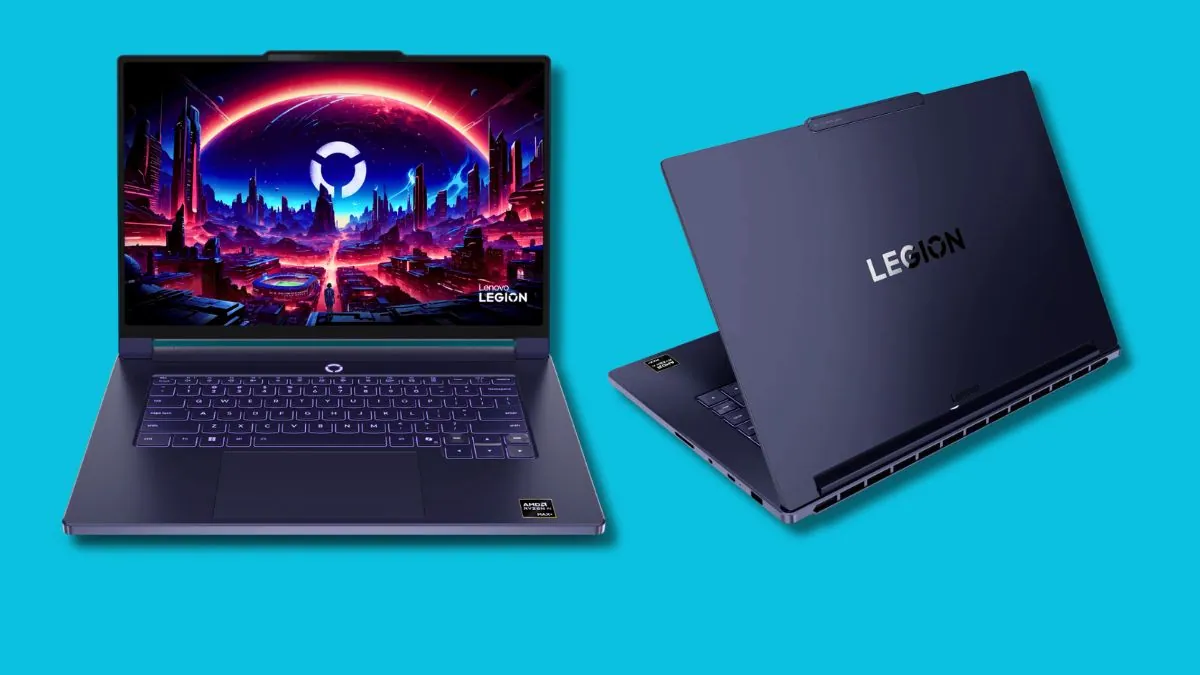
Lenovo has introduced the Legion 7a (15″, 11) at MWC 2026, expanding the Legion gaming lineup with a configuration built entirely around AMD’s Strix Halo platform. The announcement comes alongside other Legion-branded devices like Lenovo Legion Go Fold concept revealed at MWC. Unlike most gaming laptops in this price class, the Legion 7a does not include a discrete NVIDIA RTX graphics card. Instead, it relies on AMD’s Ryzen AI Max+ processors and the integrated Radeon 8060S GPU.
Processor options include Ryzen AI Max+ 388, 392, and 395. Lenovo is also using the same Ryzen AI Max+ platform in its creator-focused Yoga Pro 7a announced at MWC. These chips combine Zen CPU cores and RDNA-based graphics inside a single package and use AMD’s unified memory architecture. Rather than separating system memory and dedicated video memory, the CPU and GPU share one high-bandwidth pool. This changes how resources are allocated during gaming and creative workloads.
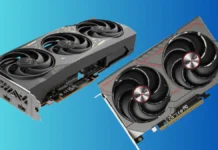
The Radeon 8060S integrated graphics unit replaces what would typically be an RTX 4050 or RTX 4060 in this category. AMD positions Strix Halo as capable of delivering discrete-class performance without the additional board space, thermal load, and power draw associated with a separate GPU. The architecture includes hardware ray tracing support and modern rendering features expected in current-generation gaming systems.
Lenovo has not published benchmark numbers for the Legion 7a. Final performance will depend on sustained power limits and cooling configuration. The company confirms support for Ryzen AI Max+ chips operating at high power envelopes, and the platform is designed to scale dynamically under load. Real-world comparisons against RTX 4050 or 4060 systems will ultimately determine how competitive the Radeon 8060S proves to be in 1080p and 1440p gaming.
The unified memory approach differs from traditional discrete GPU systems. In an RTX-equipped laptop, the GPU operates with its own dedicated VRAM. In the Legion 7a, system memory is shared between CPU and GPU. This can reduce latency and improve efficiency in certain workloads, but under heavy gaming loads, bandwidth distribution becomes critical. Total installed memory capacity will influence how comfortably modern titles run, particularly at higher texture settings.
The Legion 7a weighs 3.64 lbs (1.65 kg) and uses an aluminum chassis finished in Nebula. For a 15-inch gaming system, that weight is notably lower than many RTX-based competitors that exceed 4.5 lbs once higher wattage GPUs and larger cooling assemblies are included. Removing the discrete GPU simplifies internal layout and reduces board complexity.
The display measures 15.3 inches and uses Lenovo’s PureSight OLED panel. OLED technology delivers higher contrast ratios and near-instant pixel response times compared to standard IPS displays commonly used in mid-range gaming laptops. While Lenovo has not detailed refresh rate or peak brightness figures in the initial announcement, OLED adoption suggests a focus on image quality alongside gaming performance.
The keyboard layout has been revised. Lenovo removes the number pad in favor of a centered typing position, keeping full-sized arrow keys and a large touchpad. The design choice mirrors shifts seen in thinner performance laptops rather than traditional bulky gaming models.

Thermal and power management are handled by Lenovo AI Engine+, which dynamically adjusts system behavior based on workload. Without a discrete GPU drawing independent power, the system’s total energy profile differs from RTX-equipped Legion variants. Under lighter tasks such as browsing, streaming, and productivity workloads, systems built around integrated graphics often consume less power. Under sustained gaming loads, however, overall efficiency will depend on how aggressively Lenovo allows the Ryzen AI Max+ platform to boost.
In practical use, the Legion 7a is unlikely to target high-wattage RTX 4070 or RTX 4080 gaming machines. Instead, it occupies space between ultrabooks with conventional integrated graphics and traditional gaming laptops equipped with entry-level discrete GPUs. The Radeon 8060S is designed to handle modern titles at 1080p with competitive frame rates and may support lighter 1440p gaming depending on settings.
The Strix Halo platform also integrates AMD’s XDNA neural processing unit for on-device AI workloads. While gaming remains the primary focus of the Legion series, local AI acceleration supports Windows Copilot+ features and creative applications that leverage machine learning workloads. The unified memory design allows both compute and graphics resources to operate within a shared architecture.
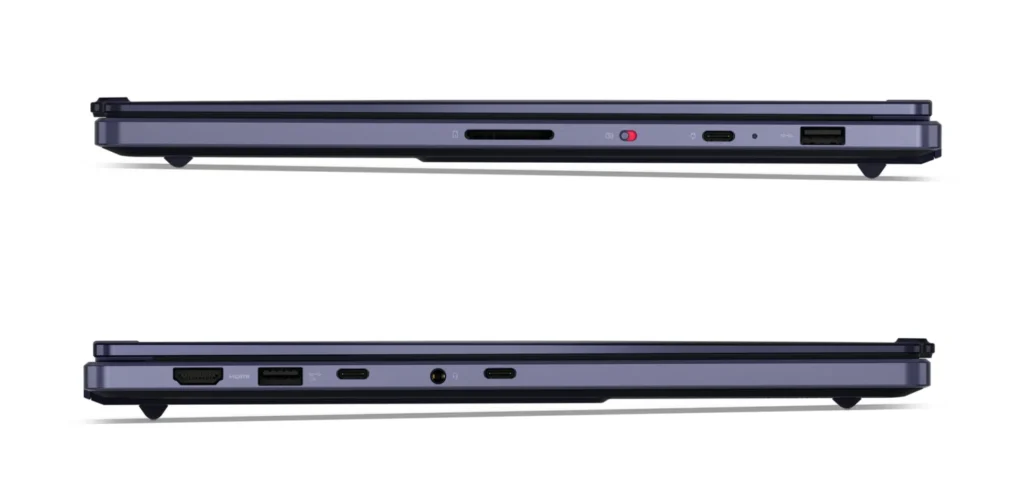
Lenovo confirms availability beginning June 2026 in EMEA markets, with pricing expected to start around €2,000. U.S. pricing has not been announced. Storage and memory configuration details were not fully outlined in the initial release, and final port selection specifications are expected closer to retail launch.
The Legion 7a represents one of the first mainstream Legion gaming laptops to rely entirely on AMD’s integrated Radeon 8060S graphics rather than pairing a Ryzen processor with NVIDIA discrete hardware. As manufacturers explore ways to reduce thickness and improve efficiency without sacrificing mid-range gaming capability, platforms like Strix Halo introduce a different design approach. Independent testing will clarify how this architecture compares against established RTX 4050 and 4060 systems in sustained gaming scenarios.
Key Specifications – Lenovo Legion 7a (15″, 11)
| Specification | Details |
|---|---|
| Display | 15.3-inch PureSight OLED |
| Processor Options | AMD Ryzen AI Max+ 388 / 392 / 395 |
| Graphics | Integrated Radeon 8060S (Strix Halo) |
| Memory Architecture | Unified Memory Architecture |
| Chassis | Aluminum (Nebula finish) |
| Weight | 3.64 lbs (1.65 kg) |
| Keyboard Layout | Centered layout, no numpad, full-size arrow keys |
| AI Optimization | Lenovo AI Engine+ |
| Discrete GPU | None |
| Availability | June 2026 (EMEA) |
| Starting Price | €2,000 |