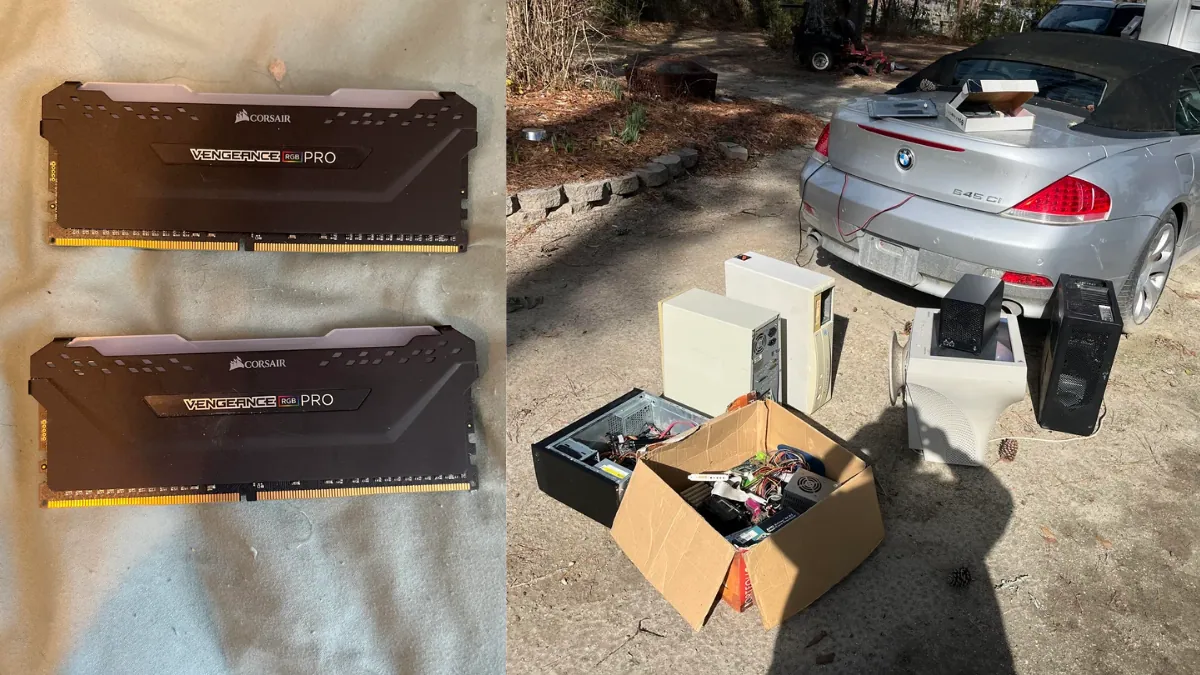
A Reddit post showing a 64GB DDR4 memory kit recovered from a landfill has drawn widespread attention this week, not just for the unlikely discovery but for what it says about the state of the memory market in 2026.
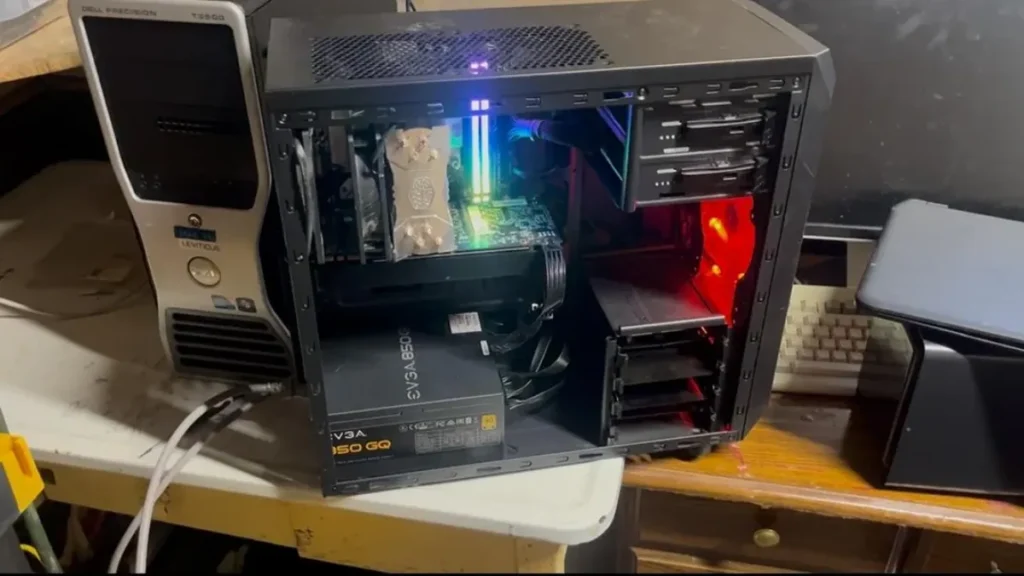
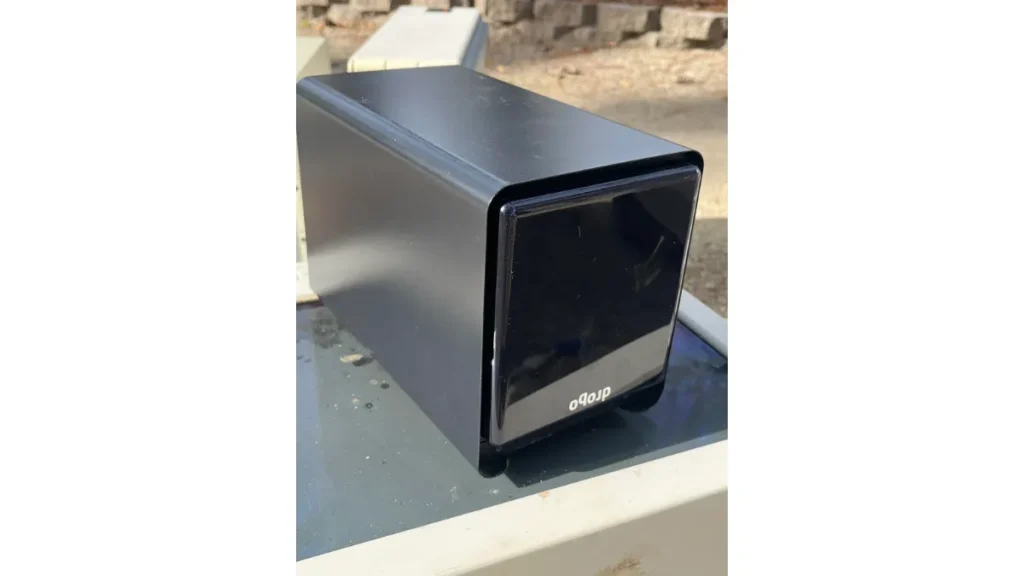
The images, originally shared in the r/pcmasterrace subreddit, show a pair of Corsair Vengeance RGB Pro 32GB modules among discarded hardware that included a 10th-generation Intel Core i7, an ASUS motherboard, and a Drobo NAS enclosure. According to listings on Newegg and similar marketplaces, comparable 64GB DDR4 kits are currently advertised for as much as $499 used, though asking prices do not always reflect completed sales.
The Reddit user explained that the find allowed a substantial system upgrade. The recovered 64GB kit replaced a 16GB DDR4-2133 configuration paired with a Core i7-7700, while the user retained a GTX 1070 OC graphics card. Moving from 16GB to 64GB dramatically reduces memory pressure in multitasking, virtualization, content creation, and heavy browser workloads. On older platforms, that kind of upgrade can extend usable lifespan more effectively than a CPU change alone.
The viral framing centers on the idea of a “$500 landfill find.” The more meaningful story is why a memory standard introduced in 2014 still commands resale value more than a decade later.
DDR4 remains locked into millions of systems built between 2017 and 2023. Intel LGA1200 and AMD AM4 platforms rely exclusively on DDR4. For those users, upgrading memory capacity is far cheaper than replacing motherboard, CPU, and memory together to move to DDR5. That platform lock-in creates durable demand for high-capacity DDR4 modules, especially 32GB sticks used in 64GB kits.
Recent coverage has largely attributed elevated DDR4 pricing to AI-driven DRAM shortages. That explanation is only partially correct. AI infrastructure demand has increased contract pricing for certain DRAM categories, particularly high-bandwidth memory used in accelerators. At the same time, major memory manufacturers have shifted fabrication capacity toward DDR5 and HBM production. As DDR4 wafer starts decline, supply tightens even if consumer demand remains stable. Reduced output, not surging desktop demand, is supporting higher prices for large-capacity kits.
Credit: Reddit User/pcmasterrace
Credit: Reddit User/pcmasterrace
Secondary market behavior reinforces this trend. Enterprise systems that once fed a steady stream of decommissioned DDR4 modules into resale channels are transitioning to DDR5 platforms. As refresh cycles shift upward, fewer bulk DDR4 modules enter the market. That constrains used supply just as enthusiast builders look to extend older systems.
Below is a summary of the recovered hardware and its current market position.
| Component | Market Position in 2026 | Notes |
|---|---|---|
| 64GB (2×32GB) DDR4 | $250–$500 depending on model and demand | High-capacity kits command a premium |
| 10th Gen Core i7 | Viable on LGA1200 | Comet Lake-era CPU |
| ASUS motherboard | Platform dependent | DDR4-based |
| Drobo 5-bay NAS | Unsupported product line | Brand discontinued |
The Drobo enclosure carries additional risk beyond simple hardware aging. The company ceased operations, and firmware updates are no longer provided. Using unsupported NAS hardware can expose users to security vulnerabilities and compatibility issues, particularly in networked environments.
Salvaged components also require caution. Memory pulled from landfill or e-waste facilities may have been discarded due to instability. Tools such as MemTest86 should be used before trusting recovered modules in production systems. In some municipalities, removing items from landfill facilities may also violate local regulations.
From a pricing perspective, the key question is timing. Should DDR4 owners sell now, or hold? If DDR4 production continues to contract as manufacturers prioritize DDR5 and AI-related memory, high-capacity kits may retain value longer than expected. However, if large volumes of enterprise DDR4 reenter secondary markets during future refresh cycles, pricing could soften quickly. The current environment favors sellers more than buyers, particularly for 32GB modules.
Also Read: What is DDR5 RAM? Everything you need to know
For buyers still running DDR4 platforms, a 64GB upgrade remains practical for specific workloads. It will not materially increase gaming frame rates in most titles, but it can reduce background stutter and improve responsiveness in memory-heavy tasks. For casual use, it may be excessive. For virtualization, editing, or home lab systems, it remains highly useful.
The landfill rescue makes for compelling headlines. The deeper takeaway is that DDR4 is not economically obsolete. Manufacturing shifts, platform longevity, and constrained secondary supply have extended its resale relevance beyond what many expected when DDR5 launched.
In 2026, a 64GB DDR4 kit is not cutting edge. It is legacy hardware with enduring demand. That is what makes the story less about luck and more about market structure.
Source: Reddit