
Qualcomm’s next-generation Snapdragon X2 Elite is delivering a substantial performance jump in early independent testing, with results pointing to roughly a 50 percent improvement in multi-core CPU workloads compared to the original Snapdragon X Elite. Early benchmarks suggest the gap with Apple’s M5 is narrowing in sustained tasks, though Apple continues to hold a lead in single-core performance.
The results come from pre-production Windows on Arm systems tested by Hardware Canucks, using standard benchmarks and real-world content creation workloads.
Cinebench 2024: Strong Multi-Core Scaling
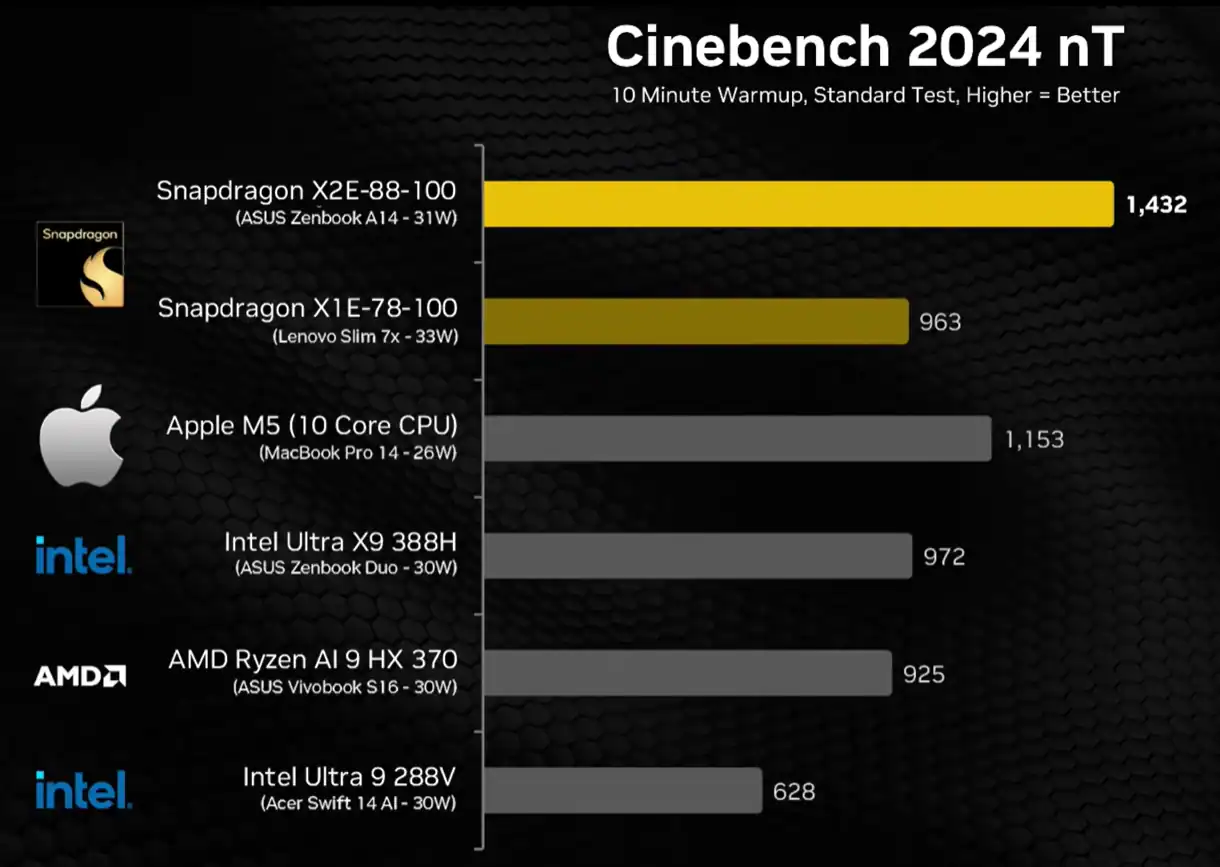
In Cinebench 2024 multi-threaded testing, the Snapdragon X2 Elite (X2E-88-100 configuration, 18 cores) scored 1,432 points, significantly ahead of the previous Snapdragon X Elite generation and surpassing Apple’s M5 in that specific workload, which scored 1,153 points in the same test environment.
For comparison:
- Intel Core Ultra X9 388H: 972
- AMD Ryzen AI 9 HX 370: 925
- Intel Core Ultra 9 288V: 628
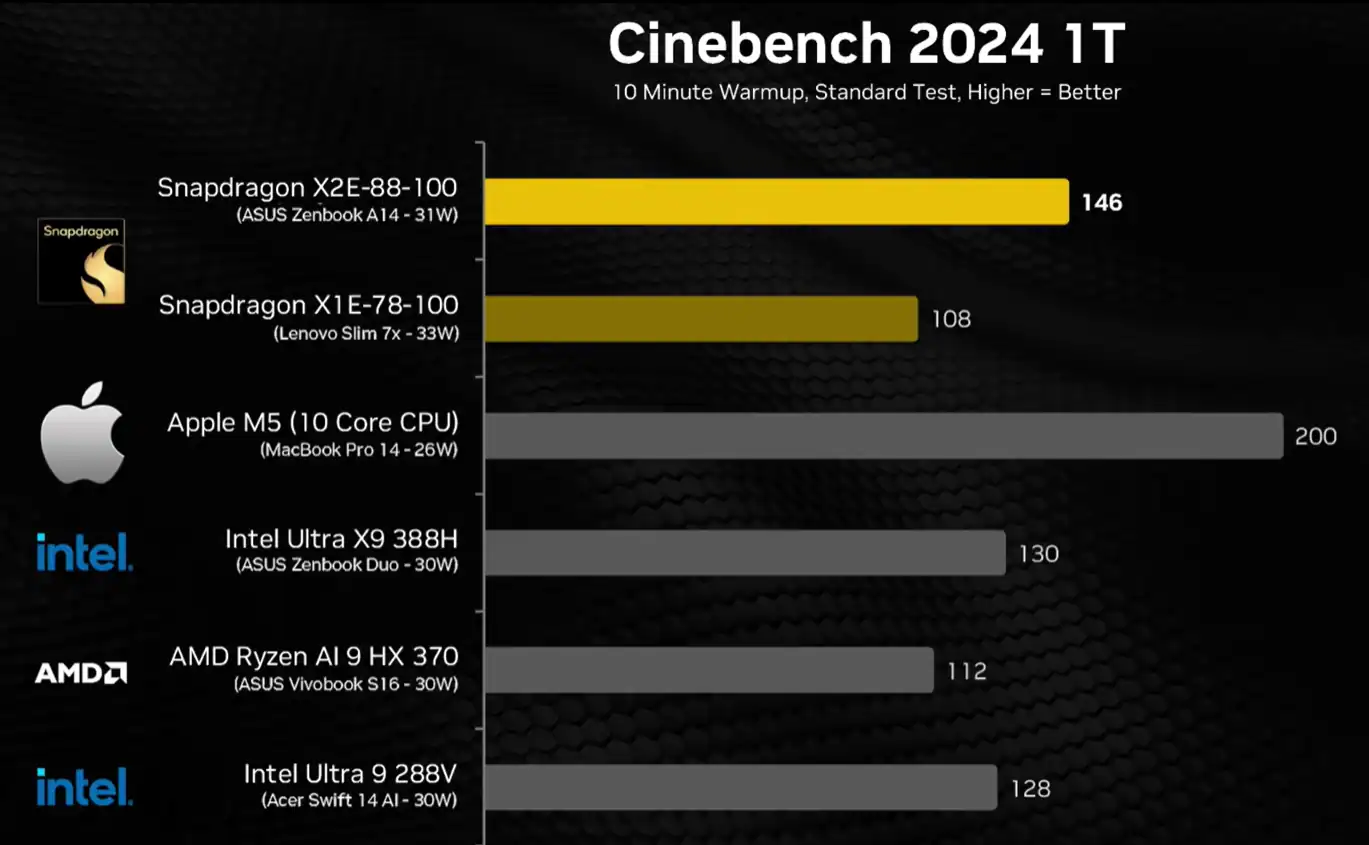
However, in Cinebench 2024 single-thread testing, Apple’s M5 maintains a clear advantage:
- Apple M5: 200
- Snapdragon X2 Elite: 146
- Intel Core Ultra X9 388H: 130
- Ryzen AI 9 HX 370: 112
This confirms that while Qualcomm has significantly improved multi-core throughput, Apple continues to dominate peak single-thread performance.
Blender and HandBrake: Sustained Workloads Improve
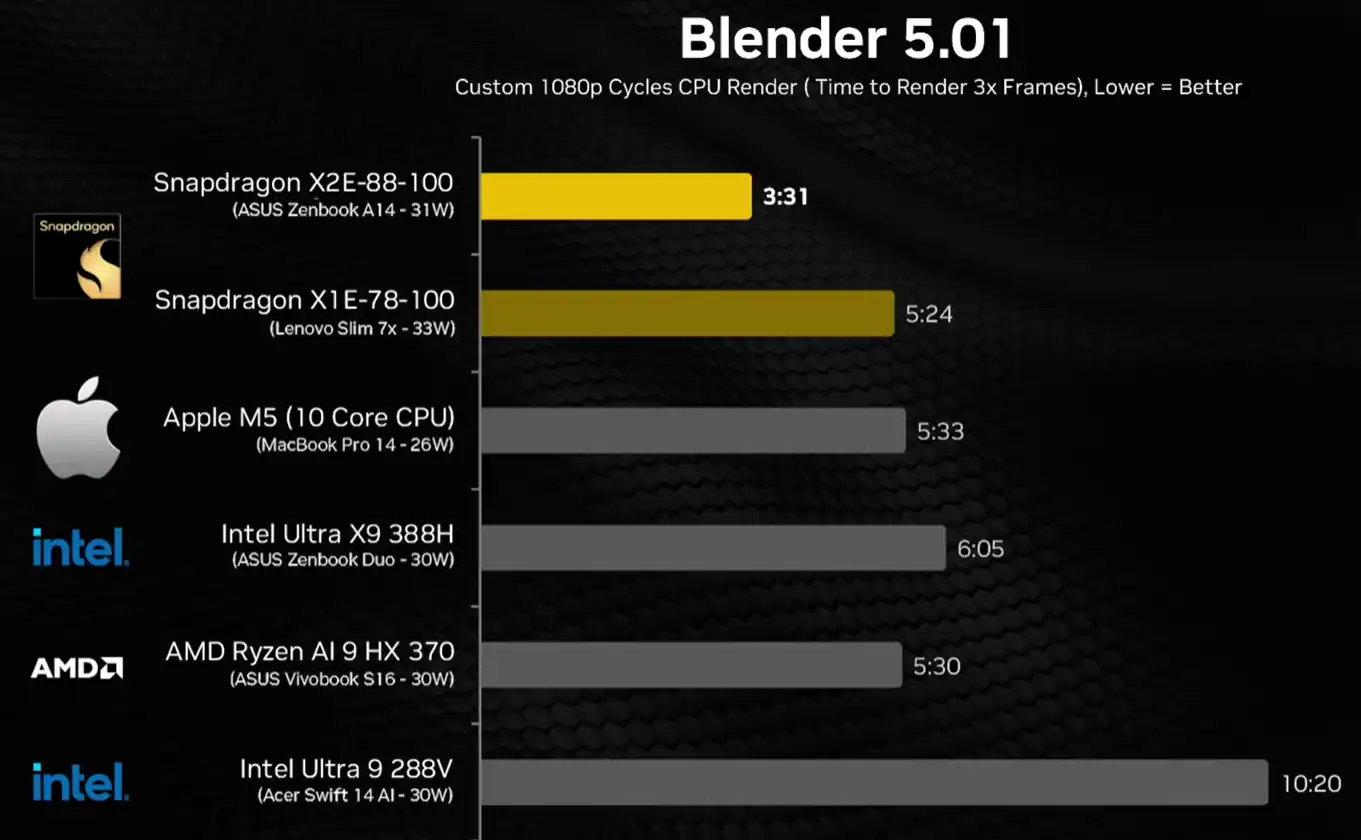
In Blender 5.0.1 (CPU render, time to complete lower is better):
- Snapdragon X2 Elite: 3:31
- Apple M5: 5:33
- Ryzen AI 9 HX 370: 5:30
- Intel Core Ultra X9 388H: 6:05
- Snapdragon X Elite (previous gen): 5:24
The reduction from 5:24 to 3:31 represents a large generational improvement for Qualcomm.
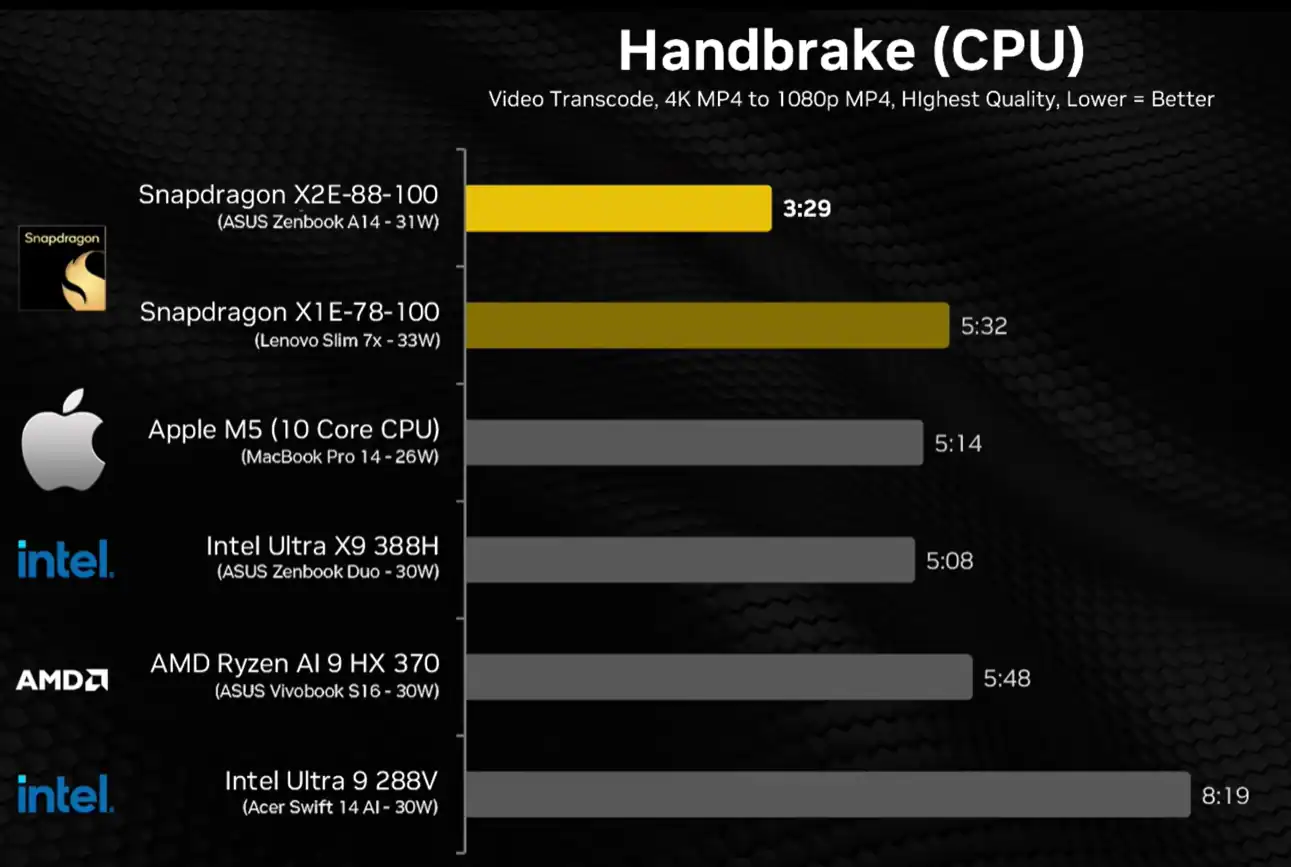
HandBrake 4K video transcode (lower is better):
- Snapdragon X2 Elite: 3:29
- Apple M5: 5:14
- Intel Core Ultra X9 388H: 5:08
- Ryzen AI 9 HX 370: 5:48
These results suggest Qualcomm has improved sustained performance scaling under prolonged CPU-heavy workloads, not just short benchmark bursts.
Gaming Performance: Big Gains, Some Variability
Gaming performance also shows improvement, though not without caveats.
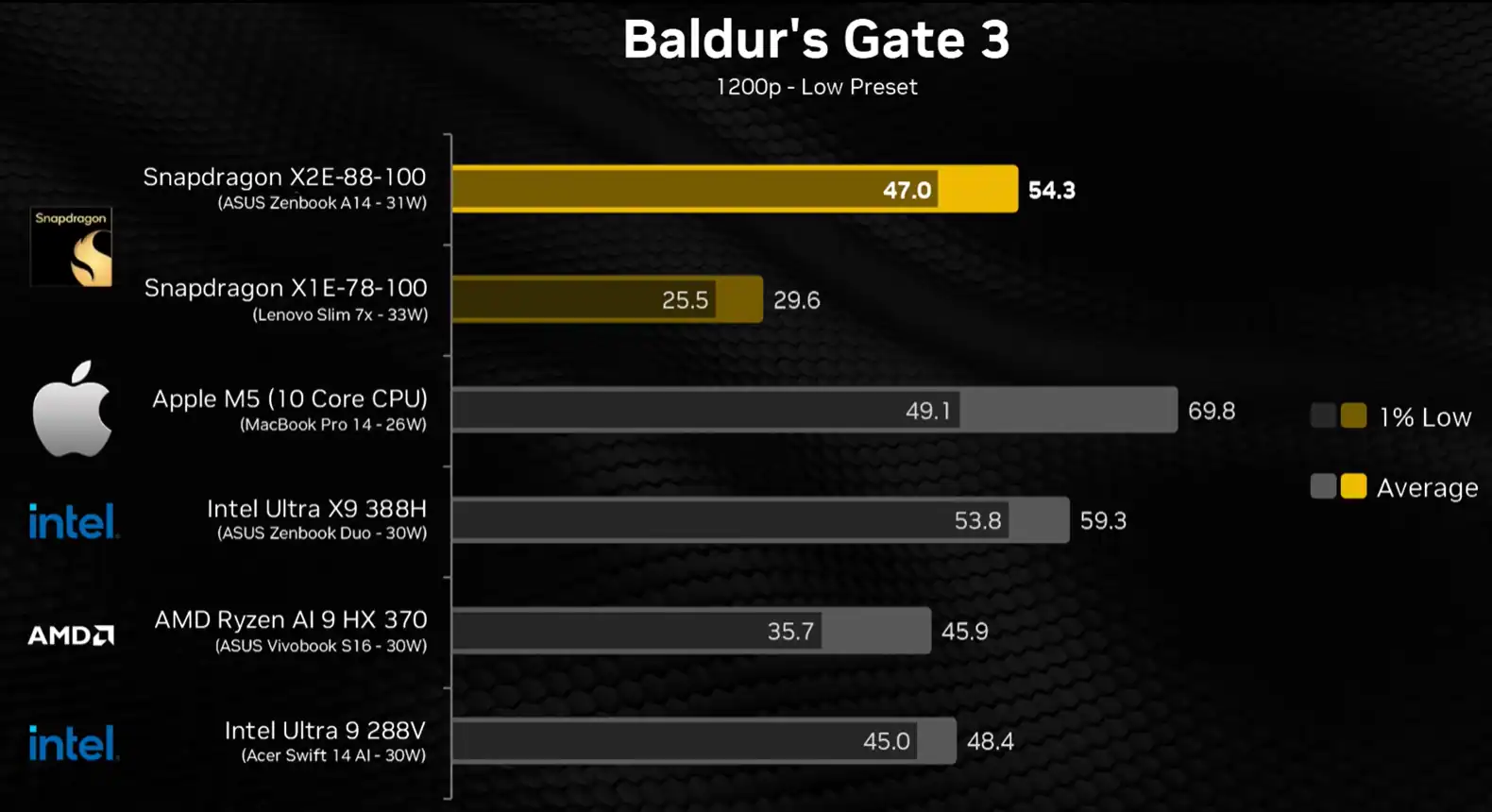
In Baldur’s Gate 3 (1200p Low Preset):
- Snapdragon X2 Elite: 54.3 FPS average, 47.0 FPS 1% low
- Apple M5: 69.8 FPS average, 49.1 FPS 1% low
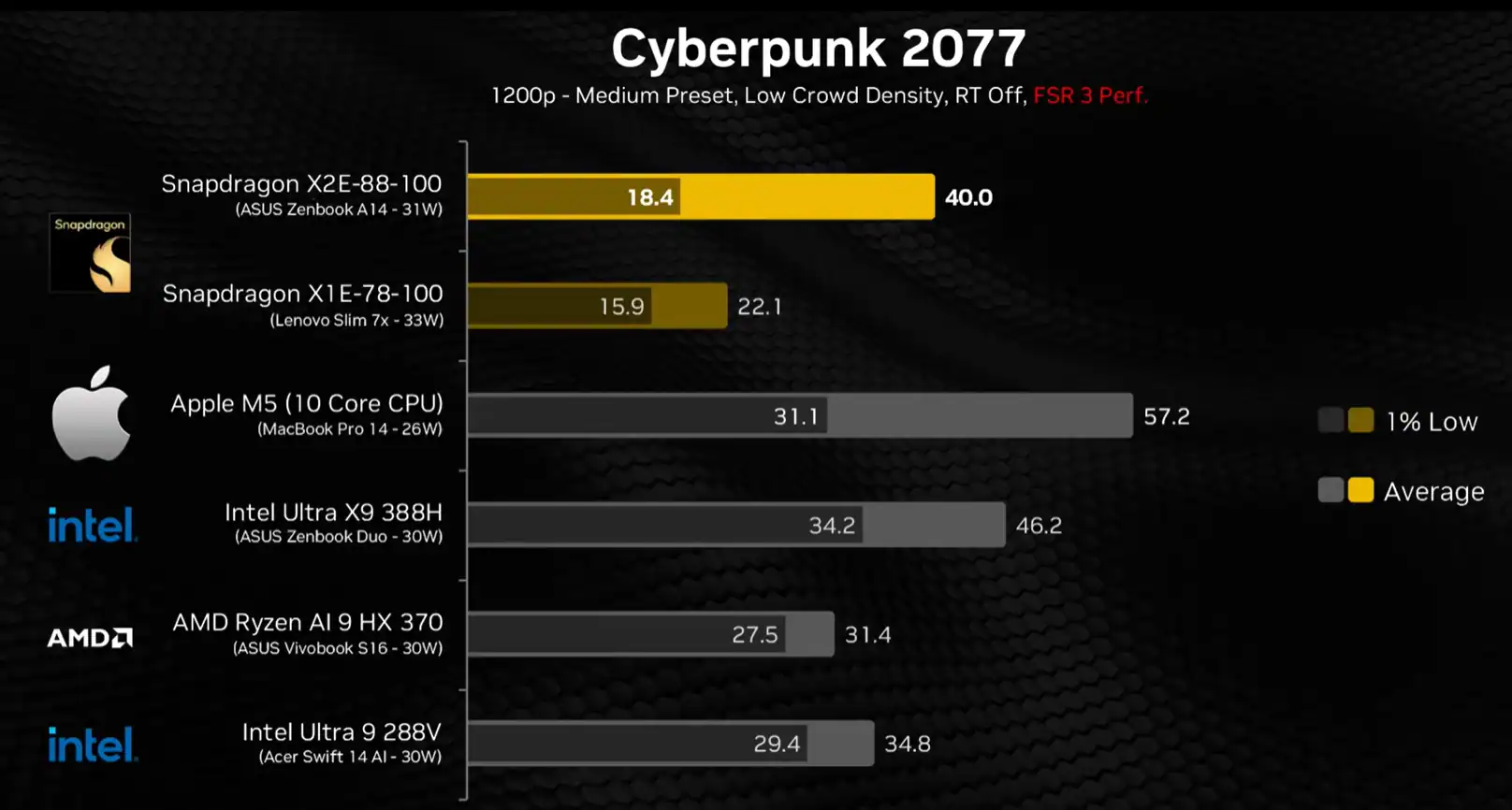
In Cyberpunk 2077 (1200p Medium, FSR 3 Performance):
- Snapdragon X2 Elite: 40.0 FPS average
- Apple M5: 57.2 FPS average
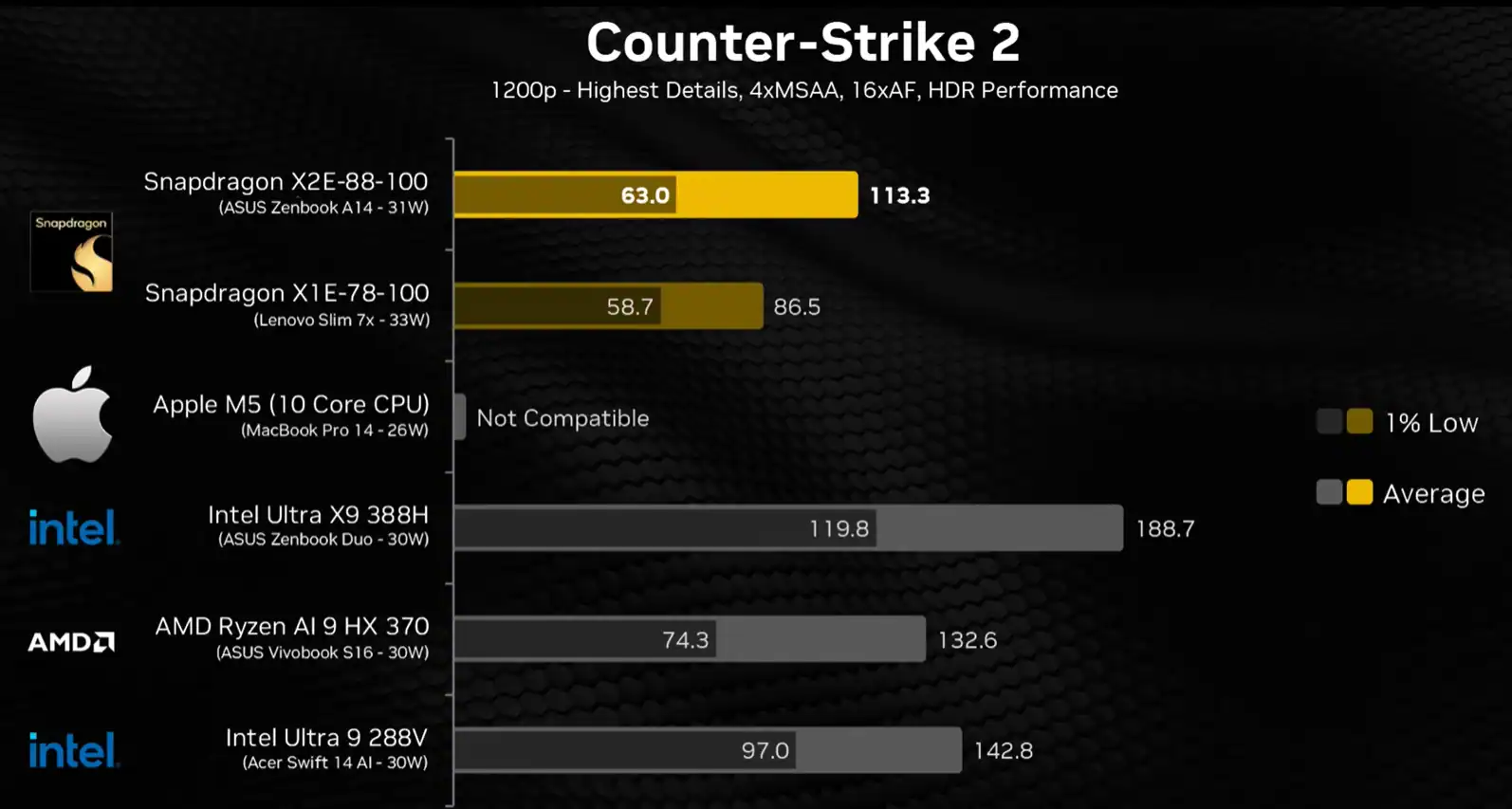
In Counter-Strike 2 (1200p Highest):
- Snapdragon X2 Elite: 113.3 FPS average
- Intel Core Ultra X9 388H: 188.7 FPS
- Ryzen AI 9 HX 370: 132.6 FPS
While average frame rates are significantly improved over the first-generation chip, some titles show weaker 1% lows compared to competitors, indicating that driver maturity and frame pacing remain areas to refine.
Architecture and Power Scaling
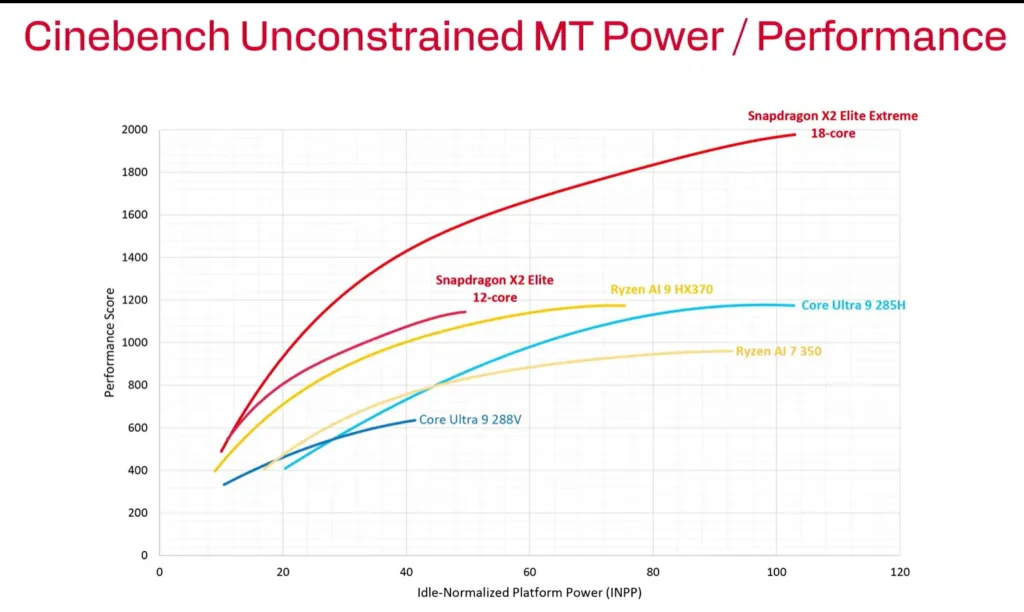
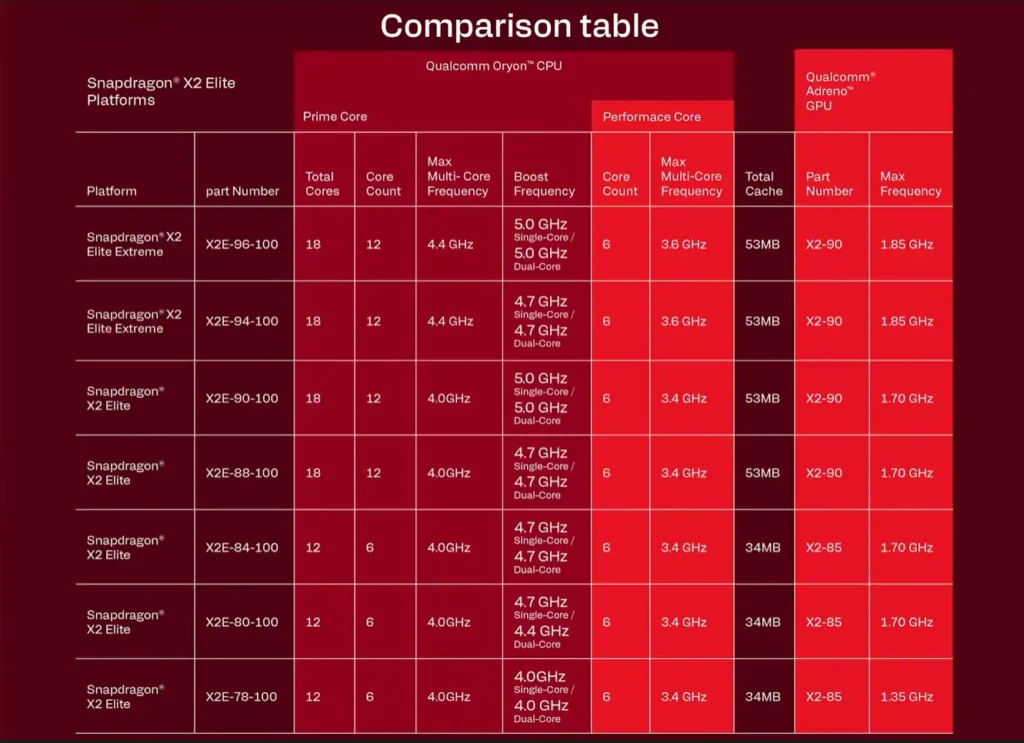
The Snapdragon X2 Elite lineup expands to configurations with up to 18 cores, alongside a redesigned Adreno X2 GPU. Qualcomm is also moving to a more advanced manufacturing process and a revised multi-cluster CPU layout aimed at improving sustained performance and memory bandwidth.
A Cinebench power-performance scaling chart shared in testing shows the 18-core Snapdragon X2 Elite Extreme scaling toward nearly 2,000 points at higher platform power levels, suggesting meaningful headroom for premium laptop implementations.
Early Results – Not Final
All results were collected from pre-production hardware running early firmware and beta drivers. Final retail performance may change depending on:
- Windows scheduler optimizations
- Driver updates
- Thermal tuning
- Power management adjustments
Battery life data was not finalized at the time of testing.
Final Thoughts
The Snapdragon X2 Elite appears to represent Qualcomm’s largest generational leap in laptop silicon to date. Multi-core gains are substantial, sustained workloads show meaningful improvement, and gaming performance is advancing, even if driver maturity still lags in some areas.
Apple’s M5 continues to lead in single-thread responsiveness, which remains important for bursty, latency-sensitive tasks. However, Qualcomm’s improvements suggest that Windows on Arm laptops are moving closer to performance parity in longer, parallel workloads.
Final conclusions will depend on retail systems later this year, but early indications show Qualcomm narrowing the performance gap more aggressively than in previous generations.
Also Read: Apple M5 vs M4 vs M3 vs M2 vs M1 – The Full Comparison
Source: Hardware Canucks (YouTube)