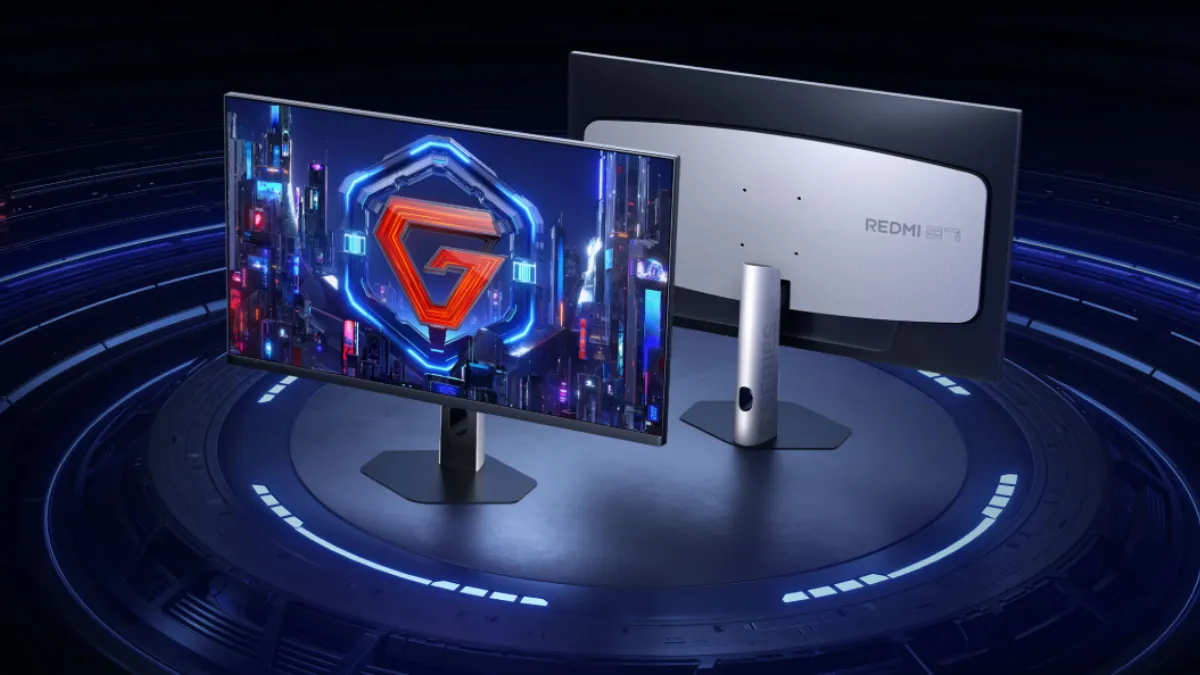
Xiaomi has launched what is currently one of the cheapest 300Hz gaming monitors on the market, priced at just $109. With the Redmi G25 2026 series, the company is aggressively targeting the budget gaming monitor segment in 2026, bringing high-refresh-rate esports performance to a price point that was previously dominated by 144Hz and 165Hz displays, similar to trends seen in ASRock 27-inch QHD gaming monitors that pack 180Hz IPS HDR400 FreeSync.
The Redmi G25 2026 series comes in a few different variants, all built around a 24.5-inch IPS display. You get a Full HD resolution along with quick response times, which is exactly what most gamers look for in this segment. The base model runs at 240Hz, while the higher-end version goes all the way up to 300Hz, something you usually only see in monitors designed for serious competitive esports, similar to high-end panels like the TCL 27C2A Pro 4K 160Hz 320Hz monitor.
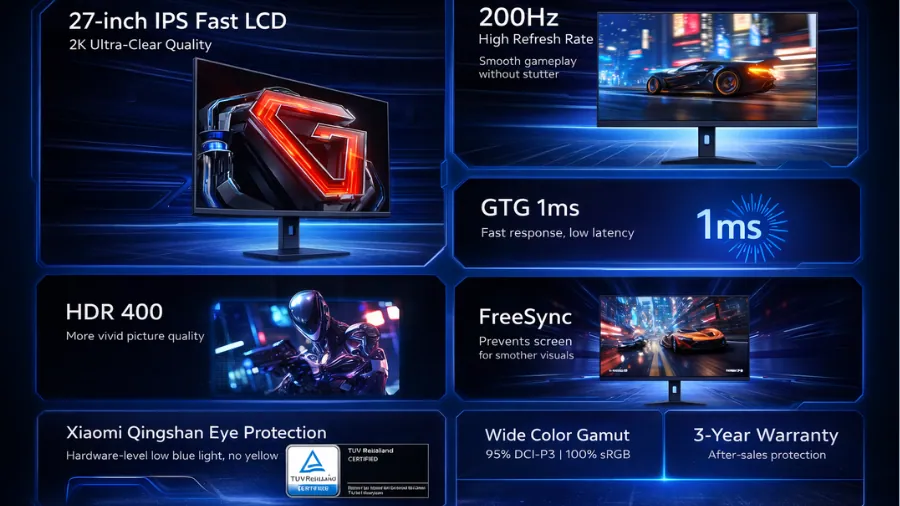
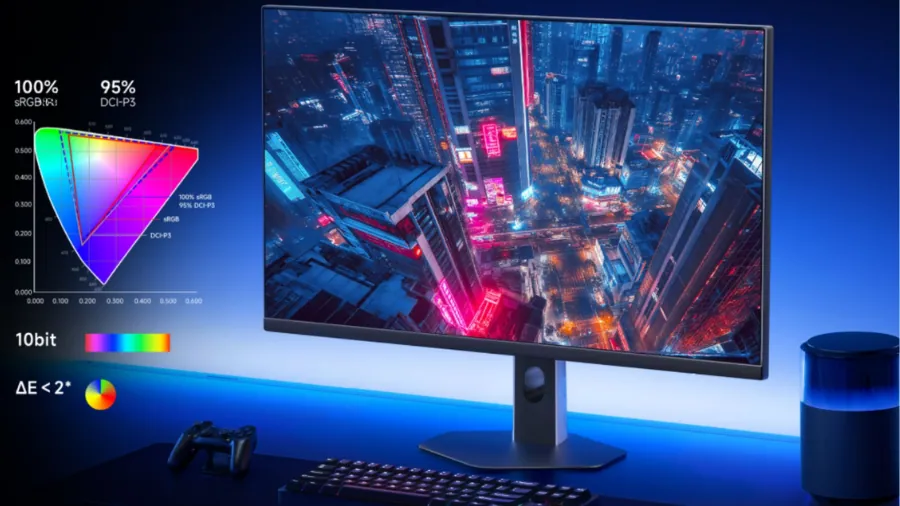
Both models share core specifications such as a 1ms response time, 100% sRGB color coverage, and brightness levels reaching up to 400 nits, features commonly found in mid-range and premium monitors rather than entry-level options.
Xiaomi is pricing these monitors far lower than you’d expect for this kind of performance. The 240Hz model starts at CNY 599 (around $87), while the 300Hz version is listed at CNY 749 (about $109), based on the company’s official retail listings.
Most 300Hz gaming monitors from brands like ASUS, Acer, and Alienware usually sell somewhere between $250 and $400. That makes Xiaomi’s pricing feel unusually aggressive, and easily one of the most disruptive moves we’ve seen in the high refresh rate monitor space.
Moving from 240Hz to 300Hz doesn’t sound like a big leap, but in fast-paced games like Valorant, Counter-Strike 2, and Apex Legends, you can actually feel the difference. The extra smoothness helps with motion clarity and slightly reduces how delayed things feel on screen, which matters in competitive play. That’s what makes the Redmi G25 2026 so interesting—it brings that kind of edge to a price most budget gamers can realistically afford.
The monitors include adaptive sync support (AMD FreeSync) to reduce screen tearing, along with gaming-focused enhancements designed to improve visibility during fast gameplay scenarios.
Select variants also include HDR support and enhanced color performance, reflecting a broader trend where features once reserved for premium gaming displays are now entering the budget monitor segment.
This aligns with a wider industry shift, where IPS panels with high refresh rates are replacing older TN-based esports monitors, a transition also visible in the ViewSonic VA27G11 175Hz gaming monitor.
The Redmi G25 2026 series is currently limited to China, but Xiaomi has historically rebranded and launched similar monitors globally. A US or global release later in 2026 is highly likely, especially given the aggressive pricing strategy and growing demand for affordable high refresh rate monitors.
By delivering 300Hz performance at a sub-$110 price point, Xiaomi is effectively resetting expectations for what a budget gaming monitor can offer. If global pricing remains close, this could force competitors to lower prices or introduce new entry-level high-refresh models, similar to the market pressure seen in Xiaomi 2K gaming monitor launches globally.
Xiaomi Redmi G25: Key Specifications
| Display | 24.5-inch IPS, Full HD (1920 × 1080) |
| Refresh Rate | 240Hz / 300Hz (variant dependent) |
| Response Time | 1ms (GtG) |
| Color | 100% sRGB (typical) |
| Brightness | Up to 400 nits |
| Adaptive Sync | Supported (FreeSync) |
| HDR | Supported (select models) |
| Ports | DisplayPort, HDMI, Audio Out |
| Weight | 9.15 lb (4.15 kg) |
| Price | CNY 599 ($87), CNY 749 ($109) |