
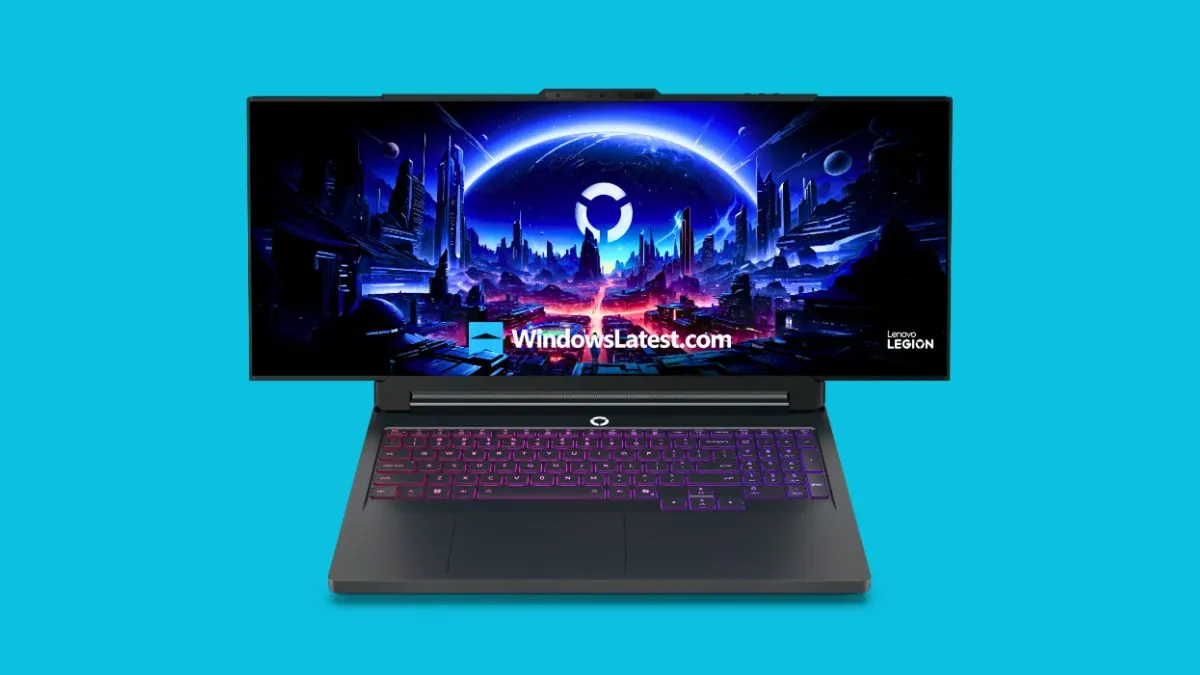
Lenovo is preparing to showcase a new concept gaming laptop called the Legion Pro Rollable at CES 2026, featuring a horizontally expanding OLED display that grows from 16 inches to 24 inches, paired with NVIDIA’s GeForce RTX 5090 laptop GPU, according to reports shared ahead of the event.
The Legion Pro Rollable is being positioned as a proof-of-concept device, not a confirmed retail product. Lenovo has not announced pricing, availability, or production plans, and the company is using the concept to demonstrate how expandable display technology could be applied to high-end gaming laptops in the future.
The device is based on Lenovo’s existing Legion Pro 7i platform, adapting the company’s flagship gaming laptop design to support a rollable OLED panel while retaining desktop-class performance components.
A Concept Device Designed for CES, Not a Product Launch
Lenovo has made it clear that the Legion Pro Rollable is intended as a technology demonstration rather than a laptop scheduled for near-term release. CES has long been a platform where manufacturers introduce experimental hardware to explore new form factors and gather industry feedback before committing to mass production.
This approach allows Lenovo to test whether expandable displays can solve real-world problems for gamers, particularly in competitive and professional esports environments, without the pressure of immediate commercialization.
As of now, Lenovo has not confirmed whether the Legion Pro Rollable will ever reach retail shelves.
Three Display Sizes Built Into One Laptop
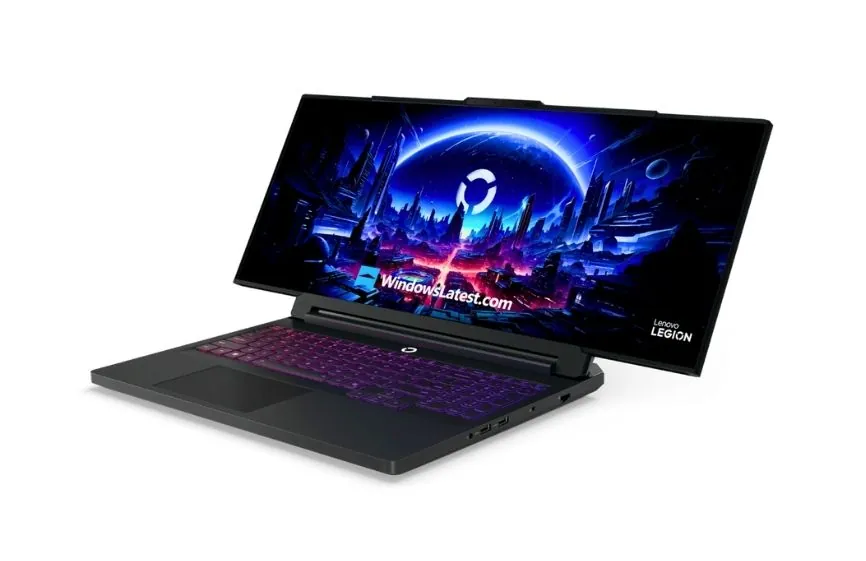
At its default configuration, the Legion Pro Rollable functions like a traditional 16-inch gaming laptop, similar in size and footprint to Lenovo’s current Legion Pro systems. With the press of a button, the OLED display expands horizontally to 21.5 inches, and then further to a fully extended 24-inch ultrawide format.
According to Windows Latest, Lenovo plans to present these three sizes as preset display modes, each designed for a different use case:
- 16-inch mode focuses on portability and standard laptop use
- 21.5-inch mode provides additional screen space for improved peripheral visibility
- 24-inch mode is intended to match the screen size commonly used by competitive esports players training on desktop monitors
The display is branded Lenovo PureSight OLED, which is the company’s premium OLED panel line used across higher-end Legion devices.
How the Rollable OLED Mechanism Works
The expanding display relies on a dual-motor, tension-based rolling mechanism that extends the OLED panel evenly from both sides. Unlike designs that slide out from a single direction, Lenovo’s approach keeps the panel under constant, controlled tension as it moves.
This design helps address common issues associated with flexible displays, such as wrinkling, uneven flexing, or surface vibration during expansion. Sources cited in reports say the motors are tuned for smooth and quiet operation, while low-friction materials are used along the display’s internal travel path to improve durability across repeated roll cycles.
When fully retracted, the laptop maintains the appearance and proportions of a conventional Legion gaming notebook.
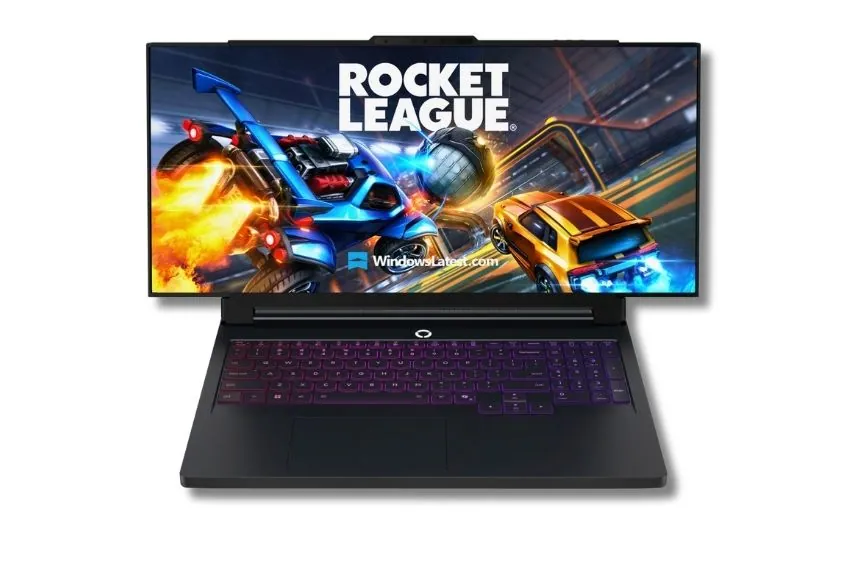
RTX 5090 Graphics and Core Ultra Platform
Under the hood, the Legion Pro Rollable concept is expected to feature NVIDIA’s GeForce RTX 5090 laptop GPU, placing it at the top of Lenovo’s gaming lineup in terms of graphics performance. The system is also paired with a high-end Intel Core Ultra processor, although Lenovo has not confirmed the exact CPU model.
The laptop retains the Legion Pro chassis and thermal design, modified to accommodate the rollable display hardware. However, key specifications such as memory capacity, storage options, battery size, and power limits have not been disclosed.
Industry reports indicate that Lenovo is prioritizing display innovation and form factor experimentation, rather than delivering a fully finalized consumer specification at this stage.
AI Features Focused on Training and Visual Awareness
Lenovo is also expected to highlight AI-assisted gaming features on the Legion Pro Rollable. The laptop reportedly uses Lenovo AI Engine+, powered by the company’s LA Core controller, to handle real-time system tuning and visual enhancements.
Demonstrated concepts include:
- AI-based scene detection
- Cursor tracking for improved focus
- Smart frame-rate optimization
- Adaptive visual overlays for maps and key interface elements
These features are designed to help players stay aware of critical on-screen information during fast-paced matches. Lenovo has positioned them as training and awareness tools, not systems that automate gameplay or provide unfair competitive advantages.
Also Read: Best Affordable AI Laptops
Why Lenovo Is Targeting Esports Use Cases
The Legion Pro Rollable is aimed at professional and competitive esports players who typically train on 24-inch desktop monitors, but often travel for tournaments, boot camps, or events.
Traditional gaming laptops, even high-end models, cannot replicate the screen size and field of view that many competitive players are accustomed to. By combining a large, expandable display with a portable laptop form factor, Lenovo is exploring whether rollable screens can bridge the gap between desktop-style training setups and mobile gaming hardware.
This use case is a key reason Lenovo selected a 24-inch maximum display size, rather than a smaller expansion.
Industry Context: Rollable Displays Are Still Experimental
Rollable displays have appeared frequently at major technology events such as CES and MWC over the past several years. While manufacturers have demonstrated rollable phones, tablets, and laptops, many of these devices have remained concepts and never reached commercial release.
Lenovo itself has a history of showcasing experimental PC designs at trade shows. Some of those concepts later influenced retail products, while others remained demonstrations used to test ideas and technologies.
The Legion Pro Rollable fits this pattern, using CES 2026 as a platform to evaluate interest in expandable laptop displays without committing to production.
Availability and What Comes Next
Lenovo has not announced pricing, retail availability, or a production timeline for the Legion Pro Rollable. The company has also not confirmed whether the design will move beyond trade-show demonstrations.
More details are expected during CES 2026, where Lenovo is set to formally present the device and clarify whether the rollable display concept will remain experimental or evolve into a future product line.
Source: Windowslatest