


Apple is expected to launch its first OLED MacBook Pro models powered by the M6 chip in Q4 2026. Samsung Display, the sole panel supplier, is scheduled to begin mass production of 8th-generation OLED panels in May, although some components remain under development to reduce costs.
Apple’s plan to introduce OLED displays to the MacBook Pro lineup in late 2026 marks a deliberate strategic shift rather than a simple component upgrade. By committing to OLED for both 14-inch and 16-inch MacBook Pro models alongside the future M6 chip, that was not in MacBook M5 Pro, Apple is signaling that it sees limited long-term headroom in mini-LED technology and is willing to accept near-term supply constraints and cost pressure to reshape the direction of its professional laptops.
Mini-LED displays have served Apple well since their introduction on the MacBook Pro, delivering high brightness, strong contrast, and reliable yields at scale. However, the technology has reached a point of diminishing returns.
Further gains in contrast control, panel thickness, and power efficiency are increasingly difficult without meaningful trade-offs in complexity and cost. For Apple, which prioritises sustained battery life, thermal efficiency, and industrial design flexibility, mini-LED no longer offers the runway needed for future MacBook Pro generations.
Also Read: AOC Agon Pro AGP327UZD Launches with 480 Hz OLED and DP 2.1
OLED provides Apple with a clearer long-term path. The technology enables pixel-level light control, deeper blacks, thinner panel structures, and improved power efficiency in mixed-use workloads. These advantages align closely with Apple’s broader silicon roadmap, where gains in performance per watt matter more than raw brightness numbers.
Waiting for OLED yields to reach smartphone-level maturity would have delayed this transition by years, potentially locking the MacBook Pro into an ageing display architecture while competitors moved ahead.
Apple’s decision to move forward now reflects a willingness to prioritise product direction over perfect manufacturing conditions. Industry sources indicate that Samsung Display will be the sole supplier of OLED panels for the initial MacBook Pro rollout, using its new 8th-generation A6 OLED production line scheduled to begin mass production in May.
Industry reports indicate Samsung Display aims to ship around two million OLED panels for 14-inch and 16-inch MacBook Pro models, with initial deliveries expected to reach Apple’s manufacturing partners in the third quarter of 2026 to support a fourth-quarter launch window.
Relying on a single supplier for such a critical component may appear risky, but this approach follows a familiar Apple pattern. Apple often accepts early supply concentration in exchange for tighter control over quality, custom panel specifications, and long-term pricing leverage.
Large-format OLED panels for laptops remain significantly more complex to produce than smartphone displays, and broad supplier ecosystems for this category do not yet exist. In this context, a single-supplier strategy is less a vulnerability and more a calculated step to accelerate industry investment and learning curves.
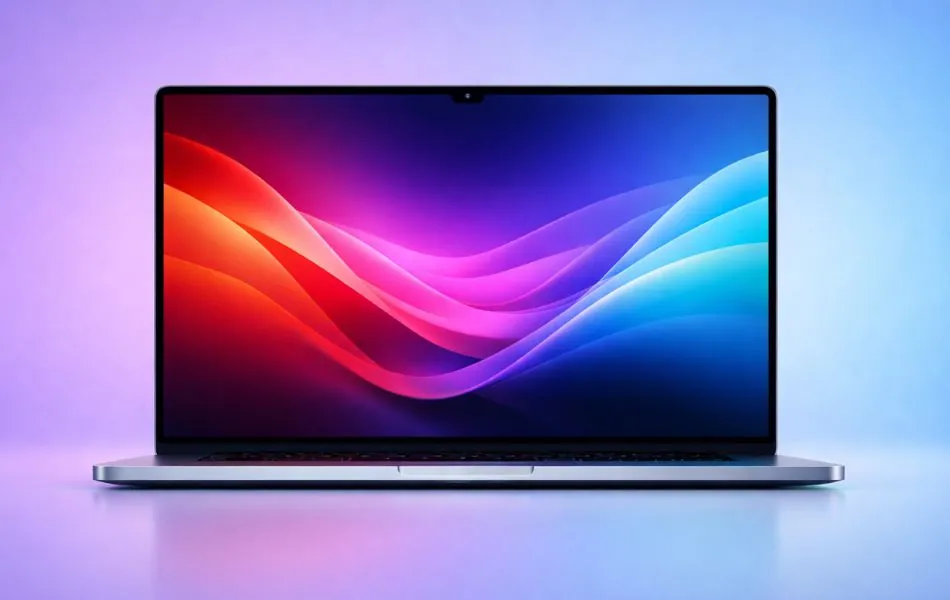
Cost remains one of the biggest challenges in Apple’s OLED transition. OLED panels are still more expensive than mini-LED alternatives, particularly at the sizes required for MacBook Pro models.
Reports indicate that some OLED module components are still being redesigned to address pricing and reliability concerns. These costs are likely to influence MacBook Pro pricing and margins in the short term, either through higher retail prices, tighter margins, or a combination of both. However, Apple appears willing to absorb or pass on some of this pressure to establish OLED as the foundation for future designs.
The move to OLED also has implications beyond display quality. Thinner panels open the door to slimmer chassis designs, internal layout changes, and potentially new form factors over time.
Combined with the expected efficiency gains from the M6 chip, Apple is positioning the 2026 MacBook Pro refresh as a platform shift rather than an incremental update. This strategy mirrors Apple’s earlier transitions, where short-term complexity paved the way for longer-term simplification and differentiation.
Apple’s OLED decision is already influencing the wider laptop market. Samsung Display’s investment in 8th-generation OLED production is aimed not only at Apple but also at expanding supply to other premium PC makers over time. As yields improve and volumes rise, costs are expected to fall, accelerating OLED adoption across high-end notebooks and reshaping expectations for display quality in professional laptops.
As Apple moves toward its late-2026 target, the success of this transition will depend on Samsung Display’s ability to stabilise production and Apple’s ability to balance cost, supply, and demand during the early stages.
If OLED production scales smoothly, Apple will have laid the groundwork for a new era of MacBook Pro design built around thinner, more efficient, and visually superior displays. If challenges persist, Apple may face short-term constraints, but the broader direction of its MacBook roadmap appears set. Either outcome underscores that Apple’s OLED move is not about reacting to supply conditions, but about defining the future of its professional laptops.
Source: thelec (In Korean)