
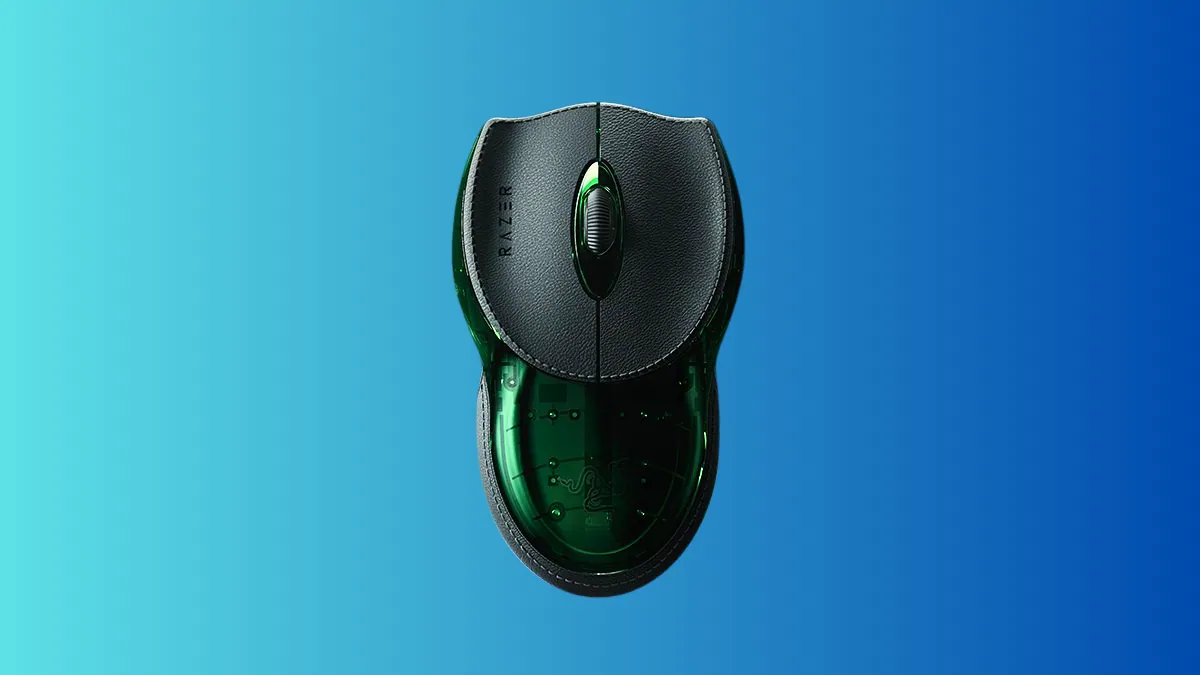
Razer has opened global preorders for the Boomslang 20th Anniversary Edition, a limited-run gaming mouse priced at $1,337 and capped at 1,337 units worldwide. The release places the product among the most expensive gaming peripherals ever sold and signals a deliberate push beyond mainstream hardware into luxury, nostalgia-driven territory.
The Boomslang is positioned explicitly as a commemorative product rather than a conventional performance mouse. Razer describes it as a tribute to its first commercial mouse, updated with modern internals and packaged as a collector’s item.
Preorders are being staggered by region, beginning February 10 in the United States, followed by Asia and Europe on February 11, with sales handled directly through Razer’s own online store and select brand locations rather than third-party retailers.
At a price that exceeds flagship smartphones and rivals entry-level gaming laptops, the Boomslang has attracted attention less for competitive advantage and more for what buyers are actually paying for.
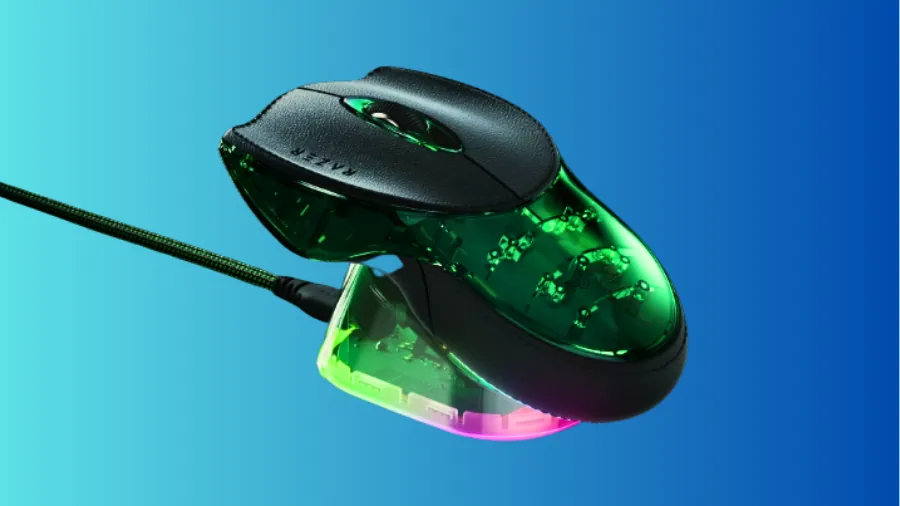
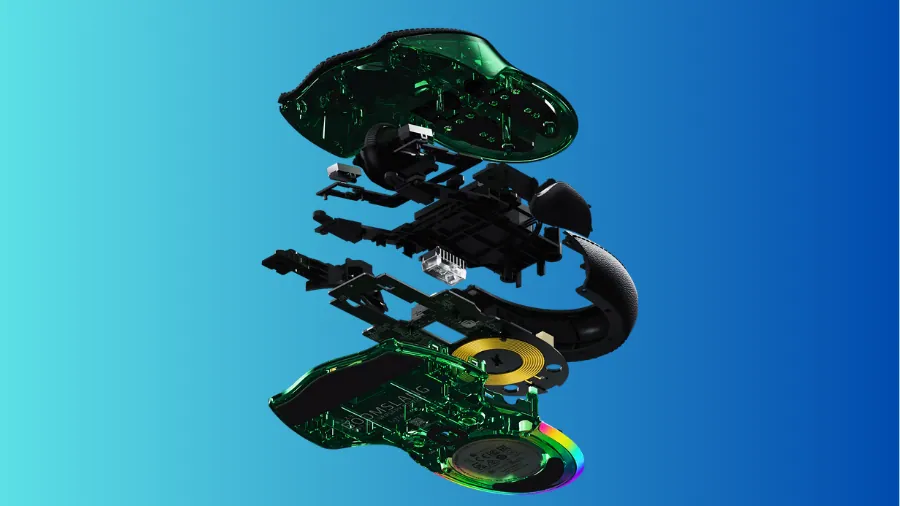
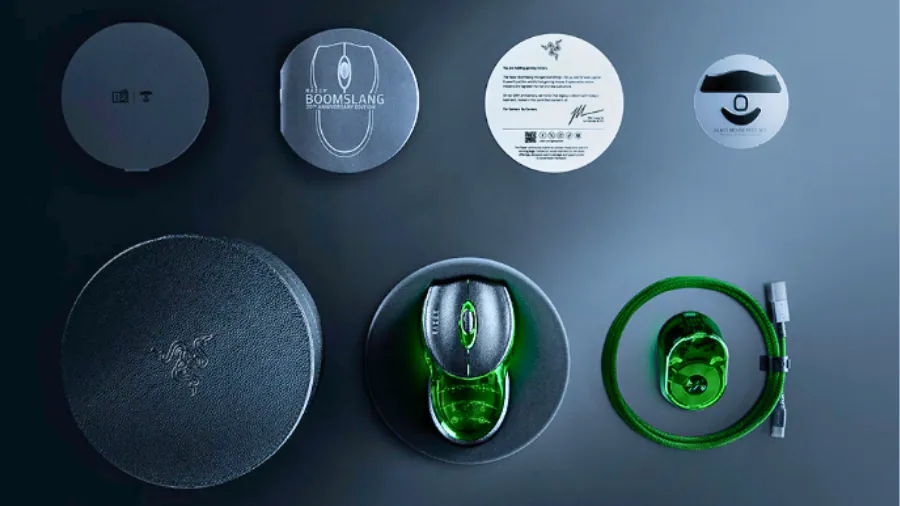
Alongside the mouse itself, the bundle includes a dedicated wireless charging dock, glass mouse skates, and a large LED-lit display frame that presents the mouse’s internal components as a visual centerpiece. Industry observers note that this presentation is central to the product’s identity, shifting the focus from desk use to display and collectability.
From a technical perspective, the hardware reflects Razer’s current flagship specifications rather than experimental or bespoke performance gains.
The mouse features a second-generation Focus Pro optical sensor rated up to 45,000 DPI, 8,000 Hz wireless polling via HyperPolling technology, fourth-generation optical switches rated for 100 million clicks, and a fully ambidextrous design. Charging is handled exclusively through the bundled dock, reinforcing the idea of the Boomslang as a self-contained set rather than a modular accessory.
Much of the discussion surrounding the launch has centered on pricing justification. Estimates circulating within enthusiast communities suggest that once bespoke tooling, low-volume manufacturing, premium materials, and engineering costs are factored in, per-unit production expenses could plausibly fall in the $700 to $1,000 range.
With fewer than 2,000 units planned, Razer lacks the economies of scale that normally drive down costs in mass-market peripherals, resulting in significantly higher per-unit pricing. Analysts also note that limited-run hardware typically carries higher margins to offset development risk and unsold inventory exposure.
In practical terms, the Boomslang’s value proposition depends heavily on intent rather than performance. Comparable sensor performance and wireless latency are readily available in gaming mice that cost a fraction of the price. The difference lies not in competitive capability, but in scarcity, presentation, and narrative value.
| Product | Approximate Price | Primary Value Proposition |
|---|---|---|
| Razer Boomslang 20th Anniversary Edition | $1,337 | Collectibility, scarcity, brand legacy |
| Razer DeathAdder V4 Pro | ~$160 | Competitive gaming performance |
| Flagship smartphone | ~$900–$1,100 | General-purpose computing |
| Entry-level gaming laptop | ~$1,100–$1,300 | CPU and GPU performance |
This positioning places the Boomslang closer to a luxury collectible than a competitive gaming peripheral. For performance-focused players, the justification is thin. For collectors, however, individual numbering, limited availability, and display-focused design often outweigh traditional performance metrics.
The launch also reflects a broader shift within the gaming hardware market. Established brands are increasingly experimenting with nostalgia-driven, limited-edition releases that blur the line between consumer electronics and lifestyle collectibles. Similar strategies have emerged in mechanical keyboards, custom controllers, and boutique PC cases, where storytelling and exclusivity are used to differentiate products in otherwise saturated categories.
Razer’s decision to revive the Boomslang carries historical weight. The original mouse played a role in shaping precision-focused PC gaming peripherals in the early 2000s, helping define a category that later became central to competitive gaming and esports.
Revisiting that legacy now suggests the company is leaning on brand history at a time when the gaming mouse market has become crowded and incremental hardware improvements are increasingly difficult to market on their own.
Whether the Boomslang sells out quickly remains to be seen, but industry sources indicate that Razer does not plan a mass-market version of this design. That reinforces the idea that the product is less a test of performance leadership and more a test of brand power and collector demand.
Also Read: Razer Blade 14 vs MacBook Pro 14
The Boomslang functions as a case study in how far gaming hardware has moved into premium category. It is not designed to win matches, but to make a statement about nostalgia, scarcity, and how established gaming brands are redefining value in an increasingly competitive market.