
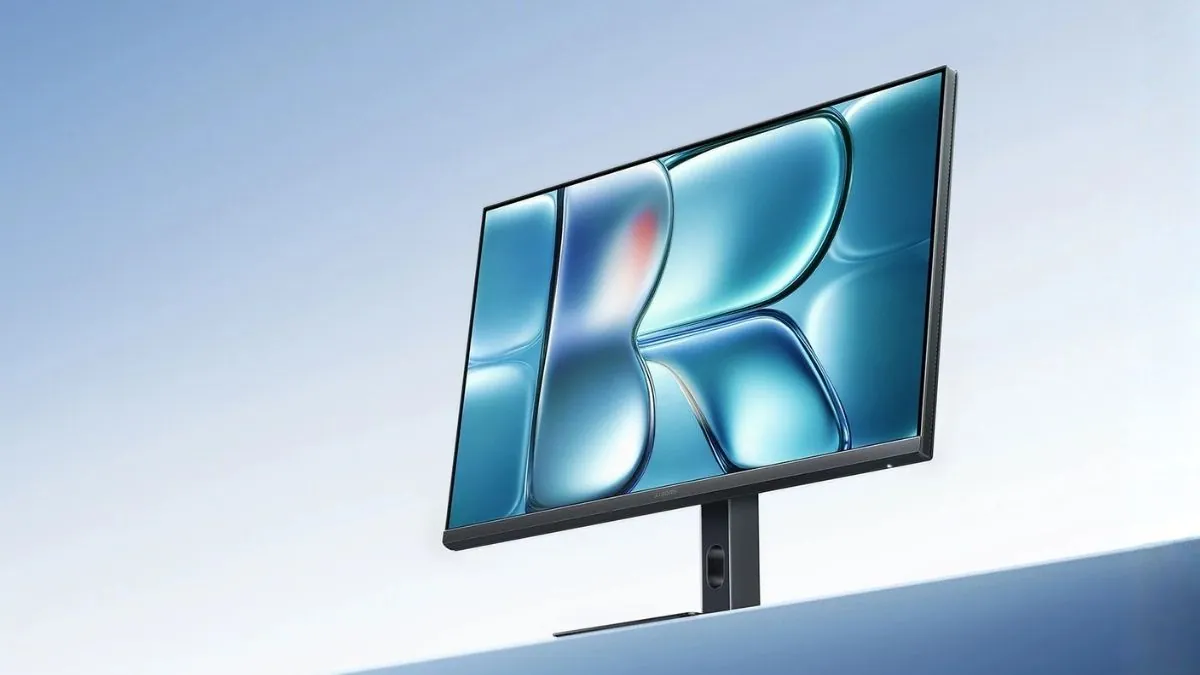
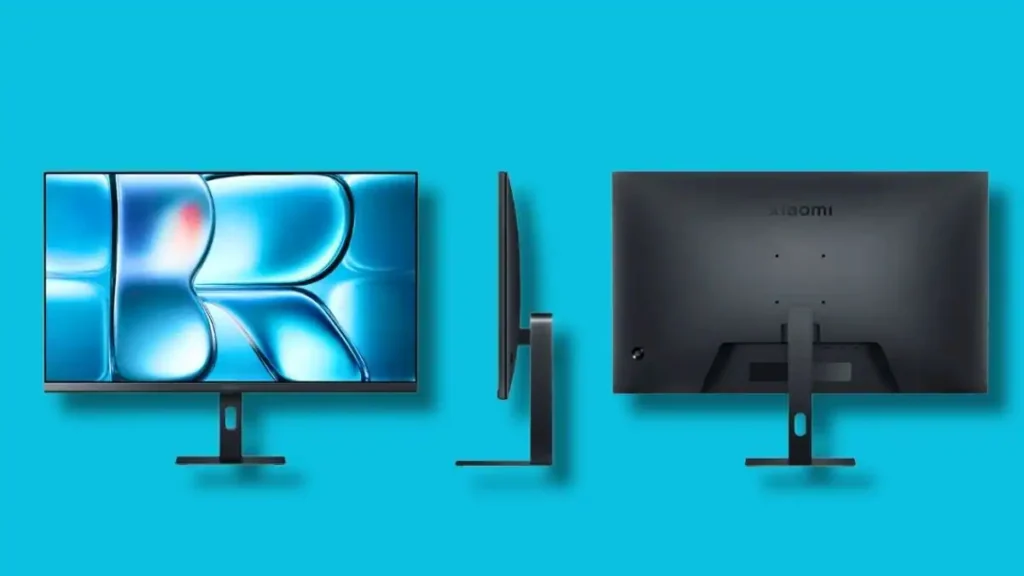
Xiaomi has officially released the 2026 edition of its 2K Monitor A27Qi, introducing higher color accuracy, improved contrast, and a faster refresh rate while keeping the price firmly in budget territory. The new 27-inch QHD display has debuted in Thailand at THB 4,990, positioning it as a serious contender in the increasingly competitive sub-$200 monitor segment.
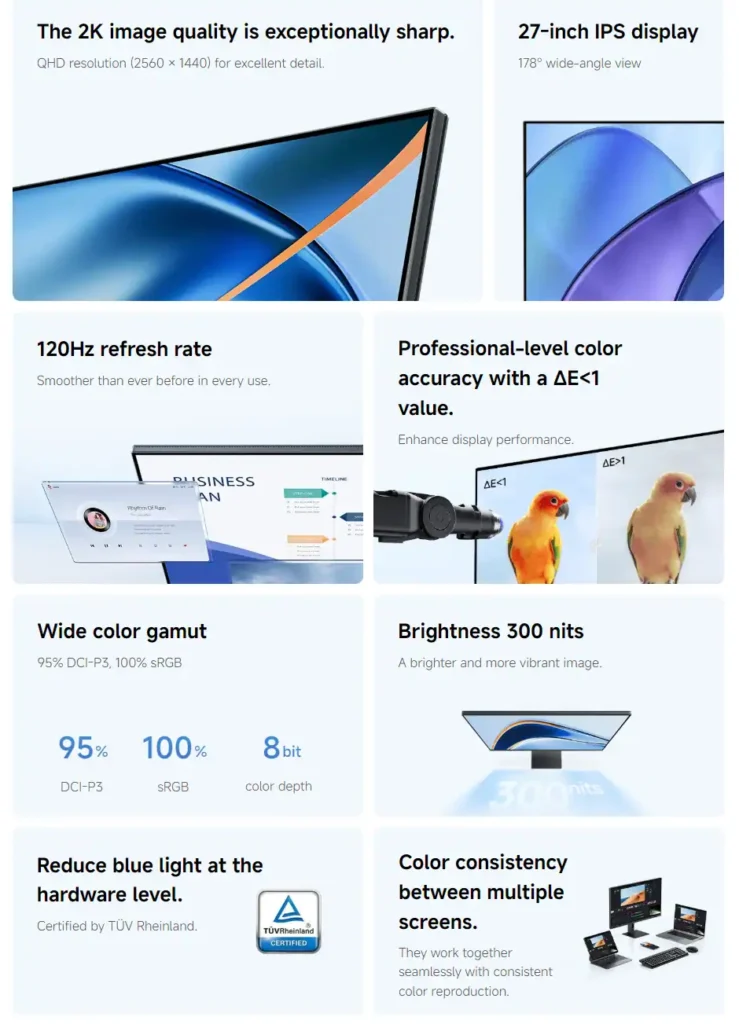
According to Xiaomi’s Thailand product listing, the A27Qi 2026 retains a 2560 × 1440 resolution IPS panel with 178-degree viewing angles and a rated brightness of 300 nits. The panel continues to deliver 6ms gray-to-gray response time and 8-bit color depth, maintaining its focus on productivity and general-purpose use rather than competitive gaming.
At first glance, the specifications appear familiar. The changes this year focus on measurable refinements that affect everyday use rather than headline-grabbing technology shifts.
Compared to the 2025 A27Qi, the 2026 version increases refresh rate from 100Hz to 120Hz and improves contrast to 1,300:1, representing roughly a one-third uplift in contrast performance while maintaining identical resolution and brightness specifications.
The most significant upgrade is factory calibration rated at ΔE<1. Each unit is individually calibrated before shipping to ensure highly accurate color reproduction. In practical terms, Delta E measures the difference between the displayed color and the true reference color, with lower values indicating greater accuracy.
Many monitors in this price range typically ship with ΔE values between 2 and 3. Achieving an average below 1 is more commonly associated with professional displays that cost substantially more. For users working in photo editing, digital design, content creation, or brand-sensitive workflows, this reduces the need for immediate manual calibration.
Contrast has also increased to 1,300:1. While still within IPS panel norms, the bump should deliver slightly deeper blacks and improved tonal separation in darker scenes. Combined with the existing 100 percent sRGB and 95 percent DCI-P3 coverage, the display remains suitable for web-based content, social media production, and general creative work. However, it is not positioned as a true HDR or 10-bit professional mastering monitor.
The refresh rate now reaches 120Hz, up from 100Hz on the previous model. While this is not aimed at competitive esports users, the difference is noticeable in daily productivity. Scrolling through long documents feels smoother, window animations appear cleaner, and multitasking across multiple apps becomes more fluid. Compared to many entry-level 1440p monitors that still ship with 60Hz or 75Hz panels, the jump to 120Hz provides a visible improvement in responsiveness without entering dedicated gaming territory.
Brightness remains rated at 300 nits. This level is adequate for typical indoor environments but may struggle in brightly sunlit offices. Xiaomi recommends using the included HDMI cable to ensure the monitor can operate at its maximum 2560 × 1440 resolution and 120Hz refresh rate, as third-party cables may not always support full bandwidth depending on source hardware.
The panel’s 6ms gray-to-gray response time reinforces its positioning as a productivity and light entertainment monitor rather than a fast-twitch gaming solution.
Xiaomi continues to emphasize eye comfort features. The monitor includes TÜV Rheinland certified hardware-level low blue light technology and DC dimming to reduce flicker.
According to Xiaomi, the hardware-based solution reduces short-wavelength blue light emissions in the 415–455nm range by up to 50 percent while maintaining color accuracy without introducing the yellow tint often associated with software filters. DC dimming adjusts brightness through current control rather than backlight modulation, helping reduce visible flicker during extended work sessions.
Also Read: Best Laptops for Multiple Monitors
Beyond raw specifications, the A27Qi 2026 reflects Xiaomi’s broader ecosystem strategy. The company is increasingly building a cohesive lineup that includes smartphones, tablets, laptops, and desktop accessories. Xiaomi highlights cross-device color consistency across compatible Xiaomi and Redmi hardware when operating in sRGB mode, suggesting that users within its ecosystem may experience more uniform visual output across screens.
Pricing remains central to the monitor’s appeal. At THB 4,990 in Thailand, the 2026 edition carries only a modest increase over its predecessor despite the higher refresh rate, improved contrast, and tighter factory calibration.
In the global QHD market, many budget 1440p office monitors at similar price points offer either standard 60Hz panels, limited color accuracy, or no individual factory calibration. By combining 120Hz refresh rate, 1,300:1 contrast, and ΔE<1 calibration under the sub-$200 bracket, Xiaomi is positioning the A27Qi 2026 closer to mid-range productivity displays rather than entry-level models.
For users upgrading from older 1080p 60Hz monitors, the transition to QHD resolution paired with smoother 120Hz motion represents one of the most noticeable productivity improvements available at this price tier. Text clarity improves, workspace expands, and motion feels more responsive across everyday workflows.
The monitor does not attempt to compete with OLED or Mini-LED displays, nor does it advertise high peak HDR brightness or advanced local dimming. Instead, it sharpens fundamentals that matter for mainstream users upgrading from Full HD panels. For students, remote workers, hybrid office setups, and entry-level creators, the combination of higher resolution, calibrated accuracy, smoother refresh rate, and stable pricing may prove more practical than experimental display technologies.
If Xiaomi maintains similar pricing in wider markets, the A27Qi 2026 could place pressure on other budget QHD manufacturers that rely on basic refresh rates and uncalibrated panels to stay competitive. In a segment where margins are thin and differentiation is limited, incremental but meaningful upgrades may prove more disruptive than dramatic spec overhauls.
Key Specifications
| Display | 27-inch IPS |
| Resolution | 2560 × 1440 (QHD) |
| Refresh Rate | 120Hz |
| Contrast Ratio | 1,300:1 |
| Brightness | 300 nits |
| Response Time | 6ms GtG |
| Color Coverage | 100% sRGB, 95% DCI-P3 |
| Color Depth | 8-bit |
| Color Accuracy | ΔE<1 (factory calibrated) |
| Eye Protection | TÜV Rheinland certified hardware-level low blue light + DC dimming |
| Connectivity Note | Use included HDMI cable for full 1440p at 120Hz |
| Price (Thailand) | THB 4,990 (~$160) |
The 2K Monitor A27Qi 2026 does not redefine the display category. Instead, it refines key performance metrics that users encounter every day. Rather than chasing headline-grabbing technologies, Xiaomi appears focused on measurable improvements in calibration, motion fluidity, and contrast consistency. In a crowded budget QHD market, that emphasis on precision and fundamentals may resonate more strongly than marketing-driven features.
Price and Availability
The Xiaomi A27Qi 2026 price in Thailand is THB 4,990 (~$160). The monitor is currently listed on Xiaomi Thailand’s official website. There is no confirmation yet regarding availability in other regions.
If Xiaomi maintains similar pricing globally, the monitor is expected to remain under the $200 segment in international markets.
Source: Xiaomi