
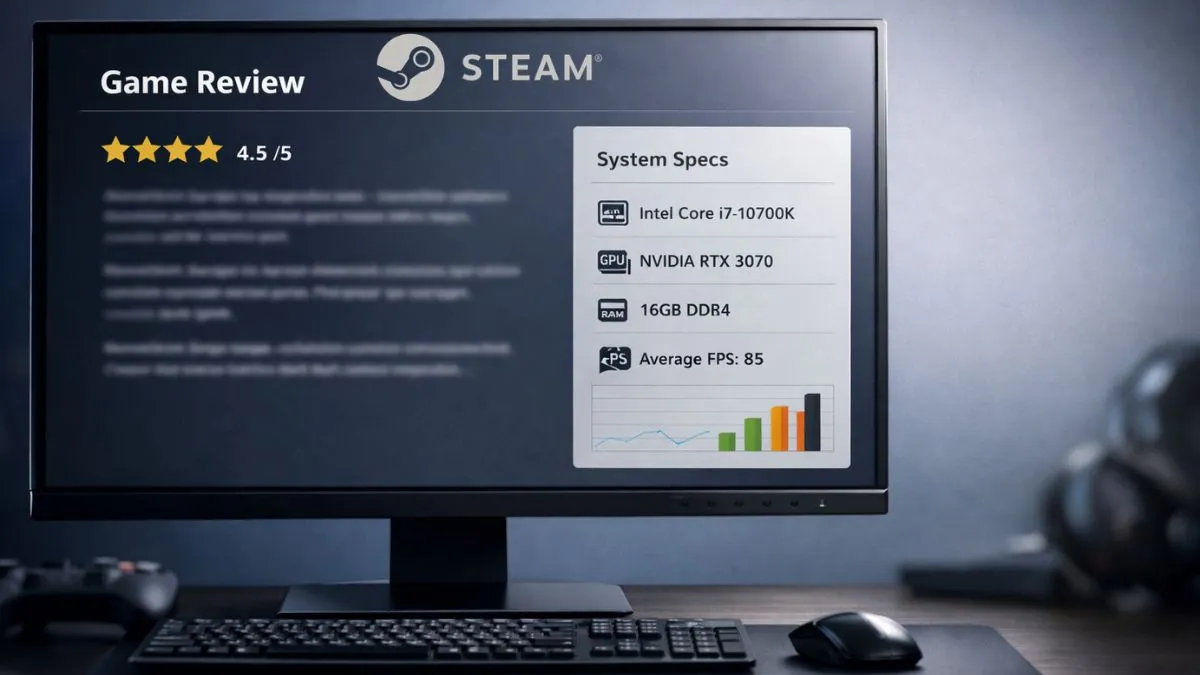
Valve has rolled out a Steam Client Beta update that allows players to attach their PC hardware specifications directly to user reviews, a change designed to add context to performance feedback and improve transparency across game store pages. The update also introduces optional anonymized frame rate data sharing, according to details outlined in the latest beta documentation.
Rolling out now to users enrolled in the Steam Client Beta branch, the feature enables reviewers to automatically append verified system information, including CPU, GPU, and memory configuration, when posting or updating a Steam review. Those using the stable client will gain access once the feature exits beta testing.
The new option appears as a selectable checkbox within the Steam review editor. Instead of manually listing system components inside the body text, users can allow Steam to attach standardized hardware data automatically. The goal is to create a clearer performance context, particularly when players report optimization issues, frame rate instability, or crashes.

Performance-related criticism has long shaped user sentiment on Steam. While some negative reviews highlight legitimate technical flaws, others stem from hardware that falls below a game’s minimum or recommended specifications. By pairing user feedback with attached PC specs, Valve appears to be drawing a clearer distinction between software-level optimization problems and individual system limitations.
Steam reviews have also historically been influenced by coordinated review bombing campaigns. Past controversies involving titles such as Firewatch, Total War: Rome II, Diablo IV, and God of War Ragnarök saw waves of negative reviews tied to external disputes rather than technical performance. While attaching hardware specs will not prevent review bombing, it could strengthen the credibility of performance-focused criticism by grounding it in measurable configuration data.

For developers, the implications extend beyond clearer reviews. Structured hardware metadata attached to user feedback could meaningfully alter post-launch workflows. Instead of parsing anecdotal complaints, studios may be able to identify recurring GPU bottlenecks, CPU limitations, or driver-specific instability patterns more quickly. If certain performance complaints cluster around specific hardware segments, patch prioritization could become more data-driven, potentially shortening hotfix cycles and reducing broad troubleshooting overhead.
The addition of anonymized frame rate telemetry reinforces that direction. Valve states that collected performance data is stored without being connected to individual Steam accounts, though categorized by hardware type. While framed as a compatibility improvement tool, the system effectively expands Steam’s ability to build a large-scale performance intelligence layer across millions of hardware configurations.
At present, anonymized frame rate reporting is focused primarily on devices running SteamOS. SteamOS powers Valve’s Steam Deck and related Linux-based environments, where performance tuning, Proton compatibility layers, and driver optimization remain critical. Aggregated real-world performance baselines could help Valve refine Steam Deck Verified indicators, improve compatibility confidence, and detect optimization gaps specific to Linux-based systems.
Taken together, the review hardware attachment and telemetry features suggest a broader shift toward structured performance transparency within Steam’s ecosystem. PC gaming operates across an unusually fragmented hardware landscape, spanning desktops, laptops, handheld devices, and custom Linux builds. Building a standardized layer of hardware-linked review data and anonymized frame rate metrics may allow Valve to map compatibility trends at scale in ways that traditional storefronts cannot.
In the longer term, such infrastructure could influence how Steam surfaces performance information. Hardware-segmented review filters, GPU-specific compatibility insights, or real-world FPS range indicators on store pages are conceivable evolutions if sufficient telemetry accumulates. As hardware diversity continues to expand, structured performance data may become central to how users evaluate purchase decisions rather than relying solely on static minimum and recommended specification lists.
Prime Day is Live — Shop the Biggest Deals Now
Get ready for exclusive Prime Day savings.
Ages 18–24 can get a 6-month Prime trial for $0.
Claim Your 6-month Prime Trial →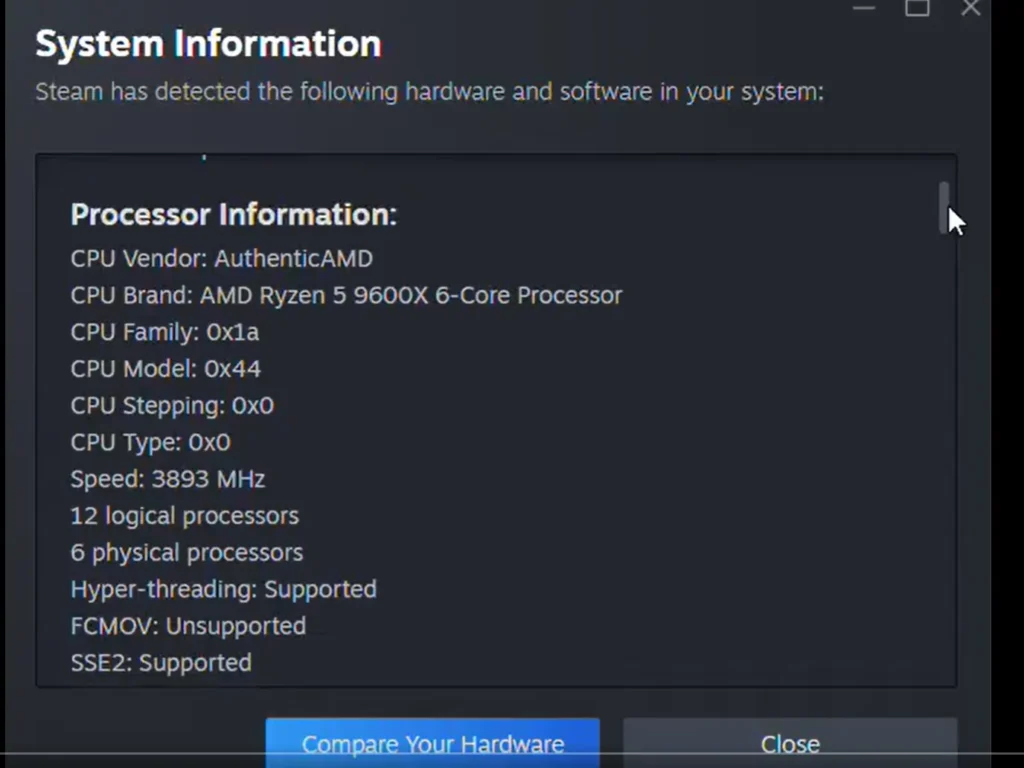
For buyers, the immediate effect is greater clarity. Contextual system information makes it easier to interpret whether a negative review reflects a systemic issue or a configuration mismatch. For developers, the structural impact may be even larger, as aggregated hardware-linked insights could provide faster diagnostic signals during critical launch windows.
Beyond the transparency tools, the beta client also includes interface refinements and bug fixes. Improvements address streaming behavior that previously left downloads throttled after streaming sessions ended, as well as Proton recognition issues in offline mode for users with large libraries. These updates indicate Valve is using the beta cycle not only to test new review infrastructure, but also to refine core compatibility and client stability.
Valve has not confirmed a public release timeline for the PC hardware attachment or anonymized frame rate reporting features outside the Steam Client Beta. If widely adopted, however, the changes could reshape how performance discussions unfold across the world’s largest PC gaming marketplace, strengthening trust in user reviews while quietly building a deeper, data-driven compatibility framework across Windows, Linux, and SteamOS devices.
Source: Steampowered