
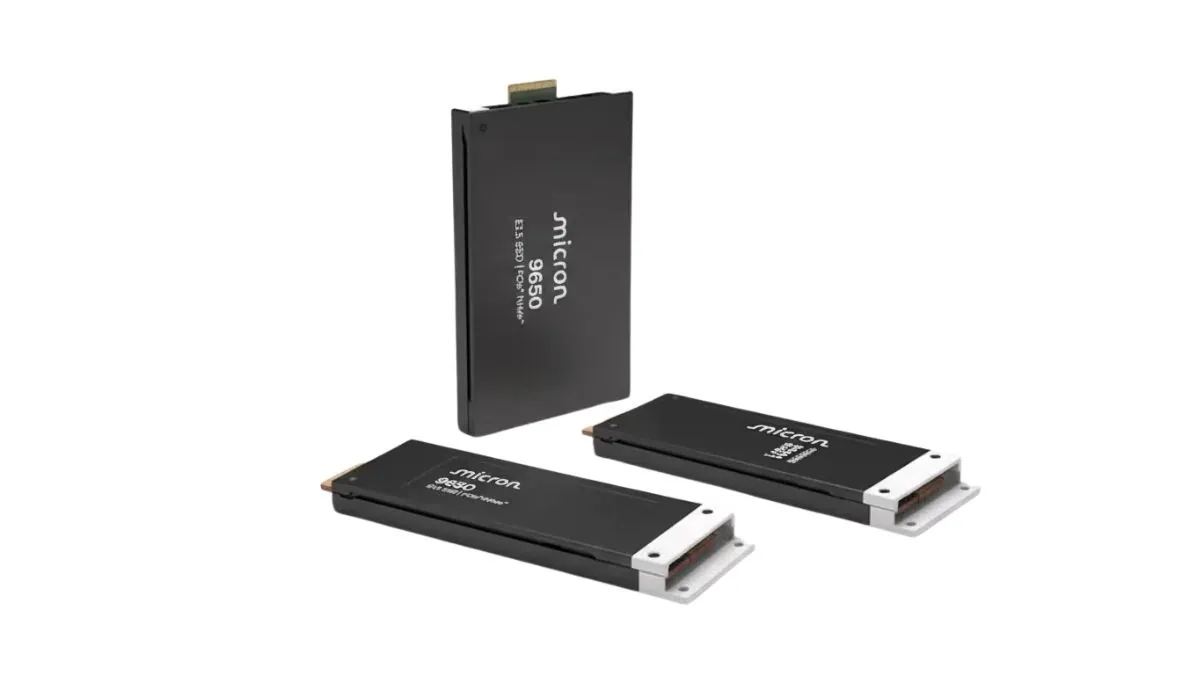
Micron has started shipping its new 9650 NVMe SSD, calling it the world’s first commercially available PCIe 6.0 SSD. The drive can reach up to 28 GB per second in sequential read speeds using a PCIe 6.0 x4 connection. That is about twice the speed of PCIe 5.0 and four times the speed of PCIe 4.0.
This is not a product for home PCs or gaming systems. It is designed for large AI data centers where storage speed can limit how fast powerful GPUs work.
Most headlines focus on the 28 GB per second number. The bigger story is why Micron is releasing a PCIe 6.0 SSD before most servers widely support PCIe 6.0. The answer is simple. AI systems are growing so fast that storage must keep up.
PCIe 6.0 uses a new signaling method called PAM4. Older PCIe versions used NRZ signaling. PAM4 allows twice as much data to be sent in each clock cycle. PCIe 6.0 runs at 64 GT per second per lane. With four lanes in a typical NVMe SSD, that results in about 28 GB per second of usable read bandwidth after encoding overhead.
Here are the confirmed core specifications from Micron’s product materials:
| Specification | Micron 9650 NVMe SSD |
|---|---|
| Interface | PCIe 6.0 x4 |
| Protocol | NVMe 2.x |
| Sequential Read | Up to 28 GB/s |
| Sequential Write | Up to 14 GB/s |
| NAND | 232-layer TLC |
| Form Factors | E1.S, E3.S |
| Target Market | AI and hyperscale data centers |
| Availability | Shipping to select customers |
Micron’s product brief also indicates multi-million class random read performance, enterprise endurance ratings, and multiple capacity options designed for high-density server use. Exact capacities and endurance levels vary by model.
The write speed is about half of the read speed. That is common in high-performance enterprise SSDs that use TLC NAND. In AI systems, read speed is often more important because large training datasets must be streamed continuously to GPUs.
To understand why Micron is moving early, it helps to look at bandwidth scaling across PCIe generations:
| PCIe Generation | Max x4 Throughput | Primary Workload Tier |
|---|---|---|
| PCIe 4.0 | ~7 GB/s | Traditional enterprise, virtualization |
| PCIe 5.0 | ~14 GB/s | High-performance databases, edge AI |
| PCIe 6.0 | ~28 GB/s | Large-scale AI training clusters |
AI training clusters work very differently from traditional business servers. When companies train large language models, huge datasets are read over and over again. Many GPUs request data at the same time. If storage cannot keep up, the GPUs sit idle. That wastes expensive hardware.
In large AI data centers, hundreds or even thousands of GPUs may run together. Faster storage helps keep them busy. A single 28 GB per second SSD can deliver as much bandwidth as two top-tier PCIe 5.0 drives. That means fewer drives may be needed to reach the same total speed. Fewer drives can reduce system complexity and possibly improve rack density.
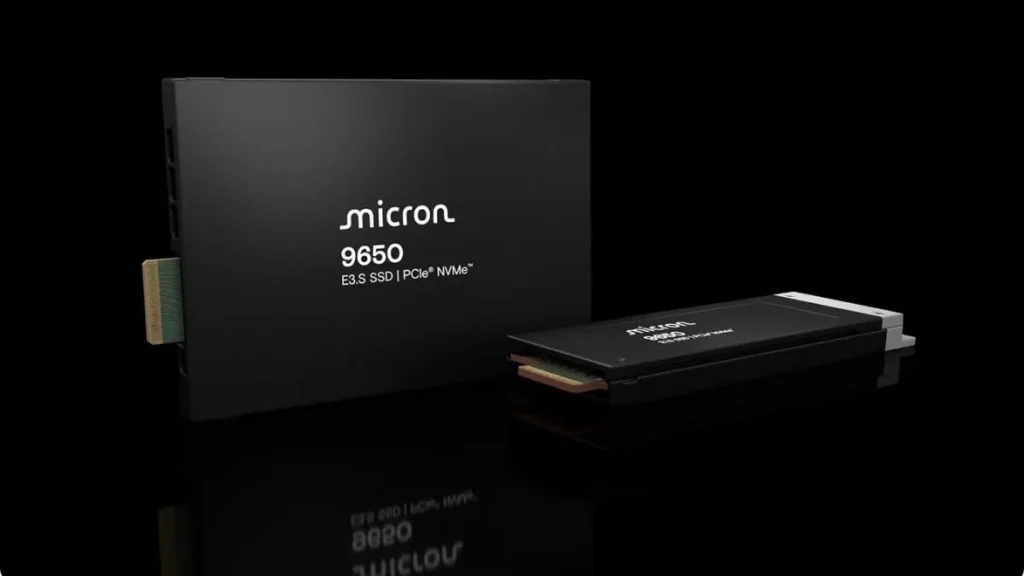
The Micron 9650 comes in E1.S and E3.S form factors. These are common in modern high-density data center servers. They are designed for better airflow and easier scaling compared to older 2.5-inch enterprise drives.
Even though Micron is shipping the drive now, PCIe 6.0 server platforms are still in early stages. Future server CPUs from Intel and AMD are expected to expand PCIe 6.0 support, but broad deployment will take time. PCIe 6.0 requires stricter signal integrity rules and more careful motherboard design because PAM4 signaling is more complex than previous PCIe generations.
Micron says the drive is shipping to select customers. That usually means hyperscale cloud providers and large AI operators are testing and qualifying the hardware before wider adoption.
Also Read: What is SSD: Everything You Need To Know
Micron has not publicly shared detailed pricing. Independent third-party benchmarks are not yet available. Power consumption under heavy AI workloads will also matter, since data centers must manage heat and energy costs carefully.
For most enterprise workloads such as databases, virtualization, and general cloud services, PCIe 5.0 is already fast enough. PCIe 6.0 mainly benefits large AI training environments that need very high sustained bandwidth.
Consumers will not see PCIe 6.0 SSDs in typical desktop PCs anytime soon. Client platforms that support PCIe 6.0 are still years away, and most home workloads do not need this level of speed.
Micron’s 9650 is important because it shows that PCIe 6.0 storage is no longer just a future standard. It is now real hardware shipping to customers. As AI systems continue to grow, storage must scale alongside GPUs and high-speed networking.