
A group of hardware enthusiasts has managed to run Intel’s OEM-only Bartlett Lake processor on a consumer Z790 motherboard after modifying the BIOS. This was not supposed to work on this platform. Earlier attempts could only reach the boot screen, but now the system can fully load Windows and run benchmarks. The result is a Cinebench R23 score that goes slightly above the Ryzen 9 9900X3D. The result looks impressive, but the full story shows several limits and risks.
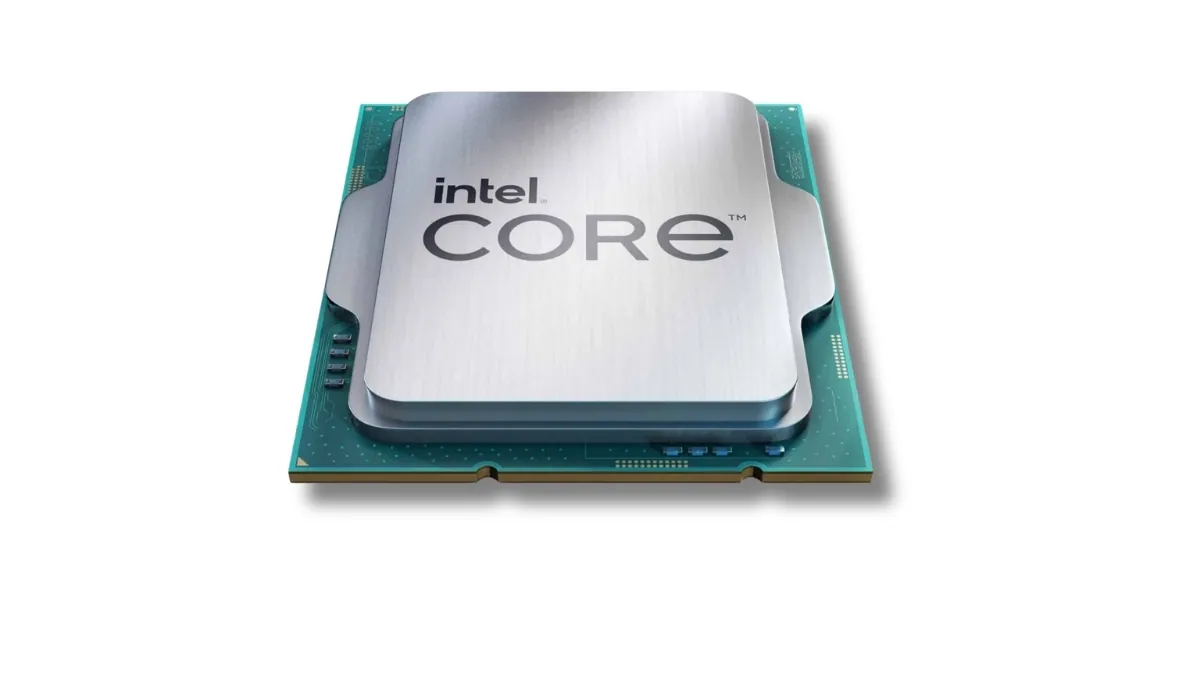
The processor used is called Core 9 273QPE. It is not a normal desktop CPU. It is made for special systems like edge devices and industrial machines. Unlike regular desktop processors, it does not use a mix of performance and efficiency cores. Instead, it uses only performance cores. It has 12 performance cores and 24 threads, which changes how it behaves in heavy workloads.
Getting this CPU to work on Z790 required a deep BIOS change. The processor fits into the LGA 1700 socket, so it can be installed physically. The real problem is firmware. Consumer motherboards are designed to support a maximum of eight performance cores. When the system tried to use more than eight, it crashed. The modded BIOS removes this limit and allows all 12 cores to run properly.
| Platform Behavior | Standard Z790 | Modified Z790 |
|---|---|---|
| Max P-core support | 8 cores | 12 cores enabled |
| CPU detection | Fails beyond limit | Fully detected |
| Boot result | Crash or black screen | Stable Windows boot |
| Benchmark support | Not possible | Fully working |
Once the BIOS issue was fixed, users started testing performance. The chip reached over 33,000 points in Cinebench R23 multi-core. This happened when all cores were running at about 5.4 GHz. Earlier runs showed much lower scores because the CPU was not stable.
| Test Scenario | Score | Clock Speed | Power Draw | Notes |
|---|---|---|---|---|
| Initial unstable run | ~25,000 | ~4.3 GHz | 320W+ | Throttling due to voltage drop |
| Tuned stable run | ~33,111 | 5.4 GHz | ~286W | Voltage locked at 1.35V |
| Additional run | ~33,818 | 5.4 GHz | Not specified | Similar tuning |
One tested setup used a high-end Z790 motherboard with 64GB of DDR5 memory running at 5600 MT/s. This shows that the result depends on strong hardware and careful tuning, not just the CPU alone.
When compared with other processors, the result is not as simple as it looks. The score is slightly higher than the Ryzen 9 9900X3D in this test, but it does not clearly beat other high-end desktop CPUs in every case. It performs well in this one benchmark, but that does not mean it is better overall.
| CPU | Core Design | Cinebench Behavior | Real Use |
|---|---|---|---|
| Core 9 273QPE | 12 performance cores | Very strong multi-core | High power use |
| Core i7 class CPUs | Mixed cores | Balanced performance | Better efficiency |
| High-end desktop CPUs | Mixed cores | Similar or higher | More stable platform |
| Ryzen X3D CPUs | Cache focused | Slightly lower score | Strong gaming |
The reason for the strong score is simple. Cinebench uses all cores heavily, and this CPU runs 12 fast cores at high speed. This makes it very good at this type of test. However, real-world use is different.
Some users were able to run games on this setup, which shows it can work outside benchmarks. Still, modern software is built for hybrid CPUs. Processors that use both performance and efficiency cores can handle different types of tasks better. CPUs with large cache also perform better in games.
| Workload Type | Bartlett Lake Behavior | Other CPUs |
|---|---|---|
| Rendering | Very strong | Competitive |
| Gaming | Works but not ideal | Better results on gaming CPUs |
| Mixed tasks | Less efficient | Hybrid CPUs perform better |
| Power use | Very high | More efficient options available |
Power is one of the biggest concerns. The CPU uses around 286W when stable, and more than 320W in earlier tests. This is very high for a 12-core chip. The main issue is voltage drop under load, known as Vdroop. Users fixed this by locking the voltage at 1.35V and adjusting settings in BIOS. This improved stability but kept power usage high.
Another important point is that this setup is not officially supported. The CPU was never meant to run on consumer motherboards. The BIOS changes are complex and risky. There is no guarantee that the system will stay stable over time.
| Category | Status |
|---|---|
| Official support | No |
| BIOS modification | Required |
| Stability | Not guaranteed |
| Warranty | Not covered |
| Repeat results | Not certain |
This experiment helps show how Intel designs different types of processors. A pure performance-core design works well in controlled environments where steady performance matters. But when used on a normal desktop platform, the downsides become clear. Power use increases, compatibility becomes difficult, and overall balance is lost.
Also Read: Best Laptops for Deep Learning, ML, and AI (2026): Tested for Real Workloads