
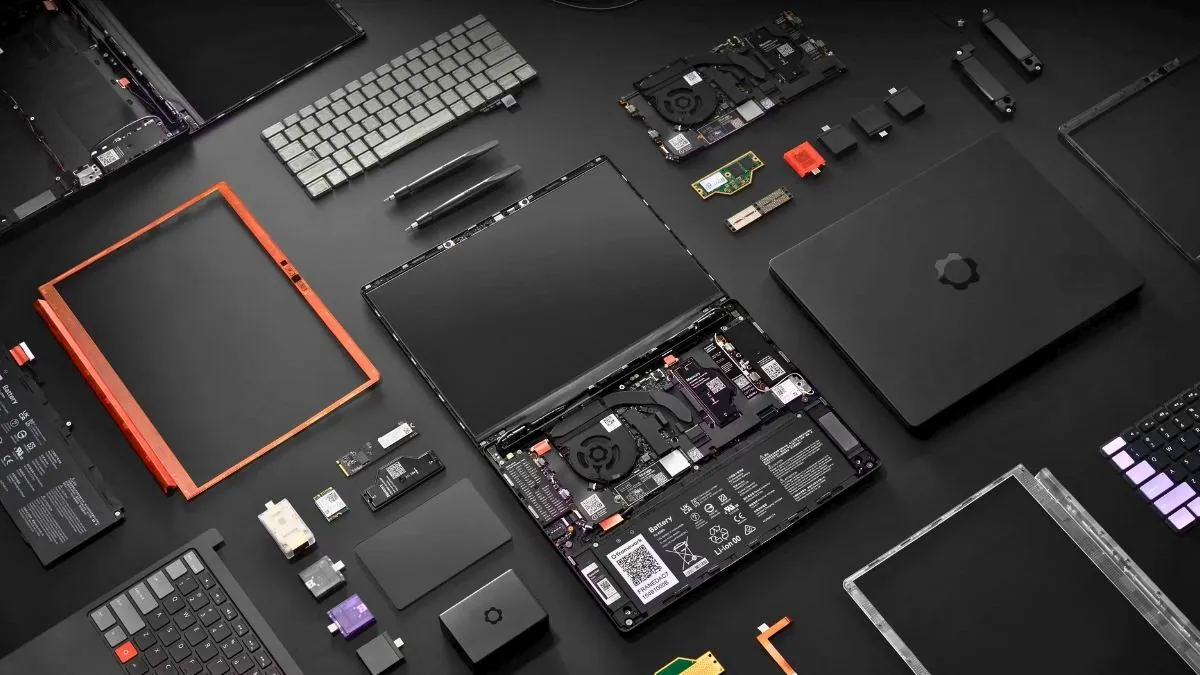
Framework has introduced the Laptop 13 Pro, marking the first full redesign of its modular 13-inch platform after years of incremental updates. The new model focuses heavily on efficiency, battery life, and modern hardware architecture while preserving the repairable and upgradeable foundation that defines the brand.
Pre-orders are now live starting at $1,199 for the DIY edition and $1,499 for pre-built configurations, with shipments scheduled for June.
This update addresses one of the most consistent criticisms of earlier models: battery life, while also pushing the device closer to premium ultrabook territory in both build quality and performance.
Core Ultra Series 3 Brings New Architecture and Efficiency Gains
Framework equips the Laptop 13 Pro with Intel Core Ultra Series 3 processors, built on a tiled architecture that separates CPU, GPU, and I/O components across different dies, part of Intel’s newer Core Ultra platform evolution. This approach improves power efficiency and workload distribution compared to previous generations.
Higher-end configurations scale up to 16 cores, combining performance, efficient, and low-power efficient cores. These low-power cores play a key role in extending battery life during lighter workloads such as video playback.
Integrated Intel Arc graphics with up to 12 Xe cores are included in higher-tier variants, offering significantly stronger iGPU performance than previous Framework models.
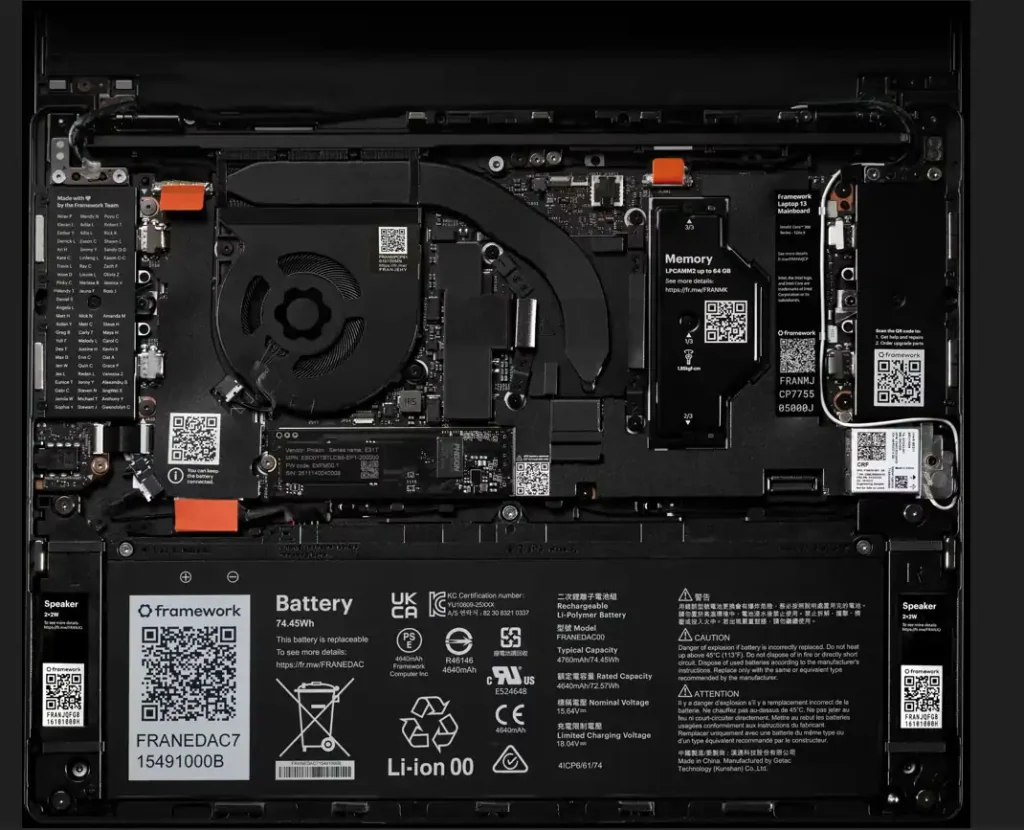
The platform also introduces PCIe Gen 5 support for modern NVMe SSDs, along with Wi-Fi 7 connectivity using Intel’s BE211 module. Storage remains user-replaceable via a standard M.2 2280 slot, with support for high-capacity drives.
LPCAMM2 Memory Enables Upgradeable LPDDR5X
One of the most important hardware changes is the transition to LPCAMM2 memory.
This new format allows LPDDR5X memory to be used in a modular, replaceable design. Traditionally, LPDDR memory is soldered to the motherboard, limiting upgrades. LPCAMM2 removes that limitation while still delivering higher bandwidth and improved power efficiency.
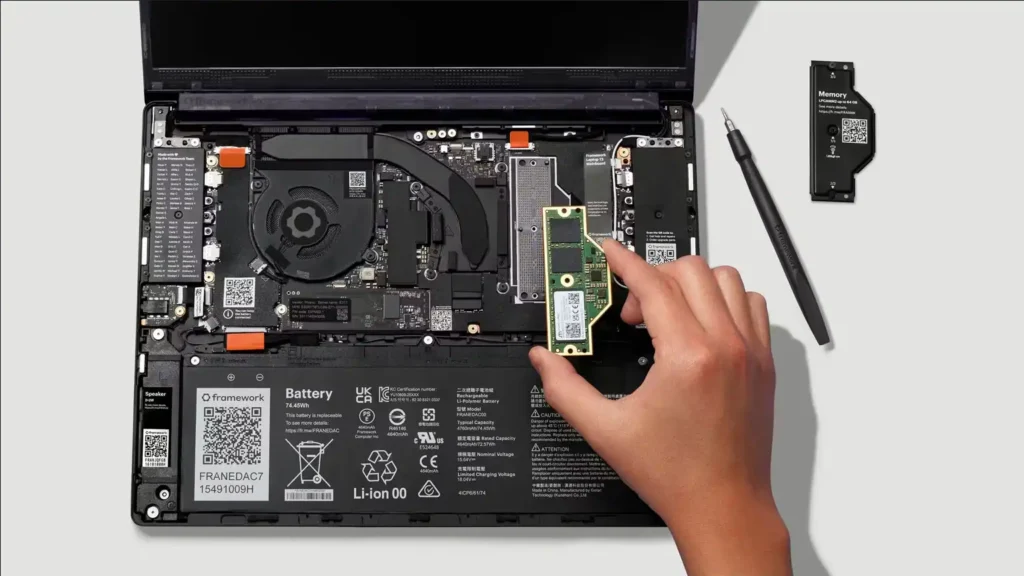
Memory speeds reach up to 7467 MT/s, with capacities up to 64GB at launch. This shift allows the system to balance efficiency and upgradeability, something rarely seen in thin-and-light laptops.
Larger 74Wh Battery Targets All-Day Usage
Battery capacity increases to 74Wh, a significant jump over previous generations. Combined with the efficiency improvements of Core Ultra Series 3 and LPDDR5X memory, Framework claims over 20 hours of battery life during 4K video streaming.
These figures are based on controlled testing conditions, including moderate brightness and system optimization settings. Real-world usage will vary, but the improvement represents a major step forward compared to earlier Framework laptops, which often lagged behind competitors in endurance.
The laptop also ships with a 100W GaN USB-C power adapter, enabling faster charging for the larger battery.
New 13.5-Inch 2.8K Touch Display
The Laptop 13 Pro introduces a newly developed display panel designed specifically for productivity workloads.
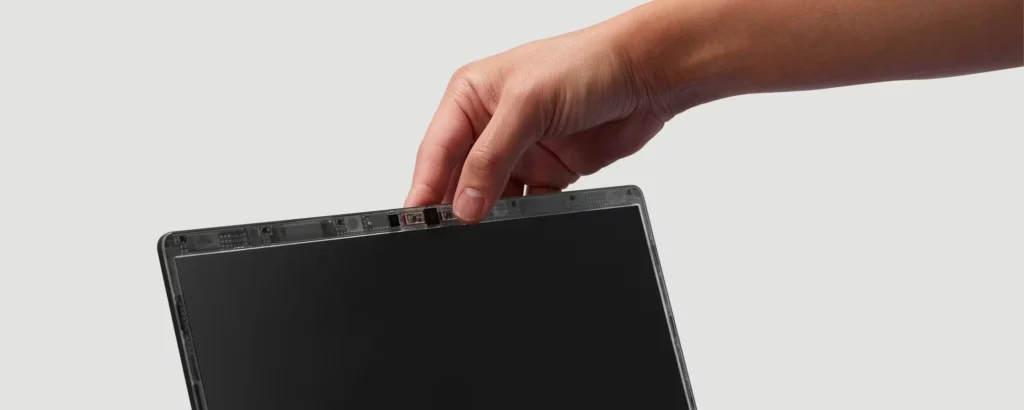
Key specifications include:
- 13.5-inch display with 3:2 aspect ratio
- 2880 × 1920 resolution
- 30Hz to 120Hz variable refresh rate
- Up to 700 nits brightness
- 100% sRGB coverage
- Matte anti-glare finish
- Touchscreen support for the first time on the 13-inch model
The 3:2 aspect ratio continues to favor coding, document work, and vertical content viewing, while the higher brightness and refresh rate improve usability across different environments.
CNC Aluminum Chassis and New Input System
Framework has redesigned the chassis using fully CNC-machined 6063 aluminum, improving structural rigidity while maintaining portability.
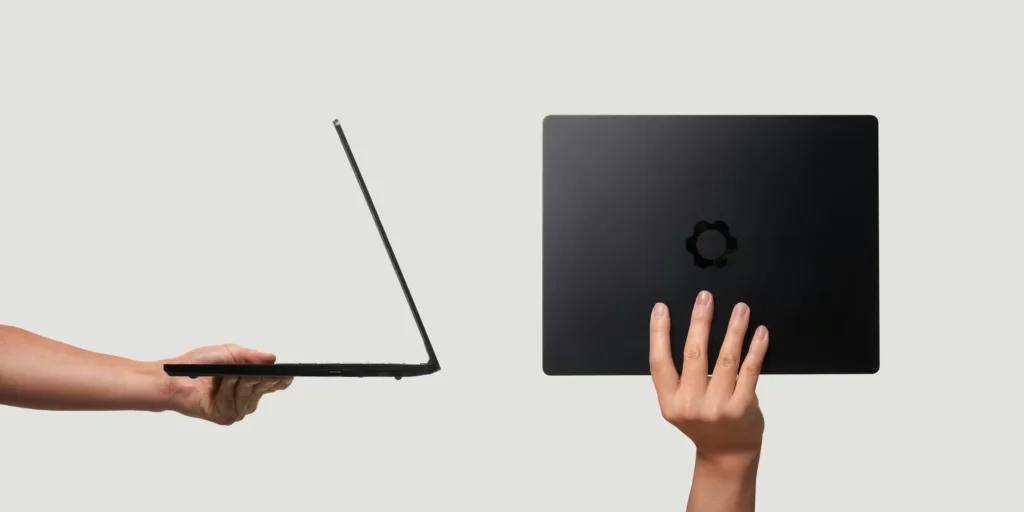
The laptop measures 15.85 mm in thickness and weighs around 1.4 kg (3.08 lbs), keeping it competitive with other premium ultrabooks like the Lenovo ThinkPad X13 Gen 7.
A new haptic touchpad replaces the traditional mechanical design, using piezoelectric feedback to provide consistent click response across the surface. This change also helps free up internal space for the larger battery.
Additional refinements include:
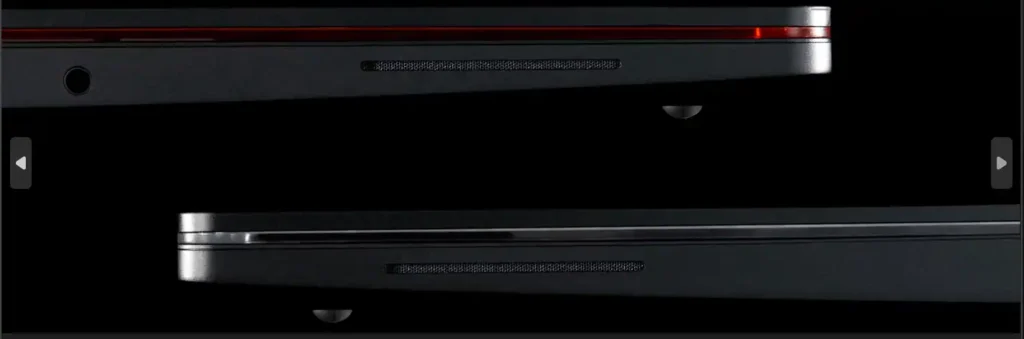
- Side-firing speakers with Dolby Atmos support
- Improved hinge mechanism
- Updated expansion card latch system
Upgradeability Remains Core to Framework’s Design
Despite the structural redesign, Framework continues to support cross-generation compatibility for several components.
- Mainboards remain interchangeable with previous Laptop 13 models
- Display modules can be upgraded across generations
- Storage uses standard M.2 2280 SSDs
- Ports remain modular through the Expansion Card system
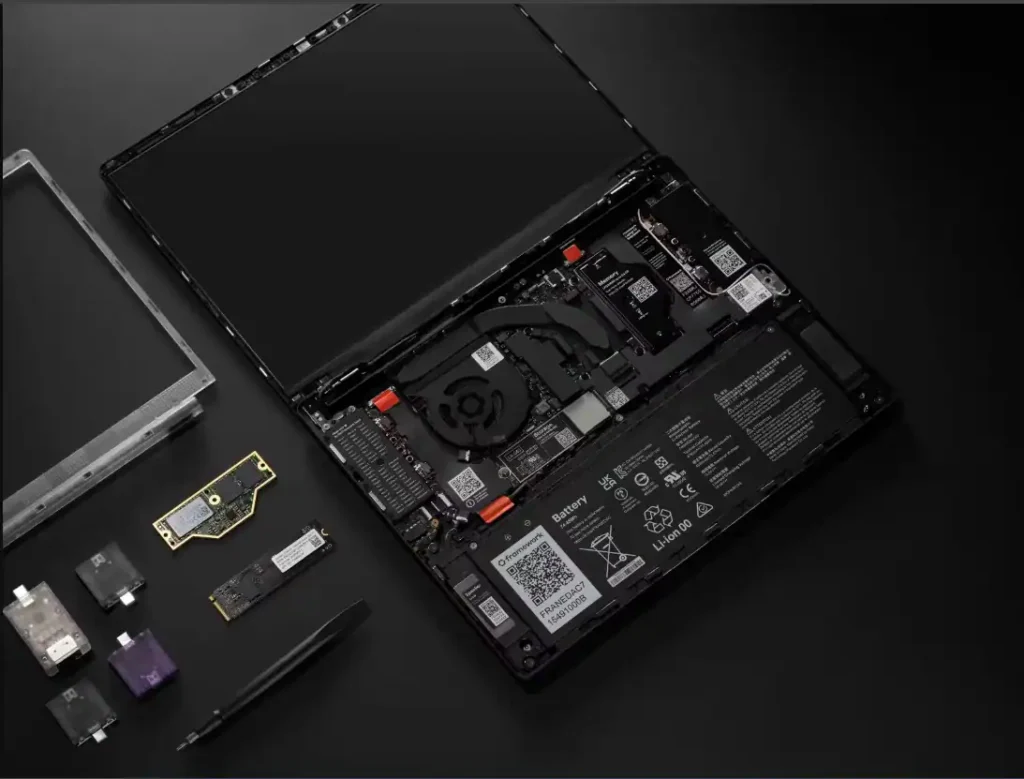
However, the new chassis, battery, and input cover are not backward compatible due to internal layout changes required for the larger battery and haptic touchpad.
Linux Support and OS Flexibility
Framework continues to position the Laptop 13 Pro as a Linux-focused system.
It is the company’s first Ubuntu-certified laptop and is available with Ubuntu pre-installed. Support extends across multiple Linux distributions, along with firmware updates delivered through LVFS.
Windows 11 configurations are also available, along with DIY editions that allow users to install their preferred operating system.
Pricing and Availability
- DIY Edition starts at $1,199
- Pre-built configurations start at $1,499
- Higher-end variants increase pricing depending on CPU and memory selection
- Shipments begin in June
Source: Framework