
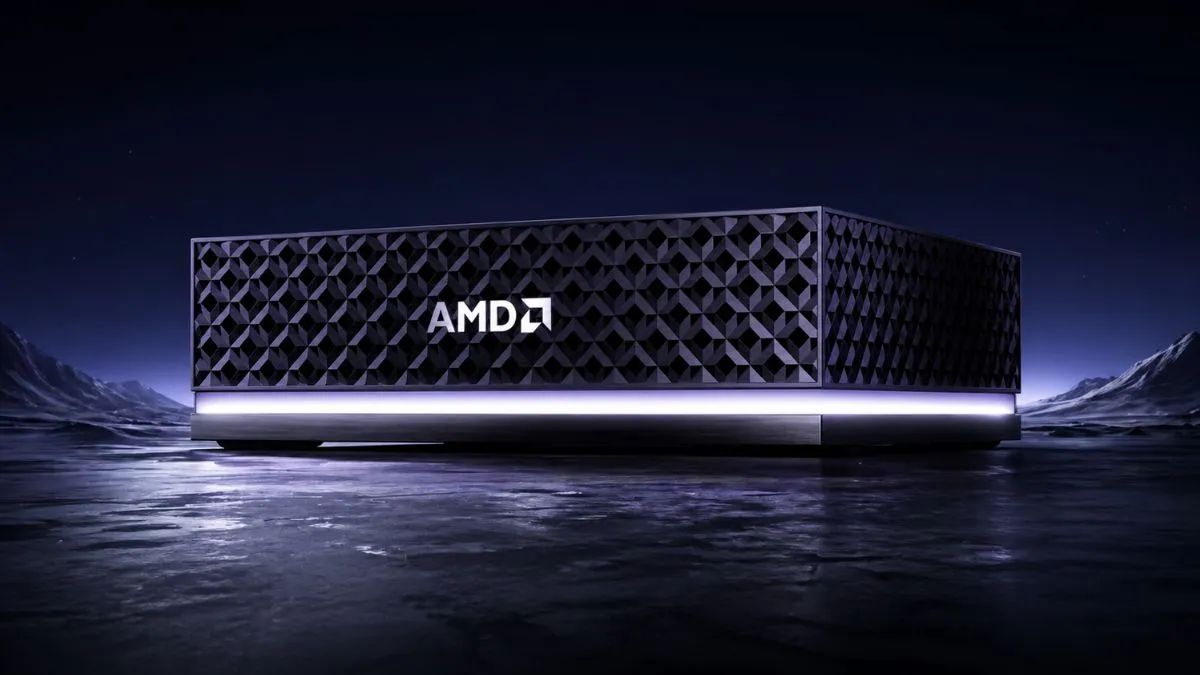
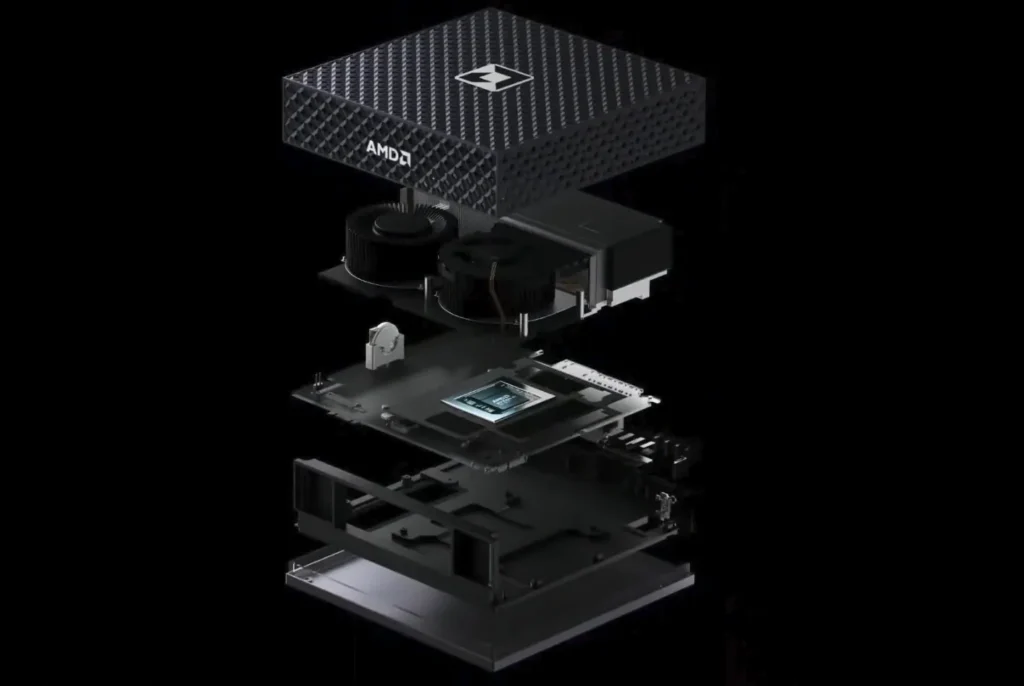
AMD’s Halo Box AI mini PC has launch again in new Linux driver patches, pointing to a Strix Halo platform that is getting close to launch. The latest update does not list full hardware specifications, but it shows clear progress and a level of readiness that usually comes late in development.
The patch introduces a new driver called amd_halo_led, which controls the RGB light bar on the device. It integrates with the Linux LED multi-color framework and exposes sysfs controls, allowing brightness and color values to be adjusted directly from the operating system. The lighting is split into three independent RGB channels, so each section can be tuned separately rather than being locked to a single color profile.
This kind of feature typically arrives after core hardware work is complete, after stages focused on CPU development detailed in Intel Core Ultra 200S Plus desktop CPUs. Early development usually focuses on CPU, GPU, memory stability, and firmware. The presence of a dedicated lighting driver suggests that those core layers are already stable, with development now moving toward polish and user-facing features.
Another detail that stands out is the repeated appearance of the name “AMD Halo Box” throughout the code. Internal naming often reflects final branding before public confirmation, and the consistency here points to Halo Box as the likely retail name. AMD has not confirmed this yet, but the naming pattern is hard to ignore.
The Halo Box is based on AMD’s Ryzen AI Max platform, part of the Strix Halo lineup first shown at CES 2026, with earlier coverage in Ryzen AI Max platform. Unlike typical mini PCs built for general use, this device targets local AI workloads. AMD has already highlighted support for ROCm and open-weight models, allowing developers to run AI tasks directly on the machine without depending on cloud services.
This places the Halo Box in the same category as compact AI workstations like NVIDIA’s DGX Spark and Dell’s GB10, alongside compact systems such as Minisforum M1 Lite mini PC. These devices are built for developers, researchers, and professionals who need local access to AI models, faster iteration, and more control over data. The focus is not on everyday computing, but on running and testing AI workloads directly on the desktop.
The timing of the driver update is also important. AMD has scheduled its Advancing AI 2026 event for July in San Francisco, and this is now the most likely stage for a full reveal, following earlier AI announcements covered in AMD Ryzen AI desktop launch. The appearance of Linux support ahead of that event suggests that the platform is already in a mature state and moving toward final release.
AMD first introduced the Halo Box concept earlier this year but has shared very few details since then. These driver updates are now filling in some of the gaps, showing steady progress behind the scenes. Each patch confirms that the device is still active in development and moving closer to launch.
The Halo Box has not been officially announced with full specifications yet, but the direction is clear. AMD is preparing a compact AI-focused machine aimed at local workloads, and the steady flow of Linux support points to a product that is close to release.
Source: Phoronix