
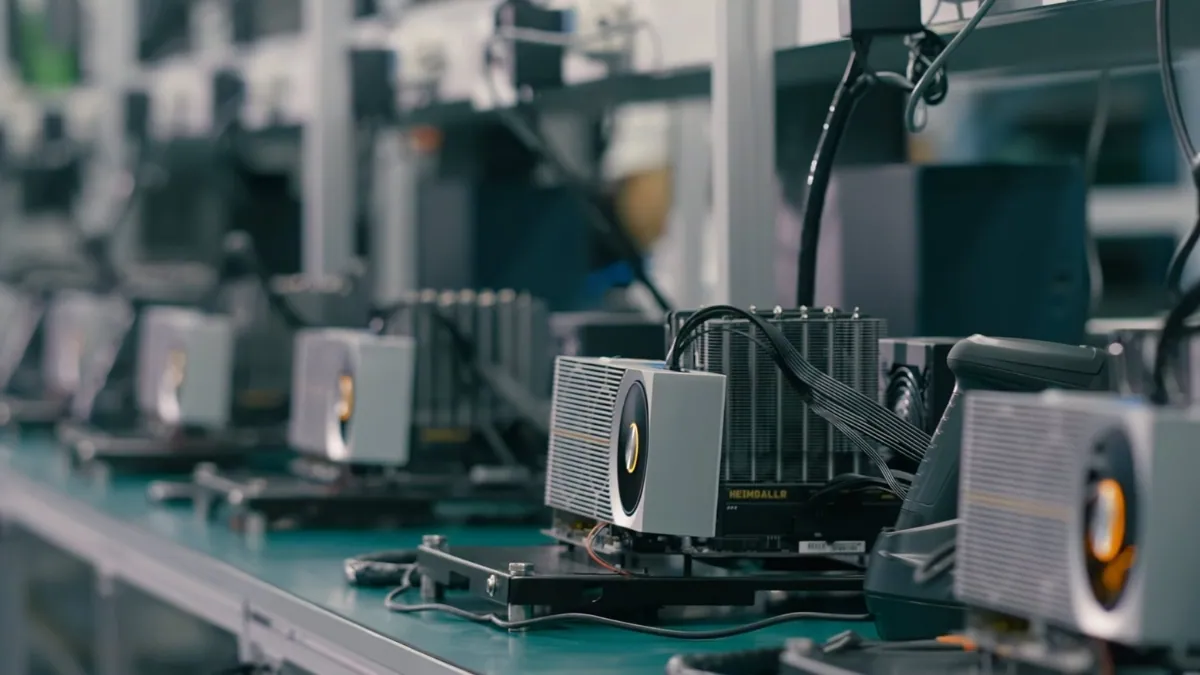
Lisuan Technology has confirmed that its first gaming graphics card, the Lisuan 7G100, will go on sale in China on May 20. The company has also shown videos of its factory where the card is being built and tested, which means this is not just a demo product. It is a real GPU that is ready for retail.
This launch is important because it shows progress in China’s effort to build its own graphics hardware. For years, most local GPU projects did not reach full market release. The 7G100 is different because it comes with modern features, wide platform support, and certified drivers.
The card has received Microsoft WHQL certification for Windows 11. This means the driver meets basic standards for stability and compatibility. However, this does not guarantee strong gaming performance. Real games depend on how well the driver handles shaders, game engines, and frame timing. That part still needs to be tested after launch.
The 7G100 is based on Lisuan’s in-house TrueGPU design and is built on a 6nm process. The company says the architecture is fully developed internally, but it has not shared deep technical details like cache structure or scheduling methods. Because of this, it is still hard to compare efficiency with established GPU designs.
| Specification | Lisuan 7G100 |
|---|---|
| Architecture | TrueGPU (in-house) |
| GPU Die | 7G106 |
| Process Node | 6nm |
| Memory | 12GB GDDR6 |
| Memory Bus | 192-bit |
| TMUs / ROPs | 192 / 96 |
| TDP | 225W |
| Power Connector | Single 8-pin |
| Interface | PCIe 4.0 x16 |
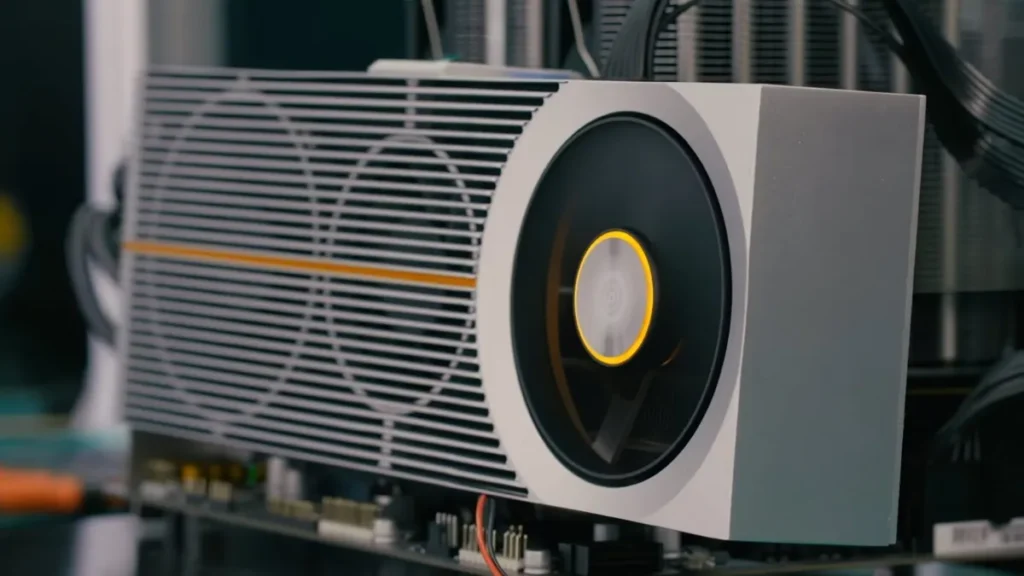
| Cooling | Triple-slot, triple-fan |
| Outputs | 4× DisplayPort 1.4a |
| API Support | DirectX 12, Vulkan 1.3, OpenGL 4.6, OpenCL 3.0 |
| OS Support | Windows, Ubuntu, UOS, Kylin |
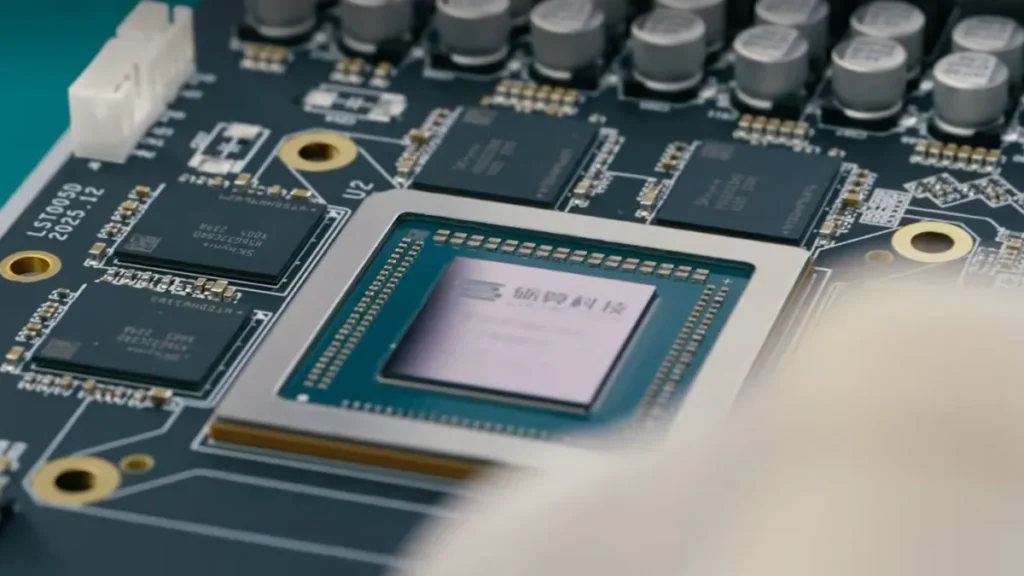
The memory setup stands out. A 192-bit bus with 12GB GDDR6 can provide good bandwidth, which helps in games that use large textures or high resolution assets. But bandwidth alone is not enough. Modern GPUs depend a lot on cache and compression, and those details are still unknown.
The media and display support is also strong. The card supports 8K at 60Hz with HDR, along with FreeSync and DSC. It can encode AV1 video up to 4K30 and HEVC up to 8K30. It can also decode HEVC at 8K60. This makes it capable for modern displays and video workloads.
Power usage is one of the biggest trade-offs. At 225W, the card uses more power than many GPUs in the same performance class. This means more heat and larger cooling needs. It may also result in lower efficiency compared to more mature designs.
The company has shared benchmark results based on synthetic tests. These tests measure raw GPU power but do not reflect real gaming performance.
| 3DMark Steel Nomad Benchmark | Score |
|---|---|
| RX 9060 XT | 38254 |
| RTX 5060 | 37402 |
| Arc B580 | 36695 |
| Arc B570 | 31328 |
| RTX 4060 | 28558 |
| Lisuan 7G106 | 26800 |
| 3DMark Fire Strike Benchmark | Score |
|---|---|
| RX 9060 XT | 3717 |
| RTX 5060 | 3138 |
| Arc B580 | 3062 |
| Arc B570 | 2644 |
| RTX 4060 | 2305 |
| Lisuan 7G106 | 2256 |
| 3DMark Fire Strike Benchmark | Score |
|---|---|
| RX 9060 XT | 3717 |
| RTX 5060 | 3138 |
| Arc B580 | 3062 |
| Arc B570 | 2644 |
| RTX 4060 | 2305 |
| Lisuan 7G106 | 2256 |
| Geekbench OpenCL Benchmark | Score |
|---|---|
| RTX 5060 Ti | 139241 |
| RTX 4060 Ti | 129826 |
| RTX 5060 | 120918 |
| Lisuan 7G106 | 111290 |
| RTX 4060 | 101028 |
| RX 9060 XT | 87653 |
These scores suggest that the GPU is close to midrange performance in raw compute tasks. However, games behave very differently. Real gaming depends on drivers, API handling, and game-level tuning. This is where new GPU platforms usually take time to improve.
The company says the card supports more than 100 games at launch. These include popular titles like Cyberpunk 2077 and Elden Ring. This shows that the GPU can run modern games, but performance and stability in each title will need real testing.
Another key feature is platform support. The 7G100 works with a wide range of CPUs, including both global and domestic platforms such as Loongson, Phytium, and Zhaoxin. This makes it useful for building complete systems without relying on foreign hardware.
Also Read: Best Laptops for Graphics Design
From a buyer point of view, the 7G100 is an early-stage product. It brings modern features and real availability, but its long-term performance will depend on driver updates. People who want a stable and fully optimized gaming experience may want to wait for independent reviews and software improvements.
Pricing has not been announced yet. This will play a major role in how competitive the card is in the market.
Source: Lisuan Tech