
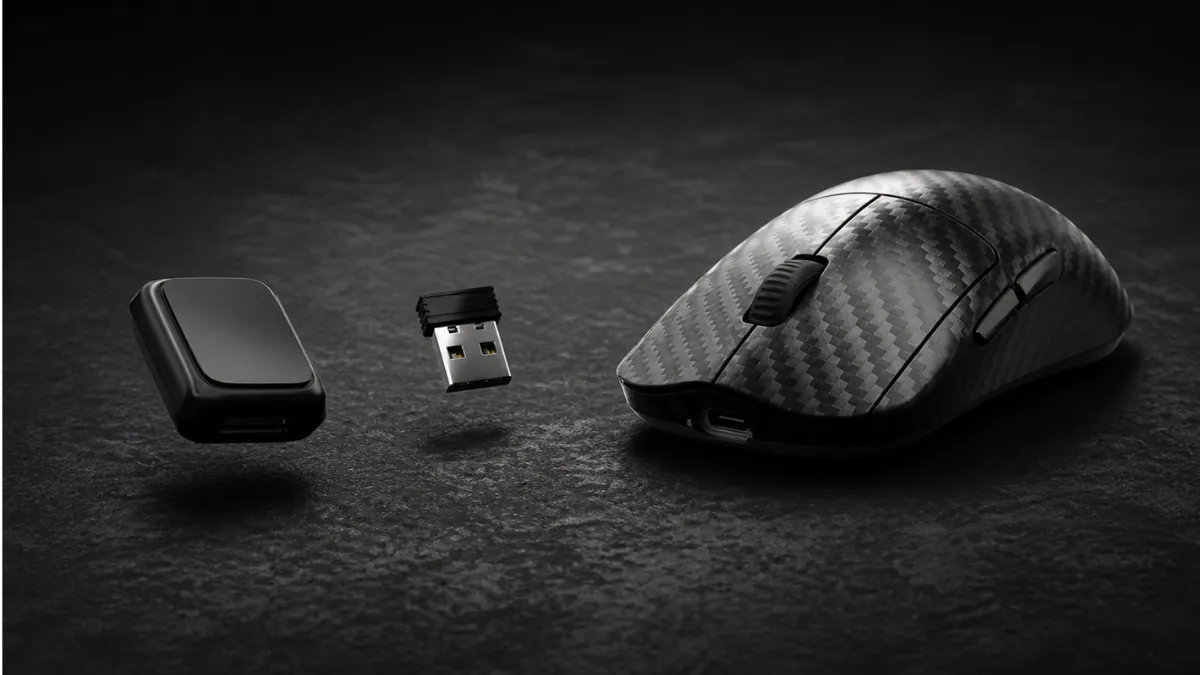
Mionix is back in the spotlight with a serious play for competitive gamers. The company has introduced the Avior Air Carbon Fiber, a premium wireless gaming mouse built around a 42-gram ultralight design, native 8K polling, and a carbon fiber shell aimed squarely at esports performance.
The Avior Air Carbon Fiber isn’t just another lightweight mouse, especially compared to devices like the Attack Shark X11 Ultra Carbon Fiber that also focus on ultralight construction. It shows where gaming gear is heading right now, faster and more responsive, and finally able to match wired performance without a cable. With 8,000Hz wireless polling over 2.4GHz and an ultra-low claimed latency of just 0.125ms, Mionix is basically saying this could be one of the fastest wireless gaming mice you can buy today.
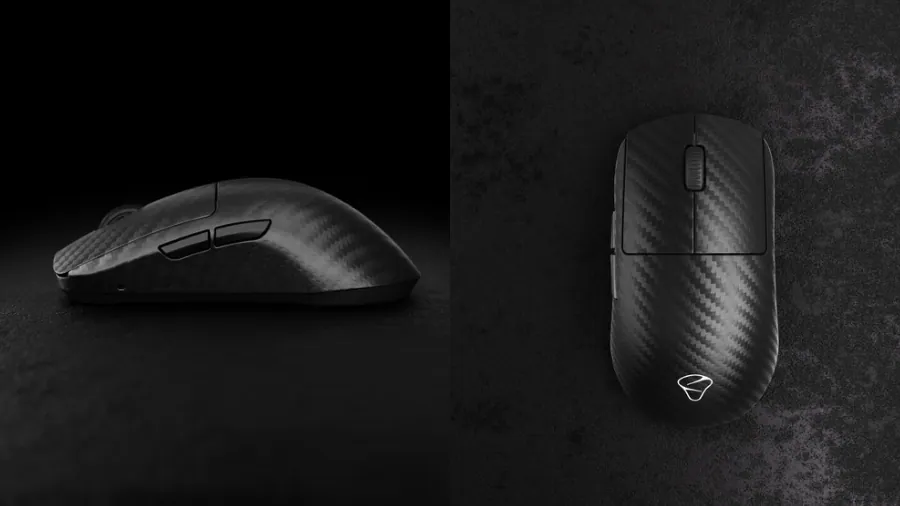
The mouse has a hand-woven carbon fibre shell, according to official product details and launch materials. This preserves structural integrity while keeping the weight at about 42 grams. This puts it in the same lightness category as the best esports mouse, but with a higher-end material approach that is still rare in this market, even among recent wireless gaming mouse launches.
The shape has also been updated compared to earlier Avior models. Mionix has shifted to a rear-positioned hump with a slightly back-heavy feel, which works especially well for claw and fingertip grip users. In actual gameplay, this design gives you better control during quick flicks and small adjustments. It becomes more noticeable in games like Counter-Strike 2 and Valorant, where precision and fast reactions really matter.
The nRF54H20 platform from Nordic Semiconductor powers the mouse’s hardware, reflecting the shift toward high-performance wireless designs seen in recent gaming peripherals. This wireless chipset uses a specialised RF dongle to provide reliable 8K polling and is designed for high-performance, low-latency applications. High polling rate wireless is rapidly emerging as a crucial component of high-end gaming mice, and Mionix is obviously aiming for that market.
The tracking is handled by the PixArt PAW3950 sensor, which supports up to 30,000 DPI along with 750 IPS tracking speed and 50G acceleration, similar to specifications seen in other flagship wireless gaming mice. These specs put it firmly in the flagship category. It also supports glass tracking, so the mouse stays accurate across a wider range of surfaces instead of needing a traditional mousepad all the time.
Click performance focuses on durability and consistency. The Avior Air Carbon Fiber uses optical-mechanical hybrid switches rated for up to 100 million clicks. It also includes a Raesha optical encoder for smoother and more precise scrolling. Separate carbon fiber panels for the primary buttons help maintain a consistent click feel across the surface.
Battery life is rated at over 40 hours, even at the full 8K polling rate, which is notable given the power demands of high polling. The mouse supports USB-C fast charging and can be used while charging, reducing downtime during extended sessions.
A web-based configuration system is used to manage software. Without installing complex software, users may modify DPI, polling rate, macros, and surface calibration. Many competitive players who desire the least amount of system overhead prefer this lightweight strategy.
Mionix is releasing the Avior Air Carbon Fiber as a limited-production model. Pre-orders are already open, with wider availability expected later in 2026. The price is set at $299.99, placing it in the ultra-premium segment. While this is higher than mainstream gaming mice, the combination of carbon fiber construction, 8K wireless performance, and limited availability makes it clear this product targets enthusiasts and competitive players.
The enhancements may result in improved reactivity and control for competitive players. It demonstrates the rapid evolution of gaming accessories toward lighter and quicker designs for the wider market.
Source: Mionix