
Dell is rolling out the Pro 5 Series 16 across global markets with Intel Core Ultra processors, LPCAMM2 memory, and PCIe Gen5 storage, pushing higher memory bandwidth and on-device AI performance into a thin 16-inch business laptop.
The lineup spans Intel Core Ultra Series 3 chips, starting from Core Ultra 5 options and moving up to the Core Ultra X7 368H vPro, part of the latest architecture covered in Intel Core Ultra X9 378H vs X7 368H. These processors include integrated NPUs rated between 46 and 50 TOPS, placing the laptop in the Copilot+ PC category for tasks such as real-time transcription, background image processing, and local AI assistants.
Graphics depend on the processor tier, with newer Intel Arc developments covered in ASRock Intel Arc Pro B65 Creator. Base configurations rely on integrated Intel graphics, while higher-end options pair select CPUs with Intel Arc B370 or Arc B390 GPUs, adding more headroom for GPU-driven workloads like video editing and data processing.
Memory is one of the biggest changes in this generation. The laptop supports both DDR5-5600 and LPCAMM2 modules, with LPCAMM2 reaching speeds up to 8533 MT/s and capacities up to 64GB in a single module design. This layout improves bandwidth and reduces internal space compared to traditional SO-DIMM setups, which is important for thinner designs.
Storage options include PCIe Gen4 and PCIe Gen5 SSDs with capacities up to 2TB, with performance context available in OWC Express 4M2 Ultra. Some configurations include self-encrypting drive support, which adds an extra layer of data protection for enterprise environments.
The display lineup focuses on IPS panels. Buyers can choose between WUXGA (1920×1200) and WQXGA (2560×1600) options, with refresh rates up to 120Hz and brightness reaching 500 nits. Entry-level panels cover 62.5% of the sRGB color space, while higher-end options reach full 100% sRGB. The panels also include ComfortView Plus low blue light technology and variable refresh rate support, improving comfort during long work sessions.
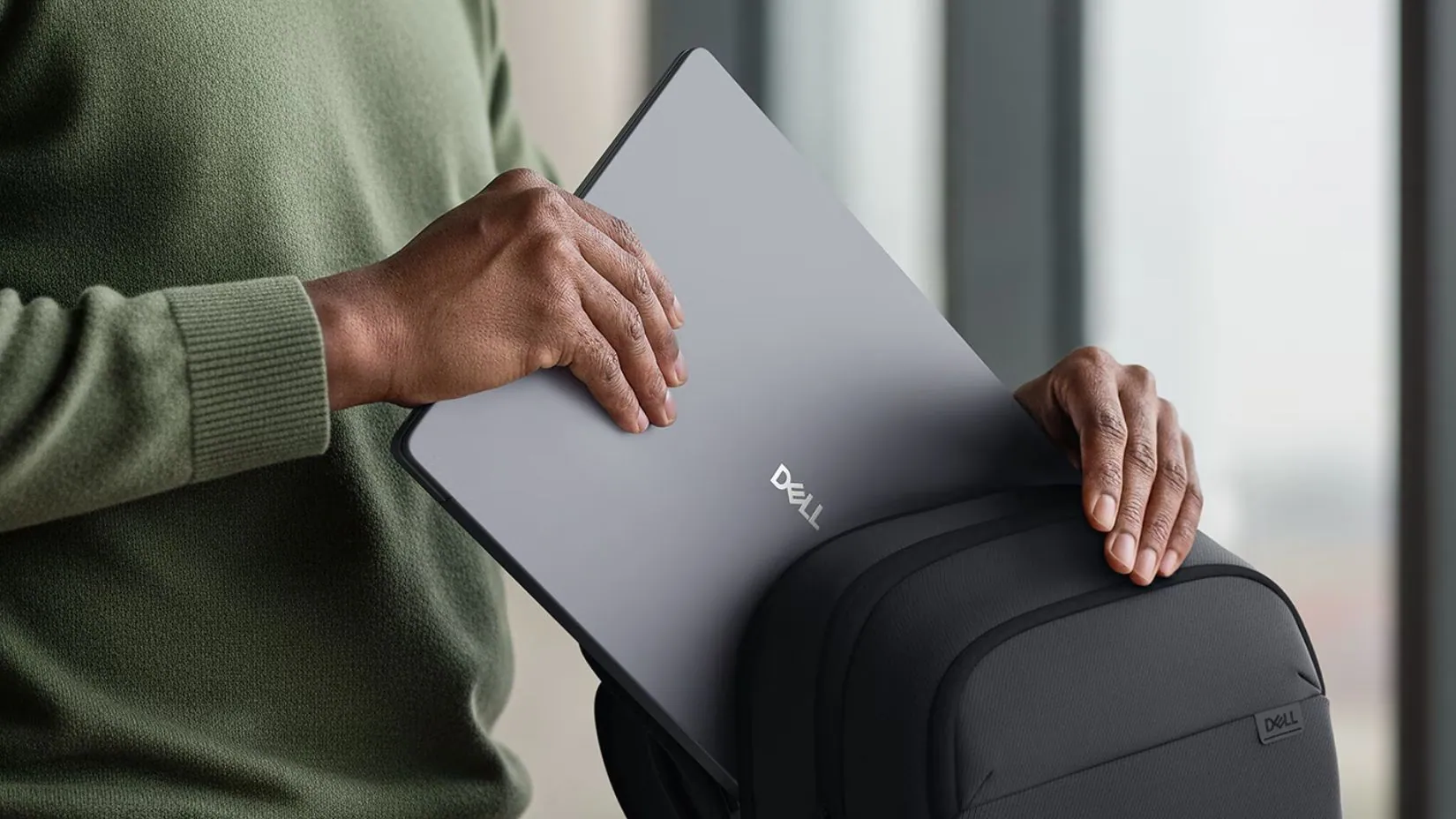
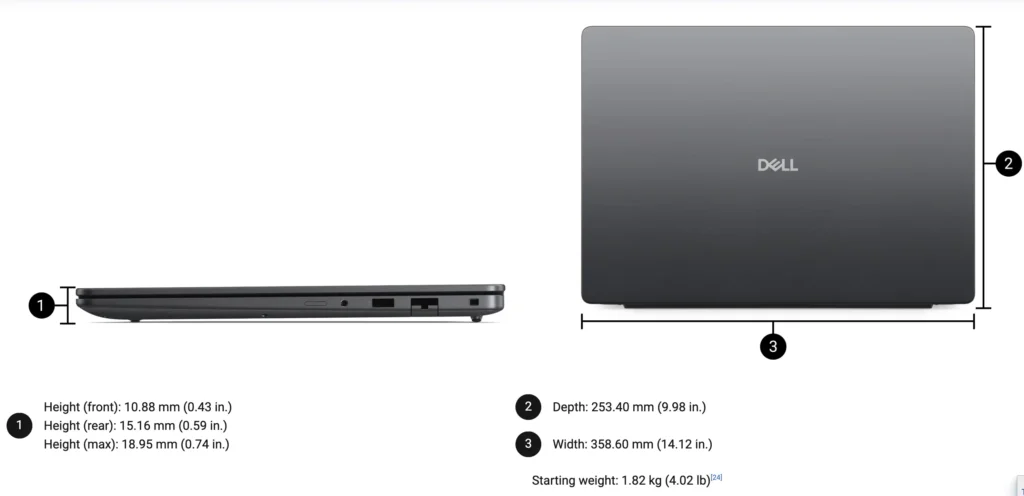
The chassis measures 358.6 × 253.4 × 18.95 mm and starts at 4.02 lbs (1.82 kg). It features an aluminum build across the lid, palm rest, and bottom panel, giving it a solid feel while keeping the profile relatively thin for a 16-inch device.
Battery configurations include 45Wh, 57Wh, and 70Wh options. The starting weight is tied to the smallest battery, meaning larger battery setups will add to the total weight while extending runtime.
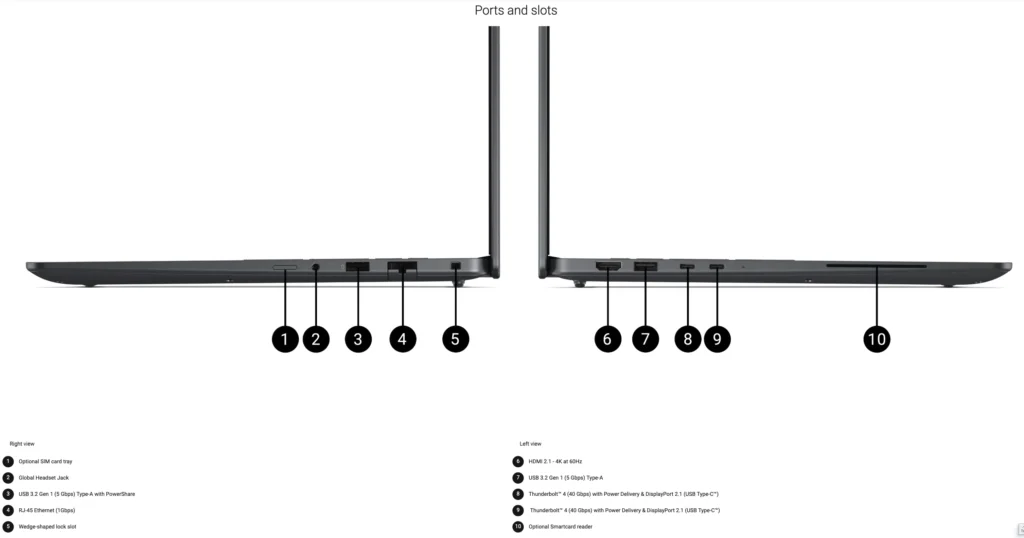
Connectivity includes Wi-Fi 7 and Bluetooth 6.0, along with a port layout designed for business use. The laptop includes two Thunderbolt 4 ports with DisplayPort 2.1 and power delivery, two USB-A ports, HDMI 2.1 with 4K at 60Hz output, a 3.5mm audio jack, and a full RJ-45 Ethernet port. Optional features include a SIM slot, a smart card reader, and enterprise security options.
Camera options range from a 1080p IR unit to an 8MP sensor with HDR and presence detection, supporting secure login and clearer video calls. Dual microphones and stereo speakers are included for conferencing.
Entry models start around $2,232 in the US and about £1,947 in the UK, while higher-end configurations with Core Ultra X7 processors and 64GB LPCAMM2 memory can reach roughly $4,877. Availability is already live across North America and Europe, with some regions offering phone-based ordering instead of direct online checkout.
The overall direction is clear. Dell is focusing on faster memory, stronger AI capability, and modern connectivity, while keeping the design practical for business use rather than pushing premium features like OLED.
Sources: Dell US, Australia, UK, Canada, France, Germany, & Ireland