
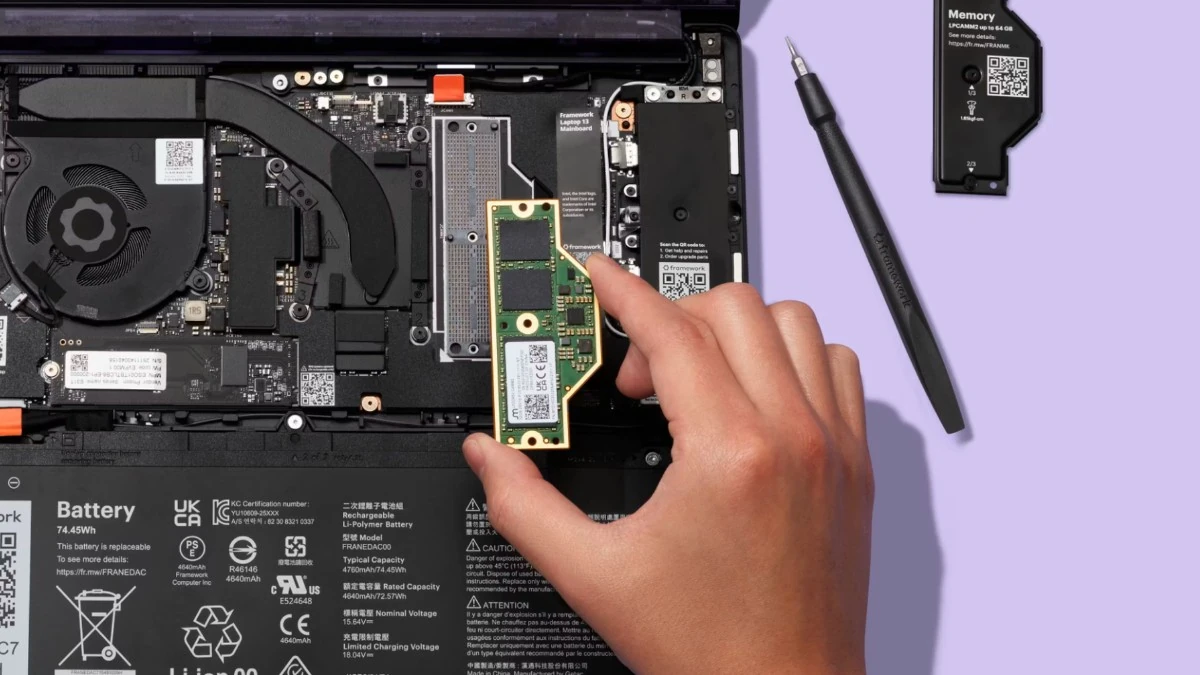
Most modern thin-and-light laptops use soldered LPDDR memory, which means memory upgrades are no longer possible after purchase. Framework is taking a different route with the Laptop 13 Pro by using LPCAMM2 modules, allowing LPDDR5x memory to remain user-replaceable while still delivering the efficiency benefits associated with low-power memory.
The Laptop 13 Pro is Framework’s first system built around LPDDR5x memory. Earlier generations relied on DDR4 and later DDR5 SO-DIMM modules. LPCAMM2 gives the new platform higher memory bandwidth and lower power consumption while keeping memory upgradeable.
LPDDR memory is normally soldered directly to the motherboard because it needs to sit close to the processor. LPCAMM2 addresses that limitation by moving the same LPDDR5x memory packages onto a removable module connected through a high-density compression interface.
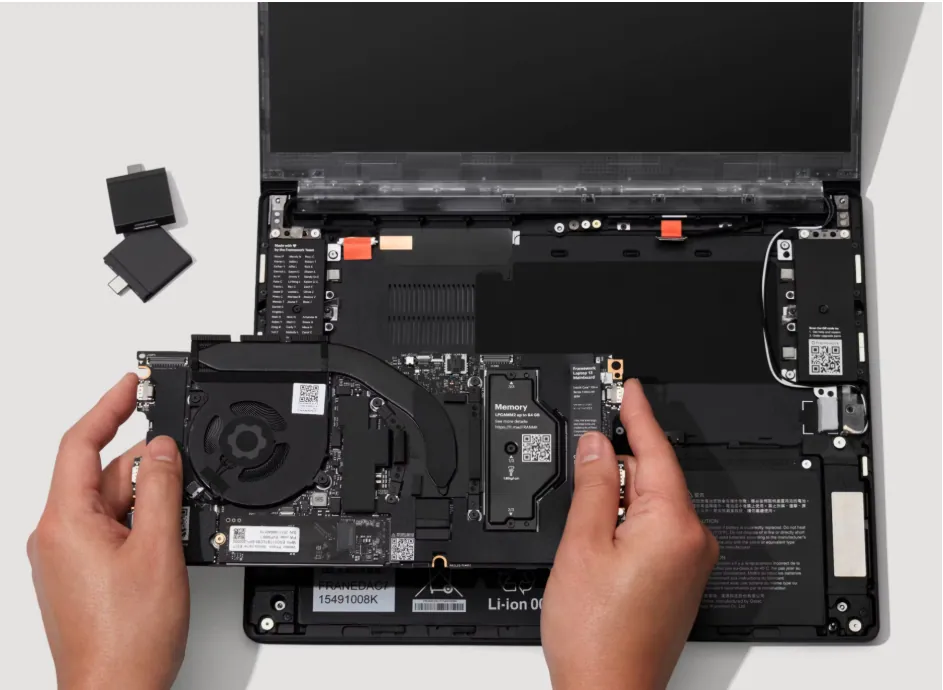
The technology traces its roots to Dell’s original CAMM design. During the JEDEC standardization process, the format evolved into CAMM2 for DDR5 and LPCAMM2 for LPDDR5x memory. Framework notes that the standard only recently reached its final specification and is still in the early stages of adoption.
The LPCAMM2 modules used in the Laptop 13 Pro are capable of running at up to LPDDR5x-8533 speeds. On Intel Core Ultra Series 3 processors, however, the memory operates at up to 7467 MT/s. Framework says that configuration still provides better performance and lower power consumption than standard DDR5 memory supported on the same platform.
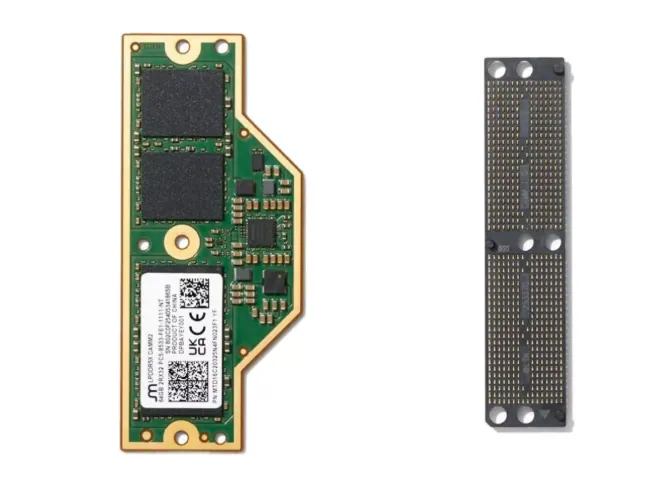
Intel’s Core Ultra Series 3 platform is among the first processor families officially validated for LPCAMM2 memory. While a small number of earlier systems experimented with the technology, wider adoption is expected to arrive alongside the latest generation of mobile processors.
Framework also points to reduced electromagnetic interference as another benefit of LPCAMM2. Traditional DDR5 SO-DIMM modules can generate EMI that requires additional shielding around wireless components. LPCAMM2 uses a compression-based connection system and a metal plate that serves as both a heat spreader and EMI shield. According to Framework, this design contributes to better Wi-Fi performance than previous Framework Laptop models.
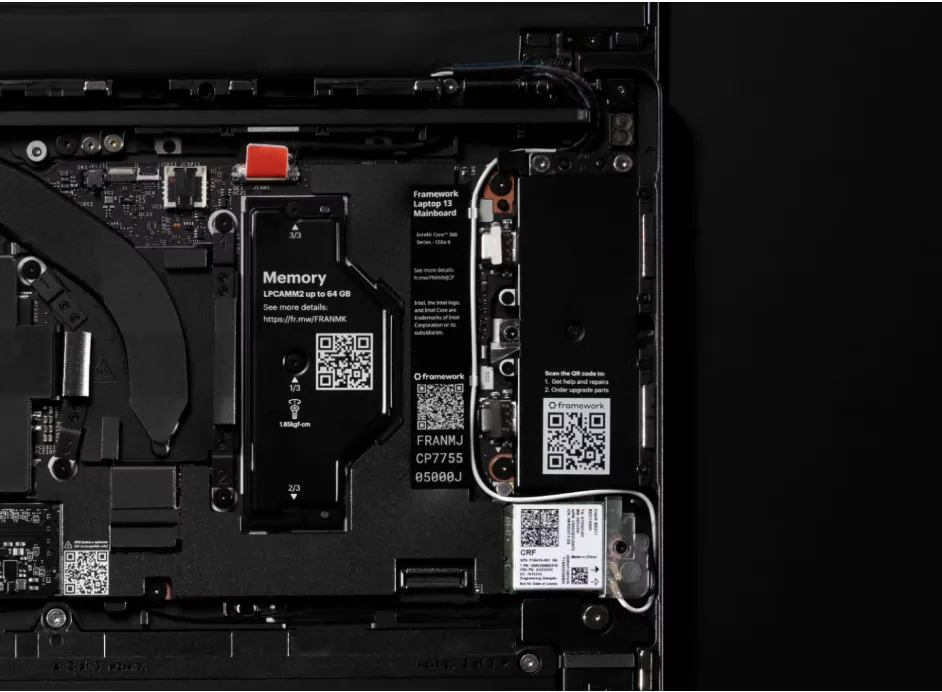
Current memory options include 16GB, 32GB, and 64GB LPCAMM2 modules. Intel’s platform architecture supports capacities up to 96GB, although modules of that size are not yet widely available. Framework expects more LPCAMM2 options to appear as adoption of the standard increases.
Framework Laptop 13 Pro LPCAMM2 Specifications
| Specification | Details |
|---|---|
| Memory Type | LPDDR5x LPCAMM2 |
| Maximum Module Speed | LPDDR5x-8533 |
| Operating Speed | Up to 7467 MT/s |
| Available Capacities | 16GB, 32GB, 64GB |
| Platform Maximum | Up to 96GB |
| Processor Platform | Intel Core Ultra Series 3 |
| Upgradeable Memory | Yes |
| Memory Standard | JEDEC LPCAMM2 |
Source: Framework