
NZXT has introduced its redesigned H6 PC case at Computex 2026, featuring a refreshed design, support for back-connect motherboards, and a new lineup of RGB fans. The updated case is aimed at PC builders who want cleaner cable management, strong airflow, and a more refined showcase-style build.
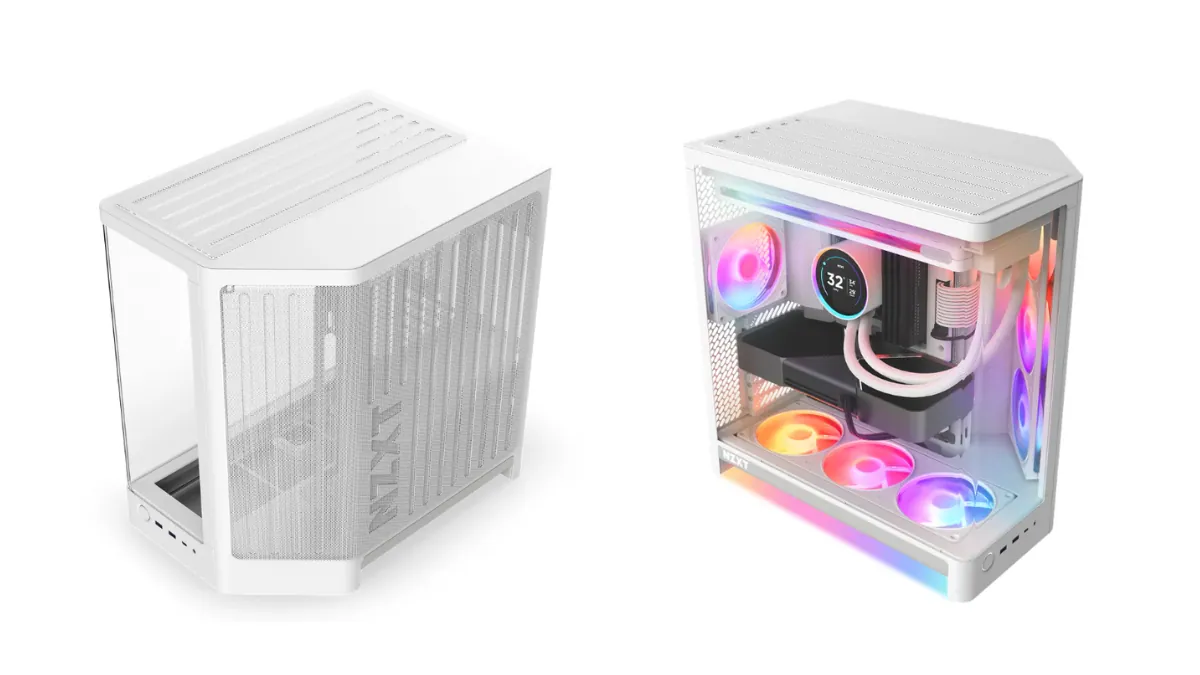
NZXT’s most significant case debuts in recent years, the H6 displays the company’s revised design approach. The new model replaces the split-panel design with a seamless curved glass panel while maintaining the well-known dual-chamber configuration. This keeps cables and power supply parts concealed in the rear chamber while providing a clearer view of the internal hardware.
Support for back-connect motherboards is one of the key characteristics. These designs assist minimize visible cabling inside the main chamber by moving the majority of connectors to the back of the motherboard tray.
Back-connect motherboards have become more popular in recent years, with companies like ASUS and MSI expanding their BTF and Project Zero product lines. By placing most connectors on the back of the motherboard, these designs help create a cleaner-looking PC and reduce the amount of visible cable clutter inside the case.
The H6 measures 448 × 292 × 420 mm and provides 55 liters of internal space. It supports ATX motherboards, graphics cards up to 390 mm long, CPU coolers up to 165 mm tall, and power supplies up to 200 mm in length. For cooling, the case can hold up to ten 120 mm fans and supports radiators up to 360 mm in the top panel.
NZXT built an adjustable graphics card support bracket right into the chassis. Built-in anti-sag solutions are becoming a standard feature in high-end PC cases as new graphics cards continue to grow in size and weight.
During the redesign, airflow was a key consideration. A sizable mesh ventilation screen is located on the front-right side of the chassis, and angled fan mounting locations aid in directing airflow toward important parts like the processor and graphics card. In order to keep the overall appearance cleaner, NZXT has also chosen a recessed mounting arrangement for the bottom intake fans.
Today’s PC builders look for more than just good airflow. A modern case also needs to offer a clean design, effective cable management, and enough cooling to handle powerful hardware without compromising appearance.
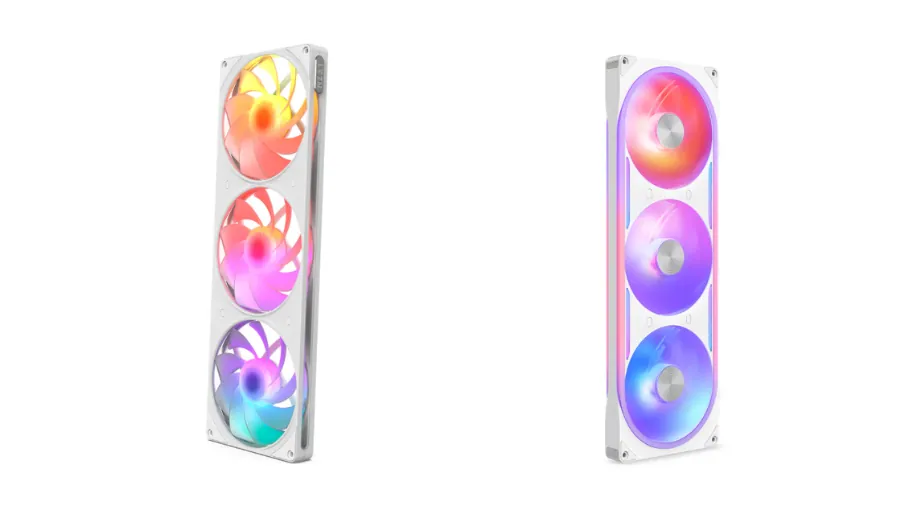
NZXT unveiled their new RGB and Ultra RGB fans in addition to the H6. Users may control lighting and fan settings from a single location because both fan series are compatible with the company’s CAM software. While the Ultra RGB models offer more lighting and customization choices for consumers who desire a more customized configuration, the regular RGB Fans concentrate on offering a balance between cooling and illumination.
The new fan lineup includes single-frame designs that combine multiple fans into one structure. This reduces the number of cables required during installation and makes system assembly easier. For builders creating high-end gaming PCs, fewer cables can result in a cleaner build and simpler cable management.
The Ultra RGB series, according to NZXT, has up to 96 individually addressable LEDs spread over several lighting zones. With NZXT CAM software, users can alter distinct effects for the hub, outer ring, and connecting portions of the fan.
The standard H6 starts at $99.99, while the H6 RGB+ is priced from $199.99. The RGB+ version comes with pre-installed RGB fans and includes an NZXT Control Hub Lite, allowing users to manage lighting effects and fan settings more easily.
The revised H6 incorporates many of the features that PC builders are presently seeking, such as support for hidden cables, robust cooling capabilities, and contemporary RGB options. In a market full of options from Corsair, Lian Li, HYTE, Montech, and Phanteks, the new chassis, when paired with NZXT’s improved fan portfolio, strengthens the company’s position.
The H6 provides a more straightforward approach to system building without sacrificing the versatility required for high-end hardware for builders considering a new gaming PC in 2026.
Source: NZXT