
MaxSun’s new Intel 800-series Mini-ITX motherboards swap the traditional PCIe x16 slot for high-density MCIO connectors. The company developed the MS-Challenger MCIO ITX and the MS-PC Farm B860I motherboards in collaboration with Intel. These boards use Mini Cool Edge I/O (MCIO) ports to route PCIe lanes instead of relying on standard slots.
MCIO is defined by the SFF-TA-1016 specification and supports PCIe Gen5 and future Gen6 speeds. Each connector supports a link width up to x8, providing high-density expansion with flexible cabling. This makes the boards suitable for dense configurations where traditional PCIe cards do not fit directly.
Also read: ASUS TUF Gaming B850I WIFI Neo AM5 Mini-ITX Motherboard
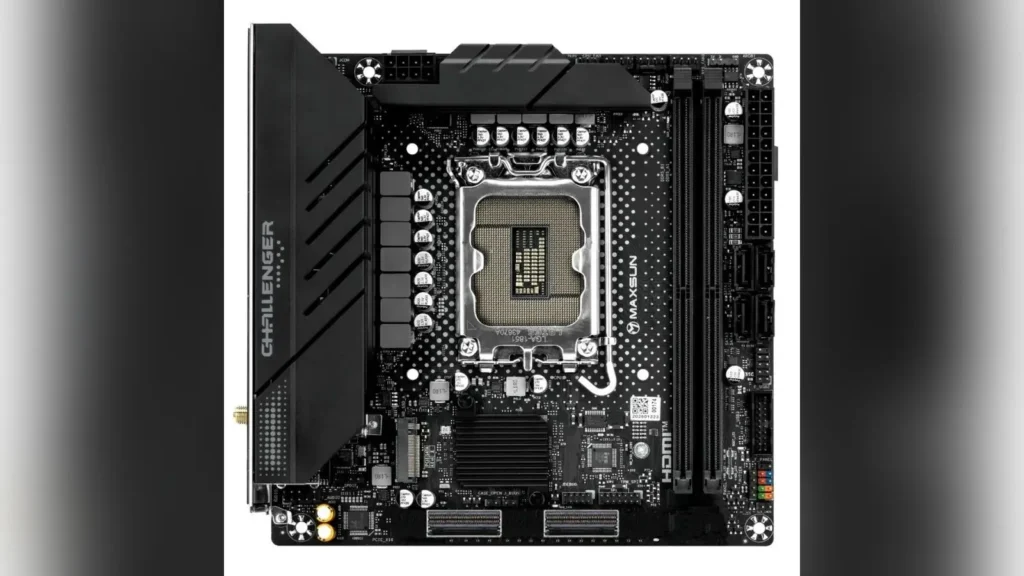
The MS-Challenger MCIO ITX shares its layout with the standard MS-Challenger H810ITX WIFI motherboard, but replaces the physical PCIe slot with two MCIO ports. Buyers can choose from Q870, Z890, H810, and B860 chipsets. The Z890 and Q870 versions support splitting lanes into x8+x8 or x8+x4+x4 configurations, while the H810 and B860 versions merge the two ports into a single x16 mode.
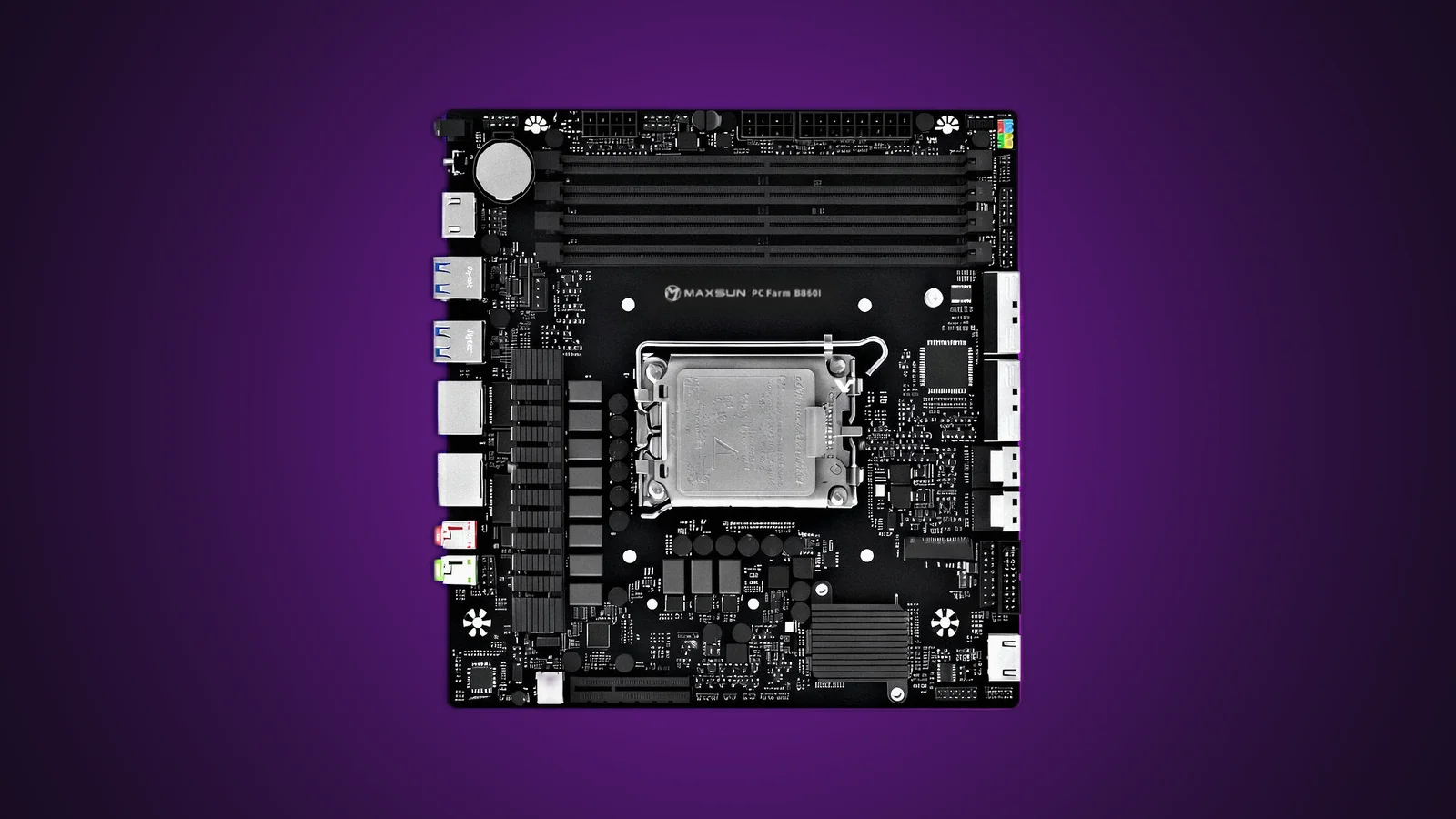
The second board is the MS-PC Farm B860I, which targets large-scale PC clusters and servers. It mounts the CPU socket and memory slots with a rotated layout, allowing four DDR5 UDIMM slots to fit onto a Mini-ITX form factor. In addition to two MCIO ports, this board retains a single standard PCIe slot and includes IPMI remote management and fault diagnosis tools.
While these designs are not practical for normal gaming desktop builds, they give board makers more freedom with cable routing in server racks. The motherboards represent a design shift compared to standard desktop options like the MaxSun MS-iCraft X870M WIFI motherboard. MaxSun plans to release the new MCIO Mini-ITX motherboard models in retail markets soon.
Source: MaxSun