
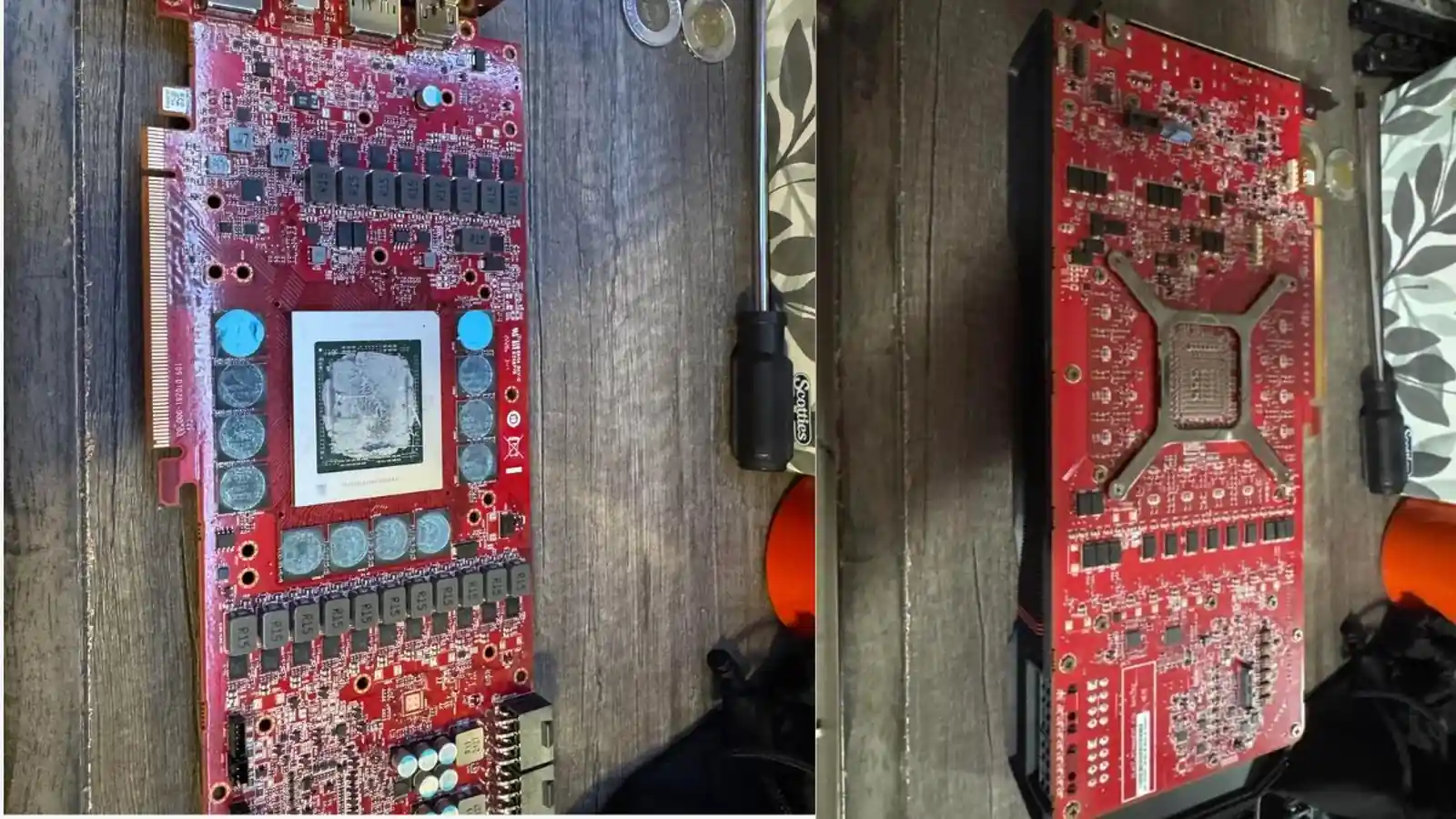
A Reddit user recently purchased a secondhand graphics card advertised as a standard Radeon RX 7900 XTX, only to discover it is a rare pre-production prototype. The buyer, known online as Shav_tech, bought the card on Facebook Marketplace for an unusually low price. After inspecting the hardware and running software tests, the owner noticed several physical and technical details that do not match retail desktop models.
Also read: Best Gaming Laptops Under 1200 Dollars
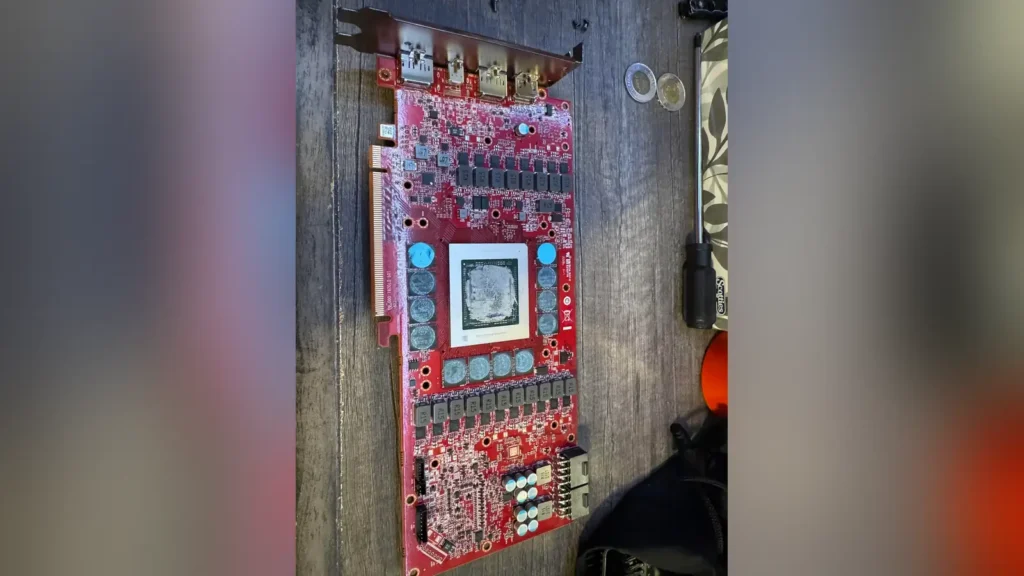
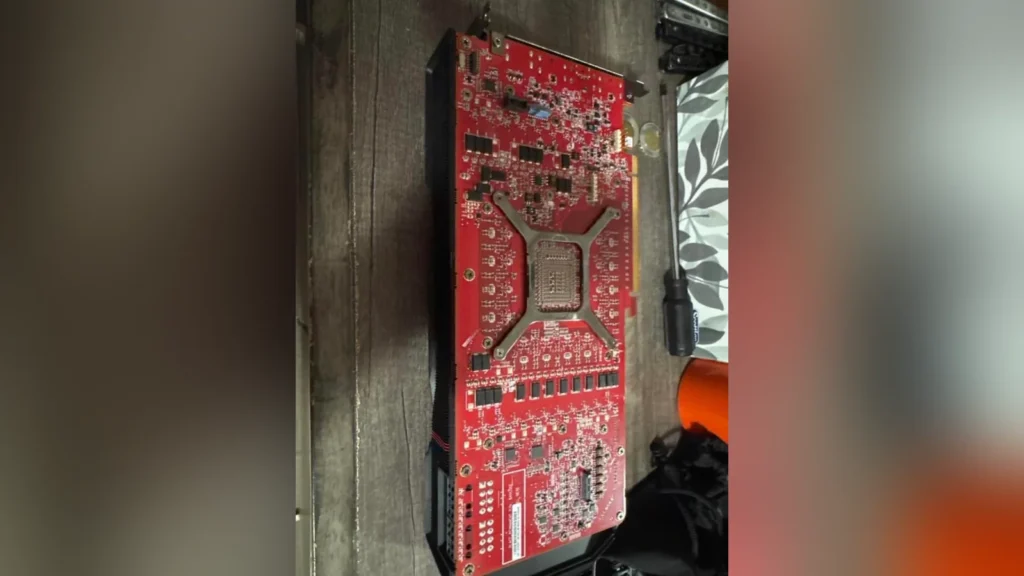
The graphics card has a distinctive red printed circuit board that AMD typically uses for early engineering verification runs. In addition to the red PCB, the board has no metal backplate and includes extra header pins along the top edge for telemetry testing and debug tools. There are also no laser-etched markings on the actual silicon GPU die, indicating it was not certified for retail sale.
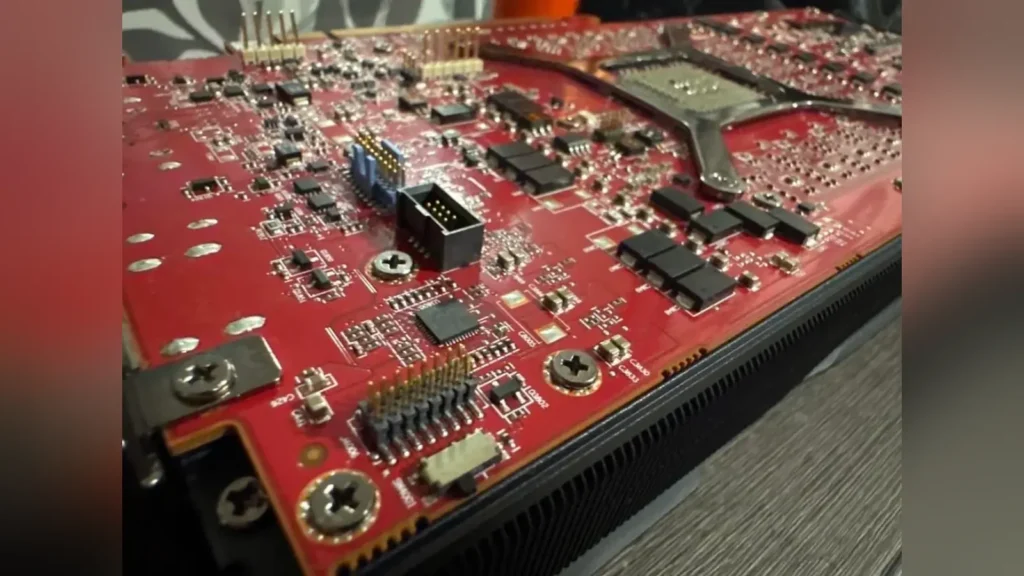
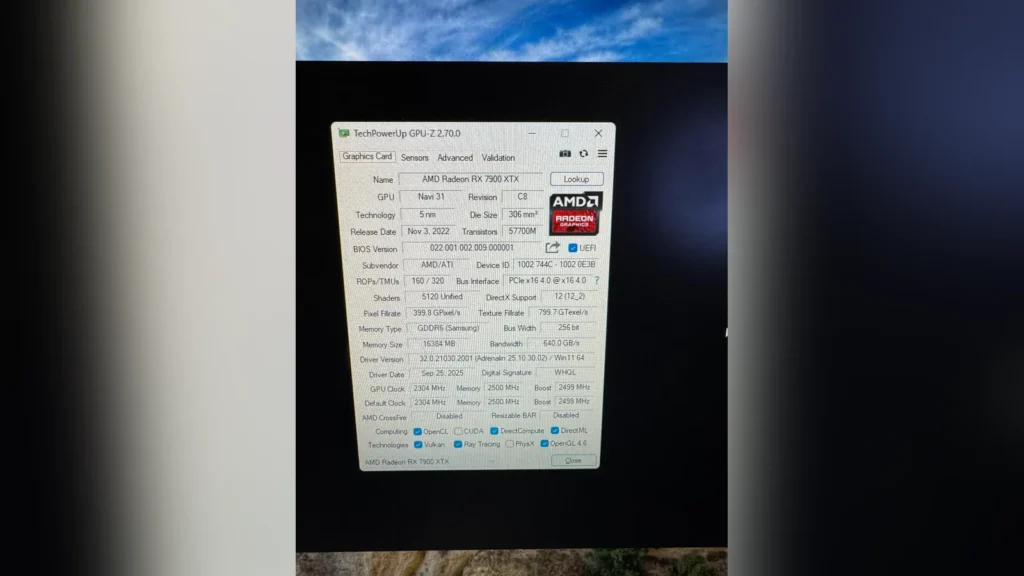
The 16GB memory configuration operates on a 256-bit bus, which is slower than the memory channels found in the best 32gb ram laptops but still typical for mid-range gaming. Although the board physically has 12 memory chips matching the standard 24GB layout of a retail RX 7900 XTX, only 16GB of VRAM is active in software. This configuration suggests AMD was testing a cut-down version of the Navi 31 silicon during early development.
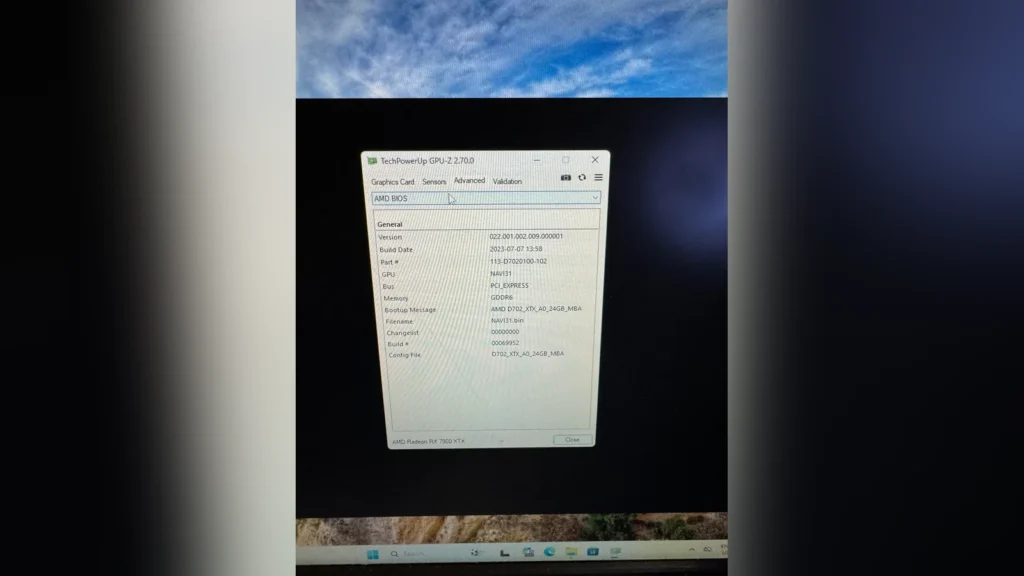
The owner tried to flash the graphics card with a standard Radeon RX 7900 GRE BIOS, but the firmware updater refused to write to the board. This blocks the theory that the card is simply a cheaper spoofed retail model modified to look like a premium XTX card. Interestingly, the custom VBIOS installed on the chip contains a filename referencing a 24GB configuration, contradicting the 16GB layout detected by GPU-Z.
Collectors of unique PC hardware often find these pre-production units highly valuable, even if they run with reduced specifications. The owner is currently asking the Reddit community for advice on how to preserve or value this unusual hardware. For now, the card serves as an interesting artifact showing how AMD tests new desktop graphics options before retail release.
Source: Reddit