
Apple M5 Pro and M5 Max processors deliver major performance gains in Geekbench benchmarks. Credit: MacRumors
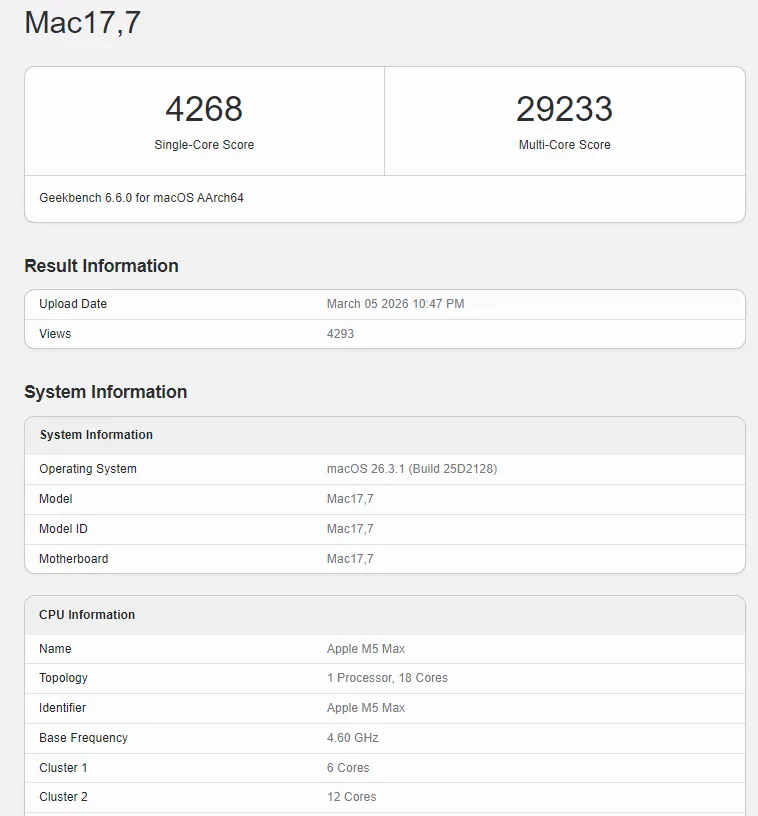
Apple’s M5 Max processor has appeared in early Geekbench 6 benchmark listings, offering an early look at performance for Apple’s latest Apple Silicon laptop chip.
The benchmark entry is linked to a MacBook Pro system identified as Mac17,7 running macOS 26.3.1. The tested configuration shows an 18-core CPU and delivers a Geekbench 6 multi-core score of 29,233.
Early Geekbench Results Show Strong CPU Performance
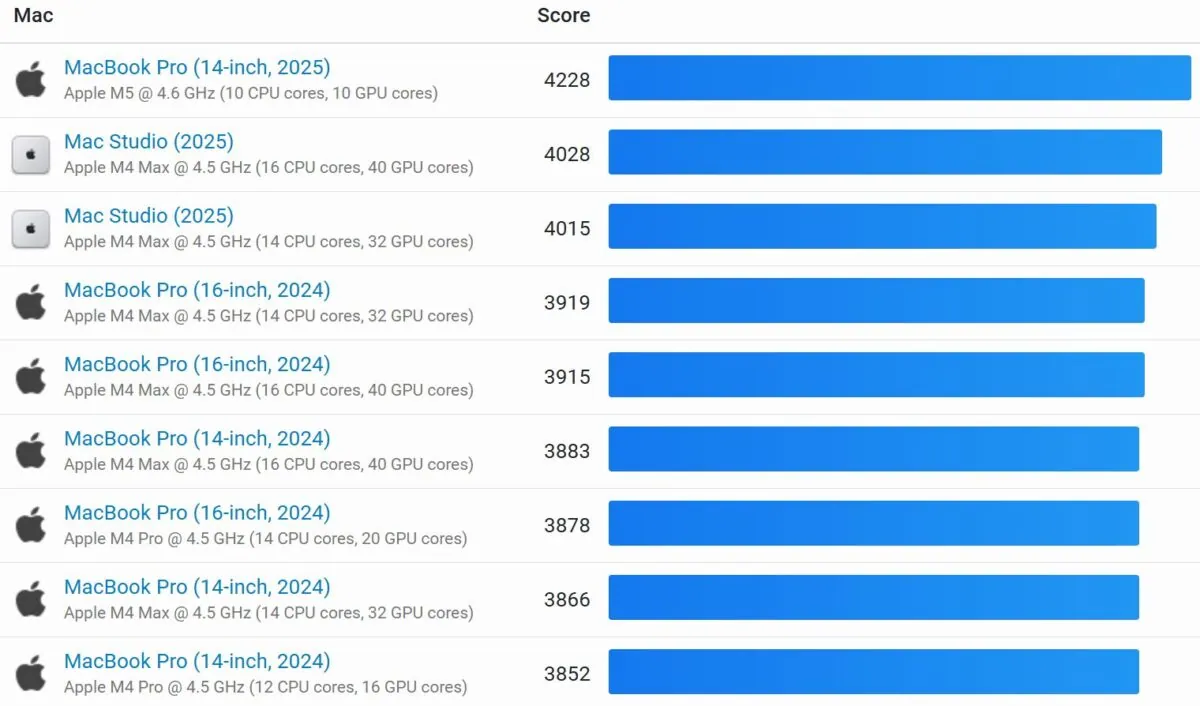
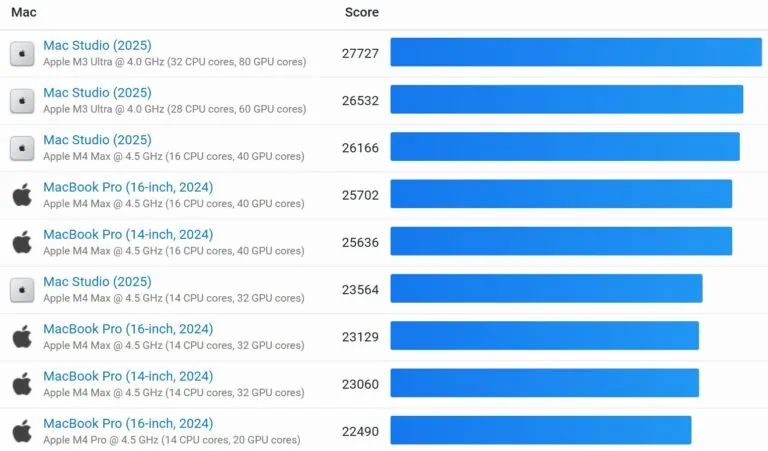
Multiple Geekbench entries for the chip report single-core scores between 4,268 and 4,297, while multi-core scores range from 29,043 to 29,233. These numbers place the M5 Max slightly ahead of the average multi-core results typically recorded for Apple’s M3 Ultra, which often score around 27,726 points in the same benchmark.
Compared with the M4 Max, the new processor appears to deliver a noticeable improvement in both single-core and multi-core performance based on current Geekbench listings.
While Geekbench results can vary depending on system configuration and software environment, the early scores suggest Apple has continued increasing performance across its Apple Silicon lineup.
GPU Results Also Appear in Early Tests
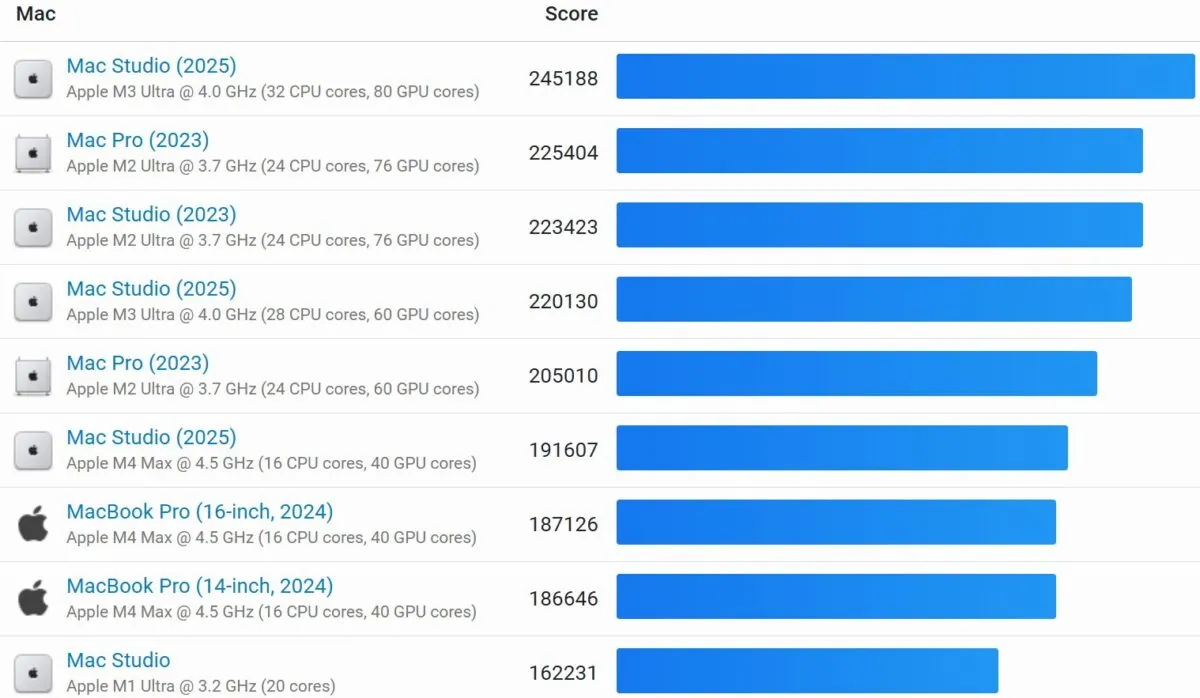
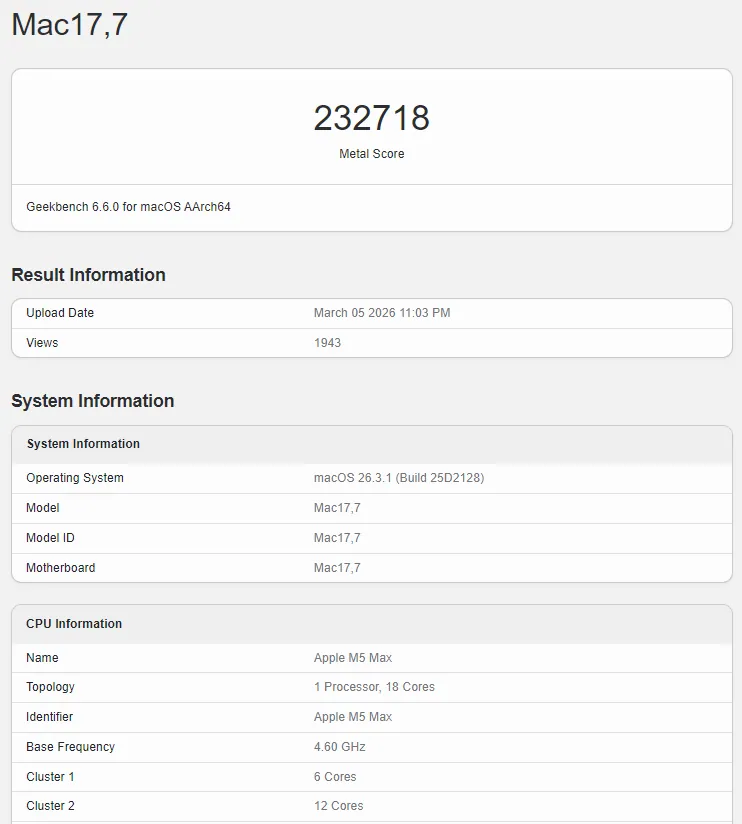
Graphics performance results are also starting to surface in Geekbench’s Metal benchmark database, showing improvements in GPU-accelerated workloads. Early GPU entries for the M5 Max show scores ranging between 218,772 and 232,718 points.
These results place the chip ahead of the M4 Max in early Metal benchmarks, although they still remain below the highest GPU scores typically recorded by Apple’s larger M3 Ultra, which can reach around 245,000 points.
The tested system configuration includes a 40-core GPU, consistent with previous Max-series Apple Silicon designs focused on high-performance laptop workloads.
Benchmark Shows Apple’s Continued Silicon Progress
Synthetic benchmarks like Geekbench provide an early indication of CPU performance and GPU capability, but they do not always reflect real-world performance across professional workloads such as video editing, software development, or machine learning.
Even so, the early benchmark entries highlight Apple’s continued progress in custom silicon development since the company transitioned away from Intel processors in its Mac lineup.
The benchmark appeared shortly after Apple introduced the MacBook Pro models powered by the M5 Pro and M5 Max processors, the first benchmark results suggest Apple’s latest high-end laptop chips may deliver another step forward in both CPU and GPU performance.