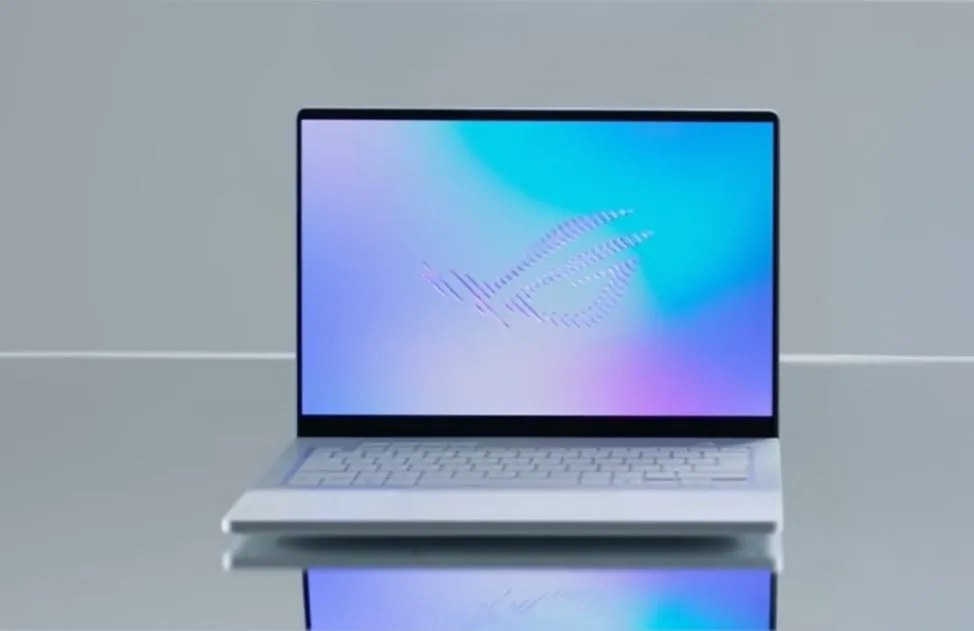
Just weeks before CES 2026 opened in Las Vegas, Asus quietly cancelled a previously planned Intel-only version of the ROG Zephyrus G14, a move that went unnoticed until the laptop failed to appear on the show floor. The model, internally identified as GU405AA, had already surfaced in benchmark databases and was shown to journalists during a private pre CES briefing in December, strongly suggesting it was on track for a commercial release in 2026.
That is why its absence during CES 2026 raised immediate questions. This was not an early prototype or an experimental concept. The system carried a full production designation, appeared in Geekbench listings months ahead of the show, and was presented as a near final product behind closed doors. Once CES began, however, the Intel-only Zephyrus G14 had disappeared entirely from Asus’s booth.
What made this version different was its hardware direction. Instead of pairing an Intel CPU with a discrete Nvidia GPU, Asus had built the laptop around Intel’s latest Core Ultra processor using integrated Intel Arc B390 graphics. For the Zephyrus G14, a machine long associated with RTX-class performance, the decision marked a clear break from tradition. Internally, the laptop was positioned as proof that modern integrated graphics had matured enough to power a thin, premium gaming system without a dedicated GPU.
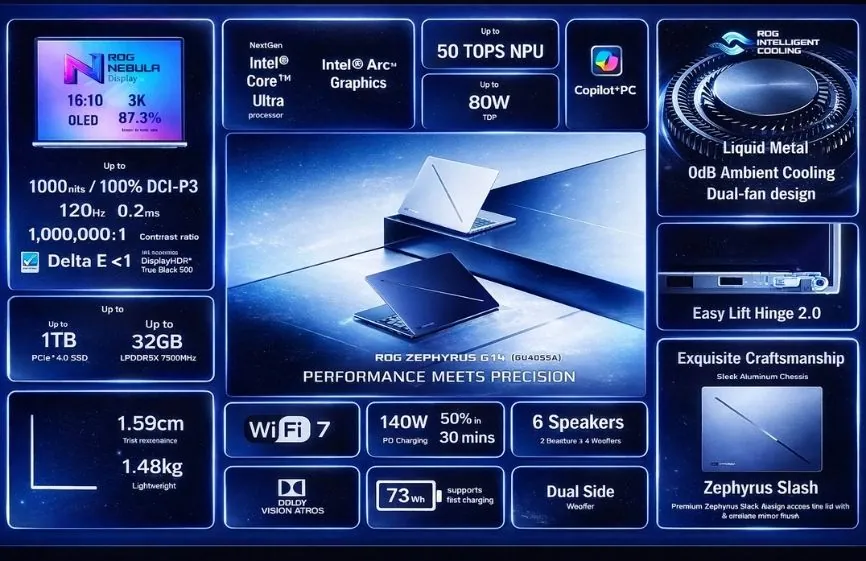
Confusion deepened when members of the press later spotted the same Zephyrus G14 inside Intel’s private demo rooms at CES. While Asus had removed the laptop from its own display, Intel was still using it to showcase its new Arc graphics architecture. Once journalists began asking why a cancelled Asus laptop was being demonstrated elsewhere, the system was quietly removed from Intel’s area as well, reinforcing the sense that the decision to cancel it came very late.
Asus later confirmed that the Intel only Zephyrus G14 had been cancelled in mid-December due to what the company described as a change in strategy. By that point, demo units, briefing materials, and partner plans were already in circulation, explaining why traces of the laptop continued to surface even after the decision had been made.
Performance expectations appear to be the core reason behind the reversal. The Zephyrus G14 sits firmly in the premium gaming category, where buyers expect consistent performance headroom across demanding titles. Current retail configurations ship with Nvidia GeForce RTX 4050 graphics or higher, often running at relatively high power levels for a 14 inch chassis. While Intel’s Arc B390 integrated GPU represents a notable generational leap, available performance figures place it closer to a lower-power RTX 4050 rather than the level traditionally associated with a flagship ROG laptop.
Pricing and brand perception added another risk. Launching an expensive ROG system without a dedicated GPU, even if day to day performance proved acceptable, would have challenged long standing buyer expectations around longevity and raw performance. Asus has spent years reinforcing the ROG brand as a no-compromise gaming label, and introducing a configuration perceived as a step down could have diluted that image.
The cancelled Zephyrus G14 also highlights a broader industry reality. Integrated graphics are improving rapidly, but premium gaming brands still operate with little margin for error. In thinner designs aimed at budget conscious or casual gamers, an integrated only approach can make sense. In a high end lineup like ROG, expectations remain far less forgiving.
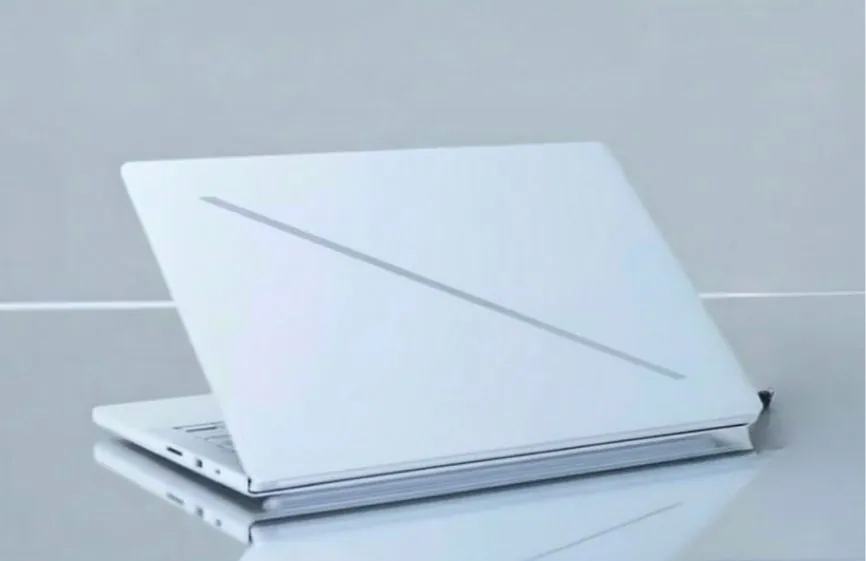
That may explain why the concept itself is not necessarily dead. A similar Intel-based design without a discrete GPU would fit more naturally within Asus’s TUF Gaming range, where price to performance trade-offs are easier to justify. In that context, the same hardware could be seen as practical rather than compromised.
CES 2026 ultimately revealed less about a missing laptop and more about where manufacturers continue to draw the line. The Intel only Zephyrus G14 was not cancelled because it failed outright, but because it challenged what buyers still expect a premium gaming laptop to be. For now, that boundary remains firmly in place.
Sources: Les Numériques via VideoCardz