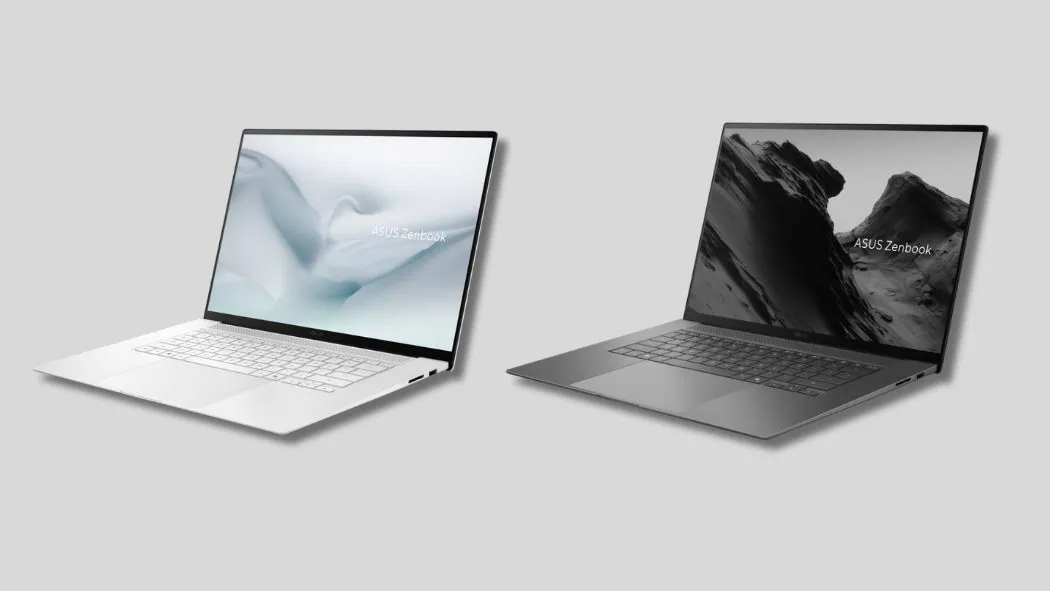
ASUS has confirmed that several high-end configurations of its newly launched Zenbook S14 and Zenbook S16 laptops will not be available globally, despite being showcased as part of a unified lineup at CES 2026.
Updated regional product listings reveal that the most powerful variants are limited to select markets, resulting in a clear disparity in performance and hardware depending on where the laptops are being sold.
The refreshed Zenbook S series was presented at CES 2026 as ASUS’s next generation of premium thin-and-light laptops, emphasizing improved efficiency, OLED display upgrades, and the latest processors from Intel and AMD. However, post-launch listings indicate that ASUS has segmented availability by region, meaning that buyers in some countries will not have access to the top-tier models showcased at the event.
Zenbook S14: Core Ultra X Models Limited to Select Markets
The regional split is most apparent with the Zenbook S14, which is based on Intel’s new Intel Panther Lake platform. In the United States and parts of Europe, ASUS offers configurations powered by Core Ultra X7 and Core Ultra X9 processors. These chips belong to Intel’s Core Ultra X Series and include more powerful integrated Arc graphics.
In contrast, markets such as Canada are limited to Core Ultra 9 386H and Core Ultra 7 355 configurations, with no Core Ultra X options listed. As a result, two laptops sold under the same Zenbook S14 name can deliver significantly different performance depending on the region.
Outside of processor availability, the core specifications of the Zenbook S14 remain largely consistent worldwide. All variants feature a 14-inch 3K OLED display with a 120 Hz refresh rate and up to 1,100 nits of peak HDR brightness, along with 32 GB of LPDDR5x memory, a 1 TB PCIe NVMe SSD, Wi-Fi 7, Bluetooth 5.4, and a 77 Wh battery.
One practical difference is charging hardware: Core Ultra X models ship with a 100 W power adapter, while non-X variants use a smaller 68 W charger, which may affect charging speeds and sustained performance under heavy workloads.
Zenbook S16: Ryzen AI Options Also Vary by Region
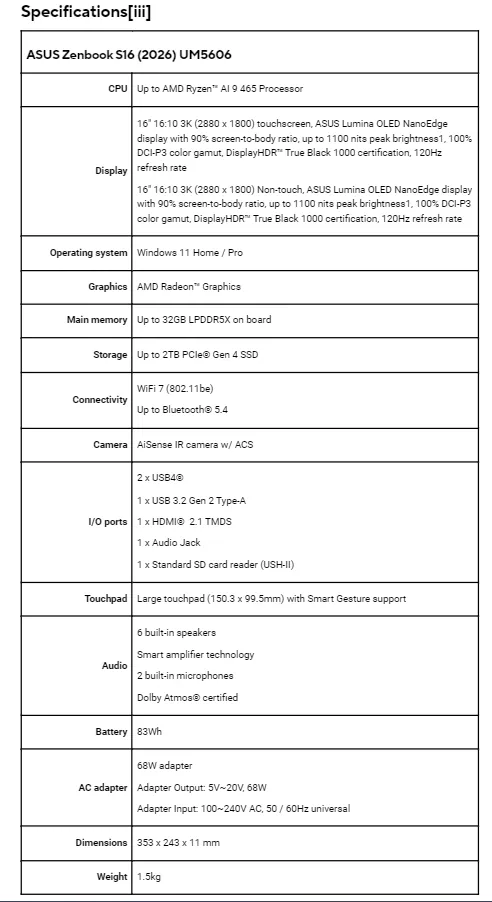
This same strategy applies to the Zenbook S16, which is built on AMD’s Ryzen AI 400 series processors, also known as Gorgon Point. In the US, ASUS lists configurations with the Ryzen AI 9 HX 470 and Ryzen AI 9 465, along with a Ryzen AI 5 445 option that doesn’t yet appear explicitly in AMD’s official lineup.
Canadian listings, however, are more limited, primarily offering Ryzen AI 7 445 and Ryzen AI 9 HX 470 models. All Zenbook S16 variants feature a 16-inch 3K OLED display with a 120 Hz refresh rate, maintaining a consistent premium positioning across all regions.
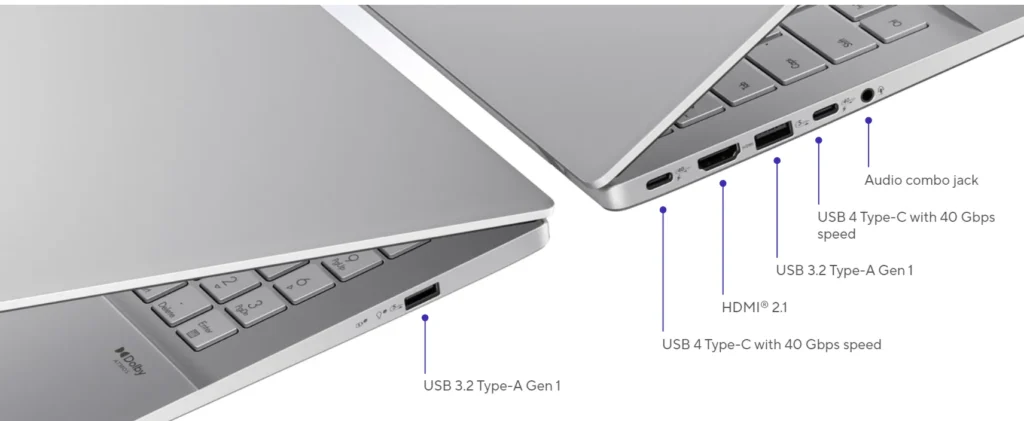
Because the Zenbook S16 is based on the AMD platform, most configurations rely on USB4 rather than Thunderbolt. Notably, ASUS lists Thunderbolt 4 support for the top Ryzen AI 9 HX 470 configuration in some regions, which can be confusing and makes it crucial for buyers to verify region-specific specifications before purchasing.
Why Regional Restrictions Matter for Buyers
These regional differences aren’t limited to just processor names. Buyers in restricted markets often face fewer high-end performance options, different charging hardware, and potentially altered port support. These variations can impact long-term usability, accessory compatibility, and resale value.
ASUS hasn’t stated that these limitations are due to supply shortages. Instead, the listings suggest this is a deliberate market segmentation strategy, allowing the company to tailor performance levels and pricing to each region rather than offering identical flagship configurations worldwide.
This approach has real consequences for customers who plan their purchases based on global launch announcements. When top-tier models aren’t available locally, importing becomes the only option, often resulting in higher costs, limited warranty coverage, and potential service challenges.
Availability Timeline
According to ASUS, both the Zenbook S14 and Zenbook S16 are expected to go on sale starting February 2026 through the company’s official website and authorized retailers.
Pricing details have not yet been announced. ASUS advises buyers to consult region-specific product pages rather than assuming all CES-announced configurations will be available locally.
Source: ASUS Press Release via Notebookcheck