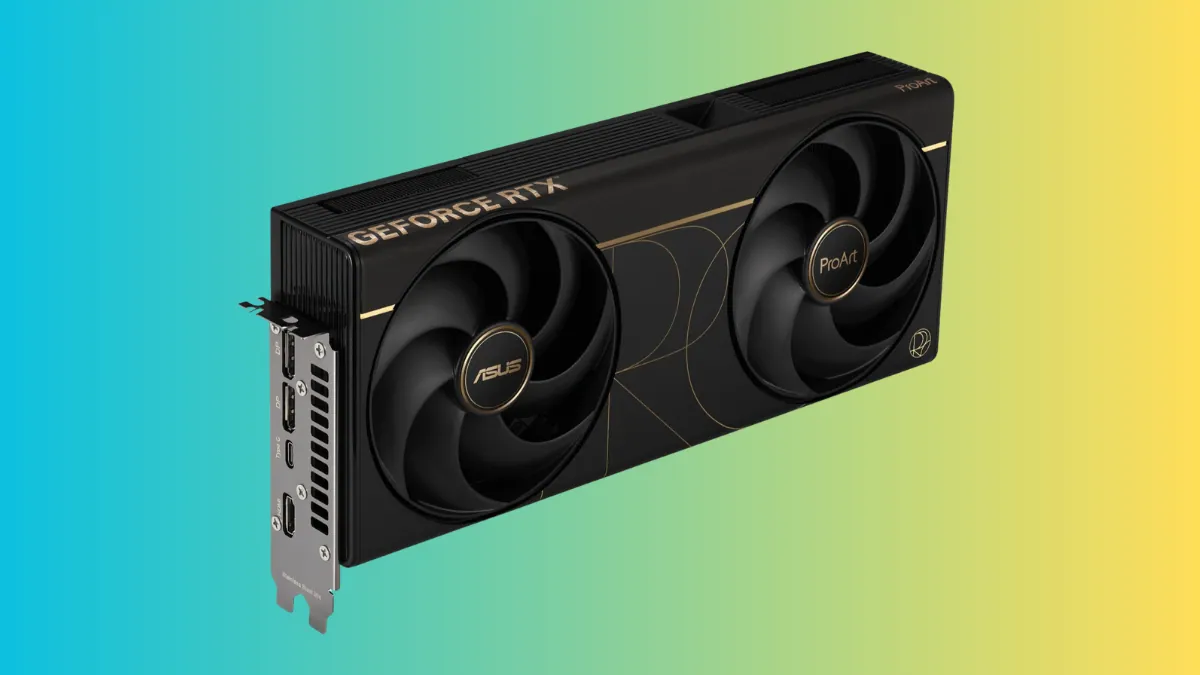
ASUS has revealed the full specifications of its upcoming ProArt GeForce RTX 5090 OC, a graphics card designed mainly for creators and professional workstations. The GPU comes with a factory overclock that can reach up to 2512 MHz, which is about 105 MHz higher than NVIDIA’s reference RTX 5090 Founders Edition. At the same time, the card keeps a compact design suitable for studio PCs and space-efficient workstation systems.
ASUS positions the ProArt RTX 5090 OC for creators, AI developers, 3D artists, and video professionals who need high-end GPU performance without the oversized cooling systems often seen on gaming cards. With its compact size, efficient cooling, and simple design, the card is built as a workstation-friendly option compared to larger RTX 5090 models.
Information listed on ASUS’s official product pages shows that the ProArt RTX 5090 OC can reach a boost clock of up to 2512 MHz in OC mode. This provides a small factory overclock compared with NVIDIA’s standard design. Even though the increase looks small, factory-overclocked GPUs often deliver noticeable performance improvements in workloads such as 3D rendering, AI model inference, high-resolution video editing, and ray tracing workloads used in modern GPUs.
The card appears to use a similar PCB base as NVIDIA’s reference RTX 5090, but ASUS has adapted the design for its ProArt ecosystem. This lineup focuses on creator hardware such as professional monitors, laptops, and workstation systems used in production environments, including systems powered by GPUs like the RTX 5070 laptop GPU with 12GB GDDR7. ASUS lists the GPU size as 304 × 140 × 50 mm, which allows the card to qualify as an SFF Ready graphics card that can fit inside many compact workstation cases.
The compact size matters as many recent flagship GPUs have grown significantly larger, especially newer models in the RTX 50-series GPU lineup. Some models now exceed 330 mm in length and require large full-tower systems. By keeping the ProArt RTX 5090 OC within a more manageable size, ASUS is targeting professionals who want powerful GPU performance in compact studios, editing setups, or space-limited workstations.
Cooling is handled by a dual-fan system with two large 115 mm fans, combined with a large heatsink and liquid metal thermal compound. Liquid metal transfers heat more efficiently than standard thermal paste, helping move heat away from the GPU die faster. This design helps the card maintain stable boost speeds during long workloads such as 8K video rendering, Unreal Engine compilation, AI processing, and GPU-accelerated simulations.
The design also follows the simple style associated with the ASUS ProArt series. Instead of RGB lighting or aggressive gaming looks, the card uses a matte black body with wood-grain style accents. This cleaner design is intended to blend easily into professional workstations and studio environments.
The card also includes a USB-C display output. This type of port has become less common on many consumer graphics cards in recent years. It can still be useful for creators who connect high-resolution displays, professional reference monitors, VR devices, or other USB-C compatible equipment.
Unlike many gaming-focused RTX 5090 models, the ProArt version emphasizes creator and workstation workloads. Systems using GPUs like this are often used for 3D animation, CAD design, architectural visualization, Unreal Engine development, AI training, and advanced video editing projects that rely on high-speed PCIe storage used in AI data centers.
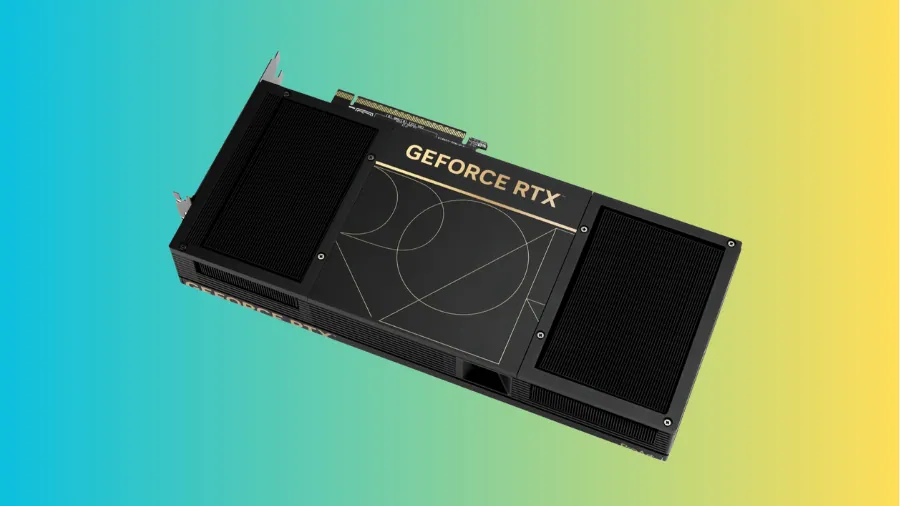
The growth of AI-assisted content creation and local machine-learning workloads has also increased the need for powerful GPUs, similar to systems using the Ryzen AI 9 HX 370 mini PC platform that can handle generative AI tasks and large compute workloads. Because of this trend, hardware manufacturers are releasing more GPU models designed specifically for creators and professional workstations rather than only for gaming systems.
Also Read: Best RTX 5090 Laptops
ASUS has not yet announced official pricing or availability for the ProArt RTX 5090 OC. However, workstation-focused GPUs in the ProArt series usually cost slightly more than standard gaming graphics cards because of their specialized cooling design, compact compatibility, and creator-focused features.
The release of the ASUS ProArt RTX 5090 OC shows how high-end GPUs are expanding beyond gaming use. As workloads such as AI generation, real-time rendering, and 8K video editing continue to become more demanding, GPU makers are designing new graphics cards to better serve professional creators, engineers, and developers.
Key Specifications
| GPU | NVIDIA GeForce RTX 5090 |
| Memory | 32GB GDDR7 |
| Boost Clock (OC Mode) | Up to 2512 MHz |
| Clock Increase | +105 MHz vs Founders Edition |
| Cooling | Dual 115 mm fans + liquid metal |
| Dimensions | 304 × 140 × 50 mm |
| Special Features | USB-C port, ProArt wood-grain design |
Source: IThome