
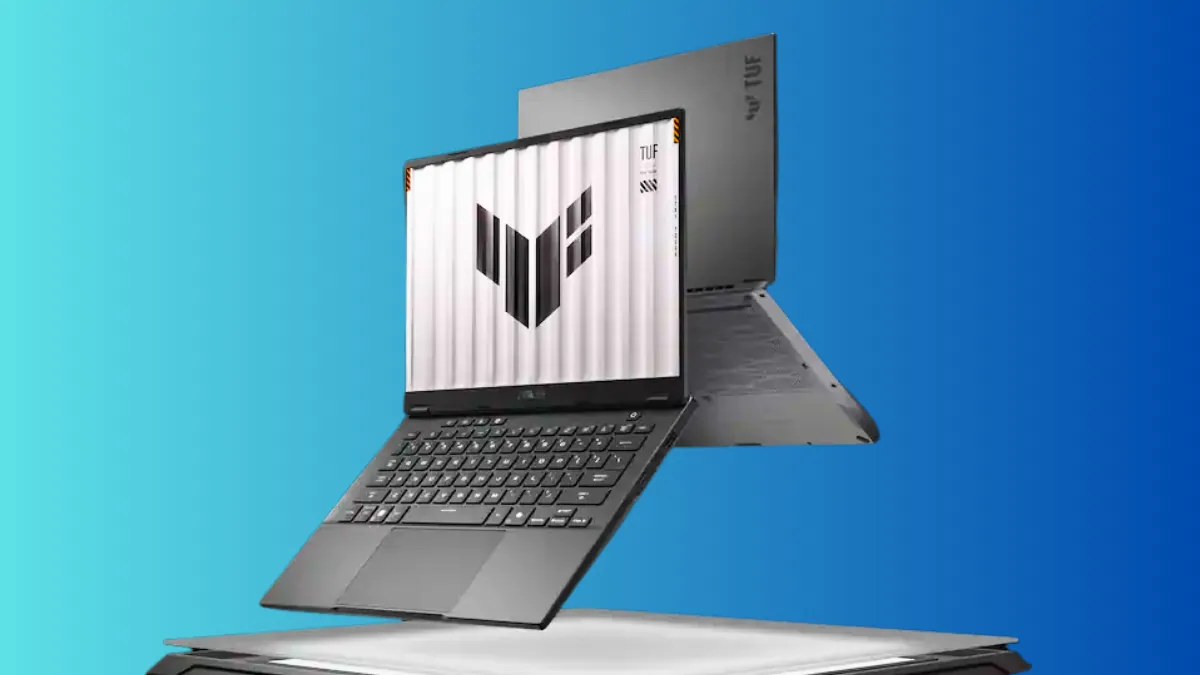
ASUS is preparing to release its TUF Gaming A14 FA401EA-DS96 in the United States, introducing one of the first 14-inch gaming laptops built around AMD’s Ryzen AI Max+ 392 processor. Retail listings confirm a $2,199 price point and position the system as a Copilot+ PC with 32GB of unified memory, signaling ASUS’s intent to compete not only in gaming but also in AI-focused computing and creator workflows.
Major US retailers list the model with a 14-inch 2560 × 1600 IPS display running at 165Hz and rated at 400 nits brightness. Distributor documentation confirms the configuration includes 32GB of LPDDR5X memory and a 1TB PCIe 4.0 SSD under the FA401EA-DS96 model number. Separate reporting indicates that the US version will not offer a 48GB RAM option, limiting memory scalability compared to some global configurations.
A key hardware difference in the TUF Gaming A14 is its use of AMD’s Strix Halo platform instead of a discrete GPU configuration. The Ryzen AI Max+ 392 integrates 12 CPU cores and 24 threads with boost speeds up to 5.0 GHz, Radeon 8060S integrated graphics, a dedicated AI NPU for Copilot+ workloads, and quad-channel LPDDR5X memory running at 8000 MHz.
Strix Halo introduces a chiplet-based mobile design paired with quad-channel LPDDR5X memory operating at high bandwidth. The unified memory architecture allows the CPU cores, Radeon 8060S graphics, and integrated AI NPU to access the same shared memory pool rather than relying on separate system RAM and dedicated VRAM.
Instead of an RTX 4060 or RTX 4070, the A14 relies entirely on Radeon 8060S integrated graphics built into AMD’s Ryzen AI Max+ 392 platform. Unlike traditional gaming laptops that pair a CPU with a discrete GPU, this configuration uses a unified memory architecture shared across CPU, GPU, and AI processing resources.
The unified 32GB memory pool removes traditional 8GB VRAM limitations, while 8000 MHz LPDDR5X improves bandwidth for graphics-heavy tasks. At 2560 × 1600 resolution, modern AAA titles require medium settings for consistent frame rates, whereas esports titles such as Valorant, CS2, and Fortnite should take better advantage of the 165Hz refresh rate.
ASUS is also positioning the system as a Copilot+ PC aligned with Microsoft’s Windows AI initiative. The Ryzen AI Max platform integrates a dedicated NPU designed to accelerate on-device AI tasks, including local image generation, AI video processing, productivity enhancements, and machine learning workflows.
For creators and developers working locally rather than in the cloud, unified memory can reduce bottlenecks between compute and graphics resources, positioning the TUF Gaming A14 as a compact hybrid AI workstation as much as a gaming device.
The 14-inch IPS display offers 2560 × 1600 resolution, a 165Hz refresh rate, 400 nits brightness, 100% sRGB coverage, and an anti-glare coating. Weighing 3.26 lbs (1.48 kg) and measuring just 0.67 inches thick, the system falls into the thin-and-light performance category rather than traditional bulky gaming laptops.
A 73Wh battery and 200W power adapter support sustained performance, while ENERGY STAR and EPEAT Silver certifications indicate an emphasis on efficiency.
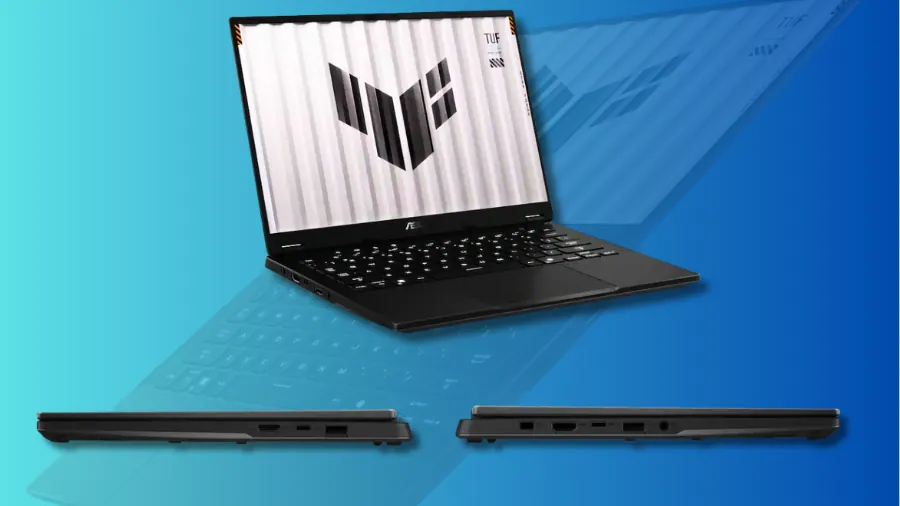
Connectivity includes HDMI 2.1, USB-C 4, USB-C 3.2, two USB-A 3.2 ports, Wi-Fi 6E, Bluetooth, and a microSD card reader. Two M.2 slots allow storage expansion, though system memory is soldered with no upgrade path beyond 32GB in the US configuration.
The TUF Gaming A14 enters a segment typically populated by 14-inch systems equipped with discrete RTX-class GPUs. ASUS has recently expanded its Ryzen AI-powered lineup across both business and premium ultrabook segments. Instead of pairing a separate graphics chip, this configuration centers on AMD’s Strix Halo platform, combining integrated Radeon 8060S graphics, AI acceleration, and unified LPDDR5X memory within a single architecture.
Buyers prioritizing ray tracing performance and NVIDIA’s DLSS ecosystem may still prefer traditional discrete GPU options, while developers, creators, and esports-focused gamers may find value in the unified AI-driven approach.
Retail listings indicate availability is imminent, placing the FA401EA-DS96 among the first Strix Halo-based gaming laptops expected to reach American consumers in 2026.
Key Specifications
| Model | ASUS TUF Gaming A14 FA401EA-DS96 |
| Processor | AMD Ryzen AI Max+ 392 (12 cores / 24 threads) |
| CPU Frequency | 3.2 GHz base, up to 5.0 GHz boost |
| Graphics | AMD Radeon 8060S integrated graphics |
| Memory | 32GB LPDDR5X 8000 MHz (soldered, non-upgradeable) |
| Storage | 1TB PCIe 4.0 NVMe SSD |
| Display | 14-inch IPS LED, 2560 × 1600 resolution |
| Refresh Rate | 165Hz |
| Brightness | 400 nits |
| Color Coverage | 100% sRGB |
| Ports | HDMI 2.1, 1 × USB-C 4, 1 × USB-C 3.2, 2 × USB-A 3.2 |
| Wireless | Wi-Fi 6E, Bluetooth |
| Battery | 73Wh, four-cell lithium-ion |
| Power Adapter | 200W |
| Camera | 1080p with facial recognition |
| Weight | 3.26 lbs (1.48 kg) |
| Thickness | 0.67 inches |
| Operating System | Windows 11 Home |
| AI Platform | Copilot+ PC certified |
Sources: Best Buy, Provantage