

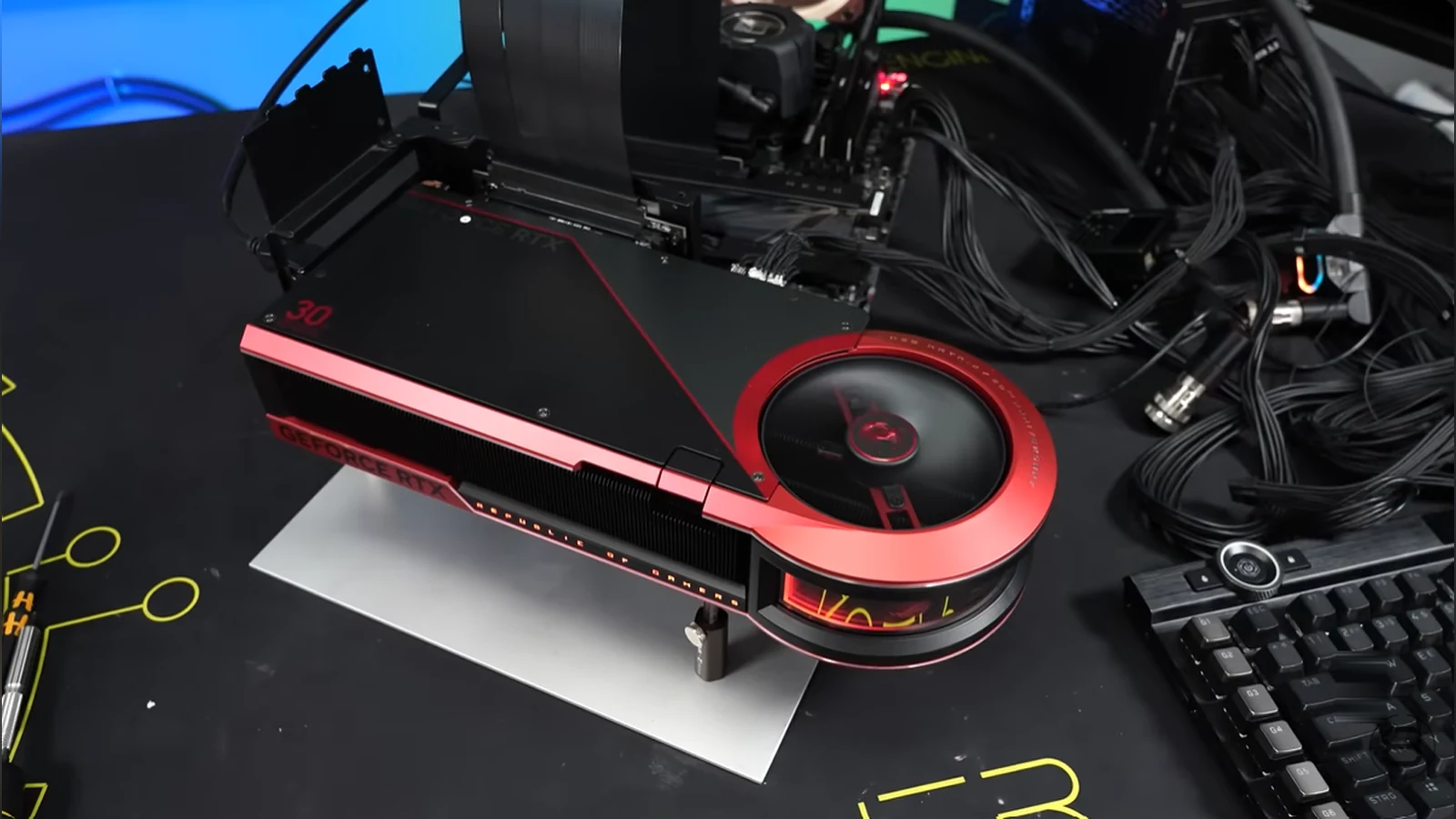
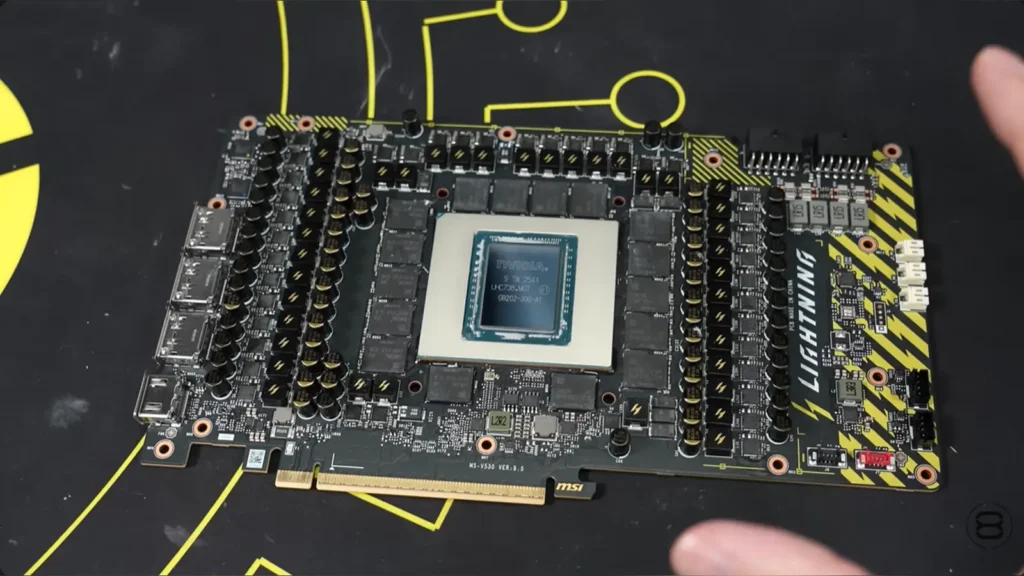
German hardware modder Der8auer has modified a rare MSI GeForce RTX 5090 LIGHTNING Z graphics card to run on a custom liquid cooling loop. The limited-edition card has a production run of only 1,300 units and often sells for around $7,000 on secondary markets. The custom modification was completed in collaboration with PC builder MIFCOM, who wanted the flagship card integrated into a custom desktop loop.
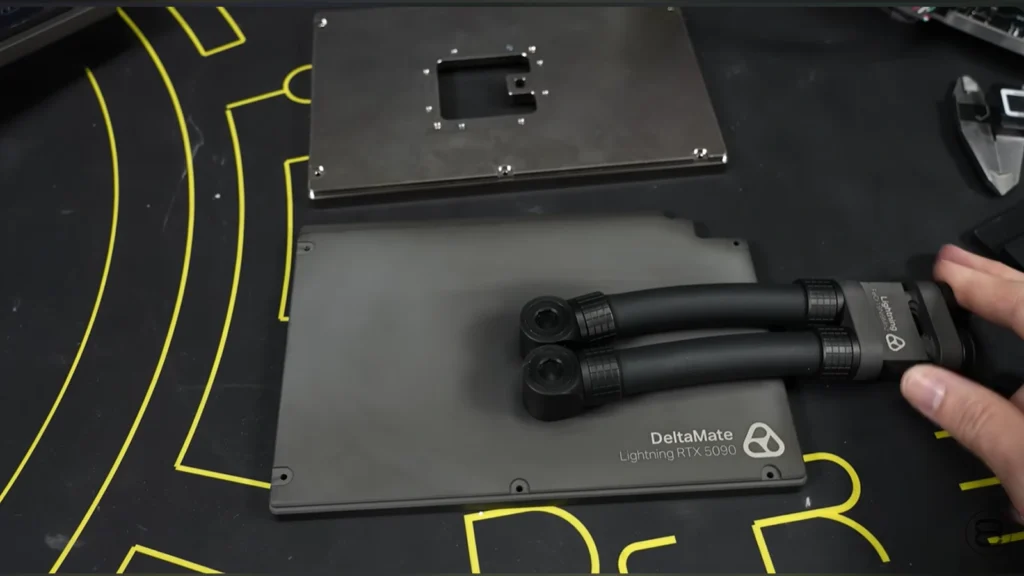
Rather than replacing the entire factory assembly with a standard aftermarket block, the team designed a conversion that preserves the card’s original outer shroud and large display screen. The mod reuses MSI’s copper base, internal rubber flow guide, and external housing while connecting them to custom water block fittings. This approach is a popular alternative for enthusiasts building custom computers using flagship GeForce graphics cards.


Also read: RTX 5090 Burn Damage GPU VRAM Warranty Rejected
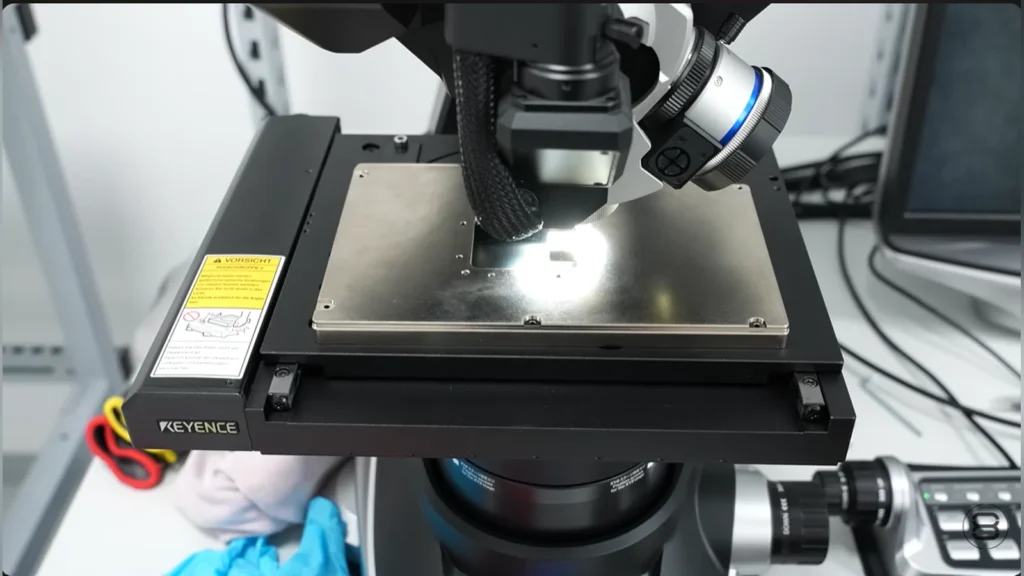
During assembly, material testing revealed that a factory plate appearing to be nickel-plated steel was actually aluminum coated with 8 to 10 micrometers of electroless nickel. While this setup functions safely inside a sealed AIO cooler containing specialized chemical inhibitors, it poses a risk of galvanic corrosion in an open custom loop if the thin coating develops pores. To prevent corrosion issues, the team replaced the aluminum component with a custom PVD-coated stainless-steel plate.
The team also installed new 1 mm (about 0.04 inches) thermal pads and a high-performance phase-change thermal interface. Der8auer decided against overclocking the GPU or flashing a more aggressive BIOS because the graphics card belongs to a customer. However, the modified cooling layout underwent intense testing to verify its thermal limits under full load.
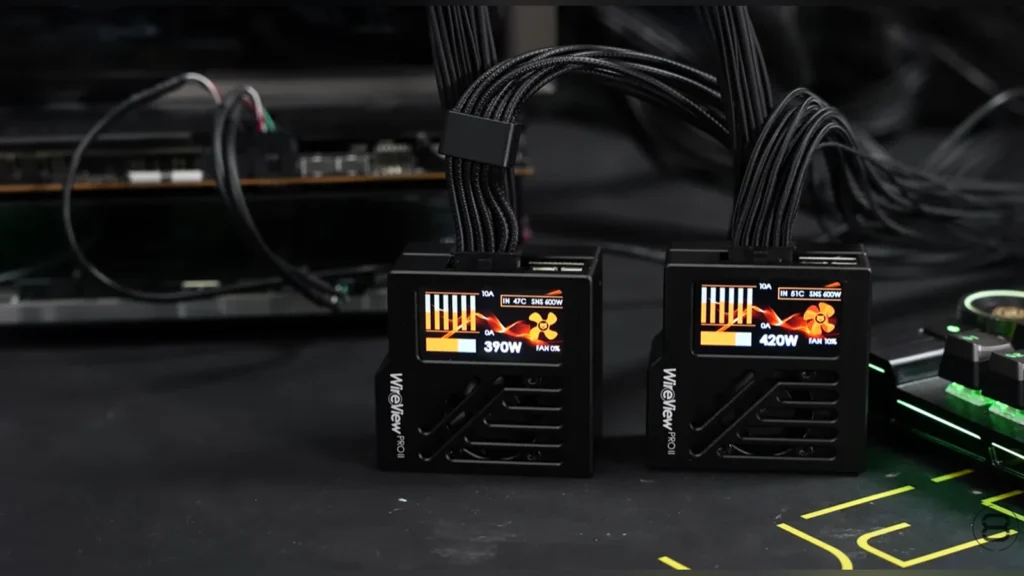
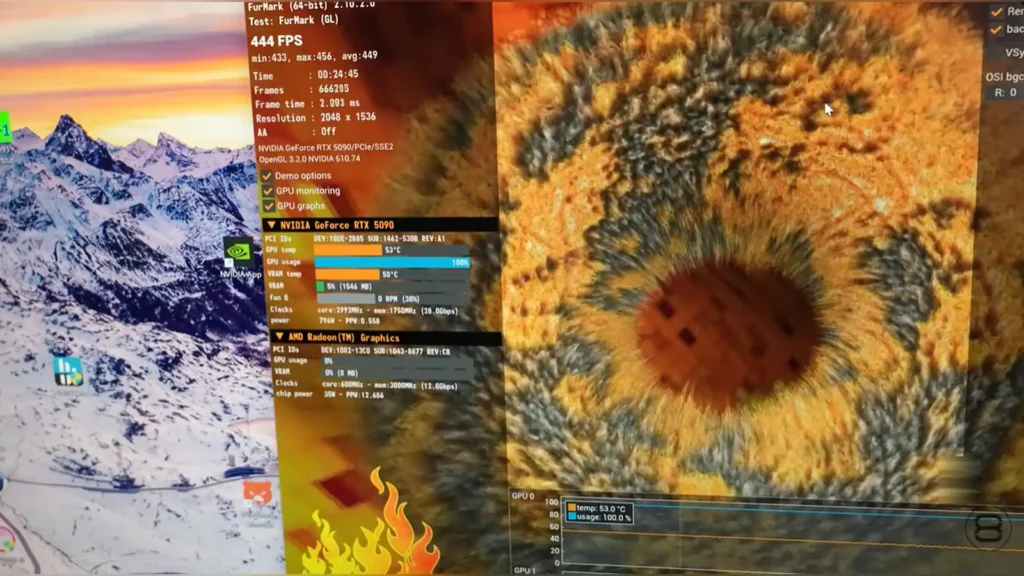
The cooling loop was connected to an external MO-RA radiator and three D5 water pumps operating at a flow rate of almost 190 liters per hour (about 50.2 gallons per hour). Under a heavy 800W GPU load, the RTX 5090 core temperature initially stabilized at 54°C (about 129°F). After a full hour of testing, the coolant temperature reached 32°C (about 90°F) while the GPU remained stable at 52°C to 53°C (about 125°F to 127°F), showing a coolant-to-core delta of just 20°C (about 36°F difference).
Source: YouTube – der8auer EN