
Lenovo has refreshed its ThinkBook 14+ and ThinkBook 16+ business laptops for 2026, introducing new AMD Ryzen AI hardware, higher sustained power limits, and an unusual desktop-style expansion path rarely seen in productivity-focused notebooks.
The updated models are already on sale in China, starting at 6,999 yuan (USD $1008.65, 06th Feb 2026)for configurations with 32 GB of memory and 1 TB of storage, a price point that undercuts many premium business laptops while offering far more aggressive hardware tuning.
The refreshed model runs on AMD’s Ryzen AI 7 H 450 processor, built on the company’s Gorgon Point platform. The chip features an 8-core, 16-thread CPU design built around a hybrid mix of Zen 5 and Zen 5c cores, combining high single-thread performance with improved efficiency for sustained workloads.
Alongside the CPU, the processor integrates a dedicated neural processing unit capable of delivering up to 50 TOPS of AI compute, enabling tasks such as background noise suppression, image enhancement, and on-device AI assistants to run locally without relying on cloud acceleration.
This focus on local AI processing closely aligns with Microsoft’s roadmap for future Windows features, where NPU performance is expected to play a growing role in system-level AI functions. By adopting AMD’s latest AI-focused silicon early, Lenovo is positioning the ThinkBook line as a longer-term platform rather than a short-cycle refresh.
Graphics duties are handled by the integrated Radeon 860M GPU, reflecting Lenovo’s decision to prioritise efficiency and balanced performance over discrete graphics. What truly differentiates the ThinkBook 14+ and 16+, however, is Lenovo’s TGX graphics interface.
Unlike conventional Thunderbolt-based eGPU solutions, TGX is designed to offer bandwidth in the same class as OCuLink, estimated at around 64 Gbps dramatically reducing the performance bottlenecks that typically limit external GPUs. For a business-class laptop, this creates an uncommon upgrade path: a thin, portable system that can tap into near-desktop graphics performance when docked.
Lenovo has also pushed power limits well beyond what is typical for slim productivity laptops. The ThinkBook 14+ is configured for up to 80 W of sustained CPU power. At the same time, the larger ThinkBook 16+ reaches approximately 83 W. These figures suggest an emphasis on long-duration workloads such as software compilation, data analysis, and content creation, rather than short turbo bursts. To support this, Lenovo has revised the hinge design and internal airflow layout, aiming to maintain performance under extended load without sacrificing portability.

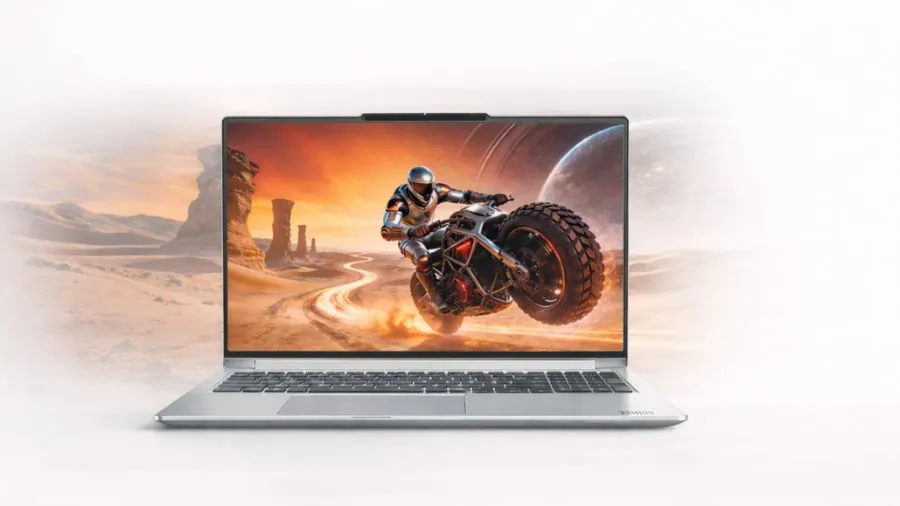
ThinkBook 14+ and ThinkBook 16+ (2026): Key Differences
| Feature | ThinkBook 14+ 2026 (Ryzen AI) | ThinkBook 16+ 2026 (Ryzen AI) |
|---|---|---|
| Processor | Ryzen AI 7 H 450 (8 cores, 16 threads, up to 50 TOPS NPU) | Ryzen AI 7 H 450 (8 cores, 16 threads, up to 50 TOPS NPU) |
| Sustained CPU Power | Up to 80 W | Up to ~83 W |
| Display | 14.5-inch, 3072 × 1920 (3K) | 16-inch, 3200 × 2000 (3.2K) |
| Refresh Rate | 120 Hz | 165 Hz |
| Color Coverage | 100% DCI-P3, factory calibrated | 100% DCI-P3, TÜV low blue light |
| Graphics | Radeon 860M integrated | Radeon 860M integrated |
| External GPU Support | TGX graphics interface | TGX graphics interface |
| Memory | Up to 32 GB LPDDR5X-8533 | Up to 32 GB LPDDR5X-8533 |
| Battery | ~99.9 Wh | ~99.9 Wh |
| Launch Price (China) | From 6,999 yuan ($1008) (32 GB + 1 TB) | From 6,999 yuan ($1008) (32 GB + 1 TB) |
Display quality is another looking factor of the 2026 refresh. Both models feature high-resolution panels with full DCI-P3 color coverage, targeting professionals who value crisp text, smooth motion, and colour accuracy. Lenovo also highlights factory calibration and improved skin-tone reproduction, a detail particularly relevant for designers, photographers, and creators working with people-centric visuals.
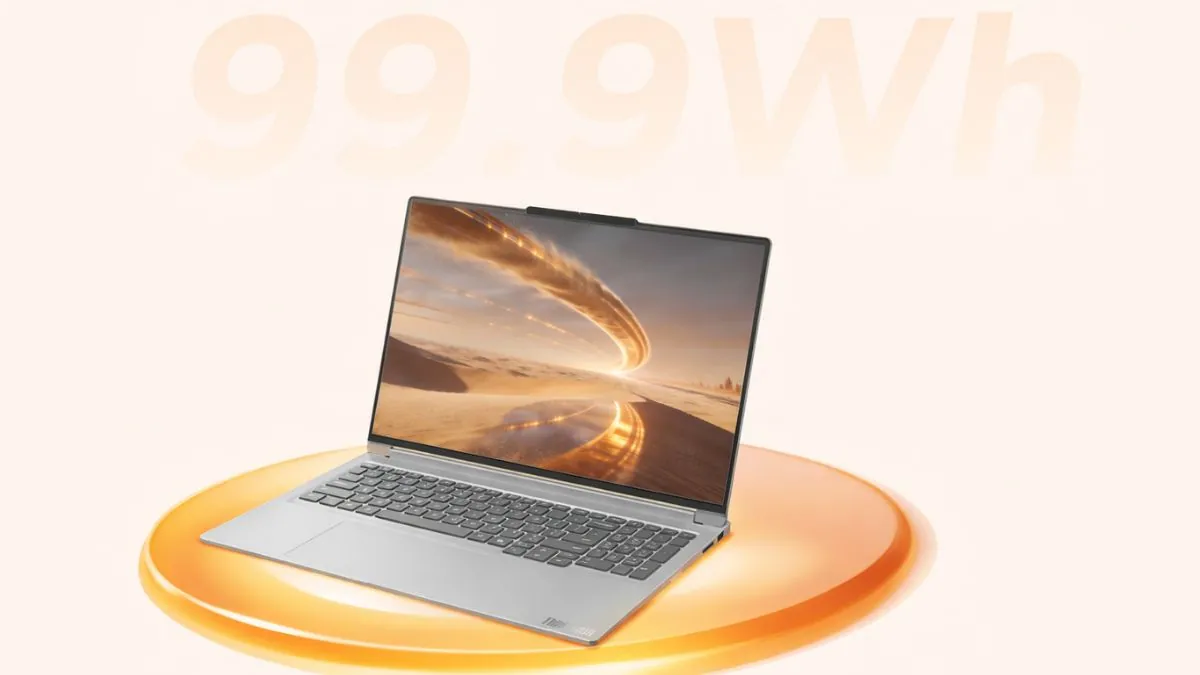
With batteries approaching the 100 Wh airline-legal limit and bundled 140 W GaN chargers, the new ThinkBooks are designed for long workdays while still supporting fast top-ups between meetings or travel. This system-level approach becomes increasingly important as AI features run continuously in the background, placing greater demands on both efficiency and thermal design.
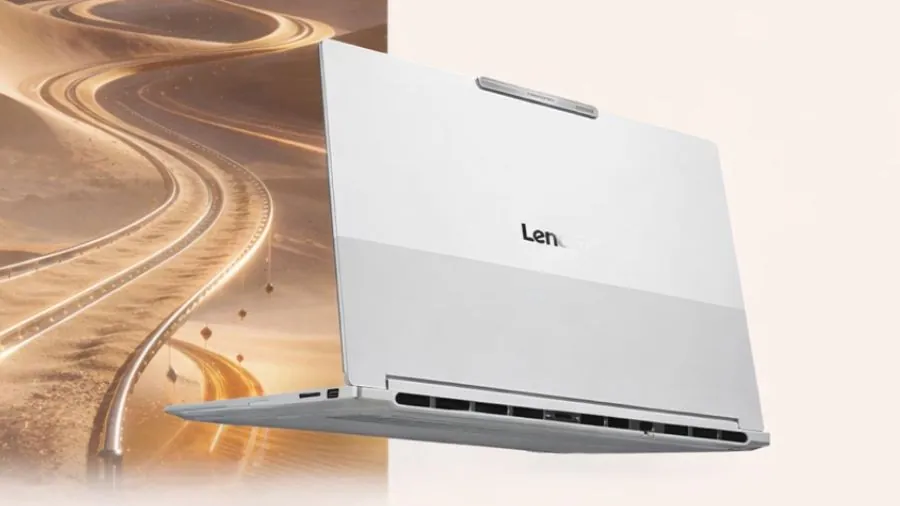
Lenovo is limiting availability to China, with no official confirmation of a global launch. However, the company often introduces ThinkBook configurations domestically before expanding to other regions. If that pattern holds, the ThinkBook 14+ and 16+ (2026) offer a clear preview of where business laptops are headed: AI-capable silicon, fewer compromises on sustained performance, and flexible expansion options that narrow the gap between ultraportables and full-size workstations.
Source: ITHome (In Chinese)