
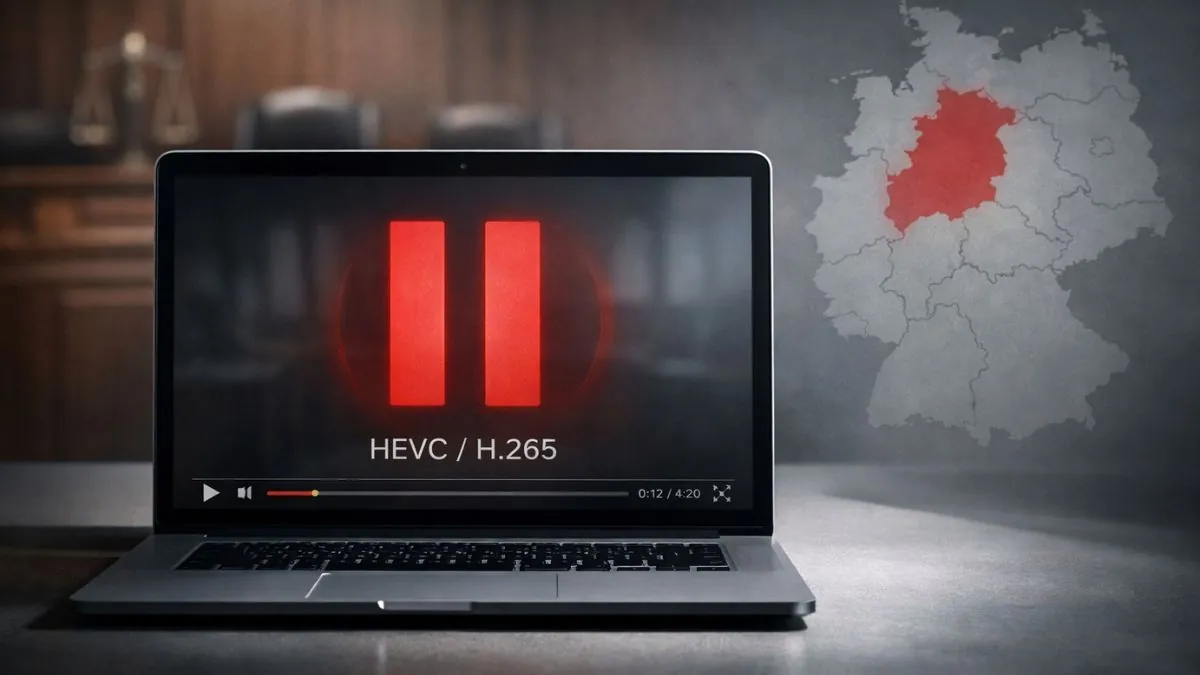
A Munich I Regional Court ruling has ordered Acer and Asus to cease sales of certain PCs and laptops in Germany after finding infringement of a Nokia standard-essential patent tied to H.265 HEVC video technology, intensifying a high-stakes licensing dispute in Europe’s largest PC market.
The decision, delivered on January 22 by the 7th Civil Chamber of the Munich I Regional Court case numbers 7 O 4100/25 against Acer and 7 O 4102/25 against Asus, concluded that the companies infringed Nokia’s European patent EP 2 375 749, which covers aspects of video coding under the H.265 High Efficiency Video Coding standard. The chamber, presided over by Judge Oliver Schön, issued the injunction the same day as the oral hearing, a practice increasingly seen in Munich’s fast-moving SEP litigation docket.
Central to the ruling was the court’s assessment under Germany’s FRAND framework, meaning fair, reasonable, and non-discriminatory licensing. The judges determined that Acer and Asus were not acting as willing licensees, clearing the legal path for injunctive relief. In German SEP jurisprudence, implementer willingness is critical. Failure to demonstrate good-faith licensing conduct can result in a sales ban even while rate disputes continue elsewhere.
The dispute is part of Nokia’s broader effort to enforce its HEVC-related standard-essential patents. In spring 2025, Nokia filed several lawsuits in Germany and at the Unified Patent Court. The company claimed that certain products were using its patented technology without a proper license. These cases involve patent EP 2 375 749 and other patents from Nokia’s HEVC portfolio.


Hisense, which was also named in similar actions, chose to take a license earlier this year. This decision reduced its legal risk. At the same time, related cases were ongoing in the United Kingdom. In one of those cases, the UK High Court granted an interim license while it continues to review fair licensing terms under FRAND rules. However, although this development was discussed during court proceedings in Munich, it did not prevent the German court from issuing an injunction.
The Munich court has recently updated how it evaluates FRAND-related disputes, especially regarding financial guarantees and interim payments. Higher courts have stated that companies using patented technology must show they are willing to take a license, which can include providing proper financial security.
The Munich 7th Civil Chamber has indicated that paying any undisputed amounts — and possibly the difference between the company’s offer and a court-set interim license — can be considered when assessing willingness. In this case, the court decided that the company did not meet the required level of willingness.
Technically, the case centers on H.265, also known as High Efficiency Video Coding HEVC, a global compression standard widely used for 4K streaming, video conferencing, and professional content production. Modern Windows 11 systems frequently rely on HEVC support for efficient playback of high-resolution media, and hardware acceleration for encoding and decoding is integrated across Intel, AMD, and NVIDIA GPU architectures. In practice, most contemporary laptops capable of 4K playback or video editing interact with HEVC at the silicon or software layer.
The injunction prohibits Acer and Asus from selling laptops and desktop PCs in Germany that implement the disputed method. Importantly, the order targets the manufacturers rather than retailers. Existing inventory in the retail channel can typically continue to be sold while stock lasts, but direct shipments from the vendors’ German online storefronts have already been disrupted.
Acer confirmed it has temporarily suspended sales of affected products in Germany following the ruling and is evaluating further legal steps, stating it respects intellectual property rights and is seeking a fair resolution. Numerous other product categories, including monitors, networking devices, and accessories, remain unaffected by the decision.
Germany represents one of Europe’s most significant PC markets, particularly for enterprise procurement, public-sector contracts, and seasonal back-to-school demand.
Any prolonged sales interruption could reshape short-term competitive dynamics, potentially shifting channel demand toward Lenovo, HP, and Dell if Acer and Asus cannot quickly secure licensing terms or relief on appeal.
Also Read: Best Acer Laptop
The ruling also underscores a growing divergence in how European jurisdictions approach standard-essential patent disputes. UK courts have demonstrated a willingness to determine global FRAND rates and impose interim licensing frameworks, while German courts, particularly in Munich, continue to apply a stringent analysis of implementer conduct and grant injunctions when licensing behavior falls short of domestic standards. This cross-border tension increases strategic complexity for global device manufacturers operating across multiple legal regimes.
For consumers, the immediate impact is more limited than headlines may suggest. There is no product recall and no deactivation of existing devices. Current Acer and Asus owners can continue using their systems without interruption. However, replenishment of new stock in Germany may tighten if enforcement proceeds and appeals do not quickly reverse or suspend the injunction.
The dispute highlights how widely HEVC remains used across hardware and professional video workflows, even as alternatives like AV1 gain adoption. Licensing obligations tied to the standard continue to affect device manufacturers.
Acer and Asus are expected to appeal the ruling, and a negotiated licence would be the fastest way to restore full sales in Germany. Until then, the injunction remains in place.
Sources: PC Welt, Juve Patent