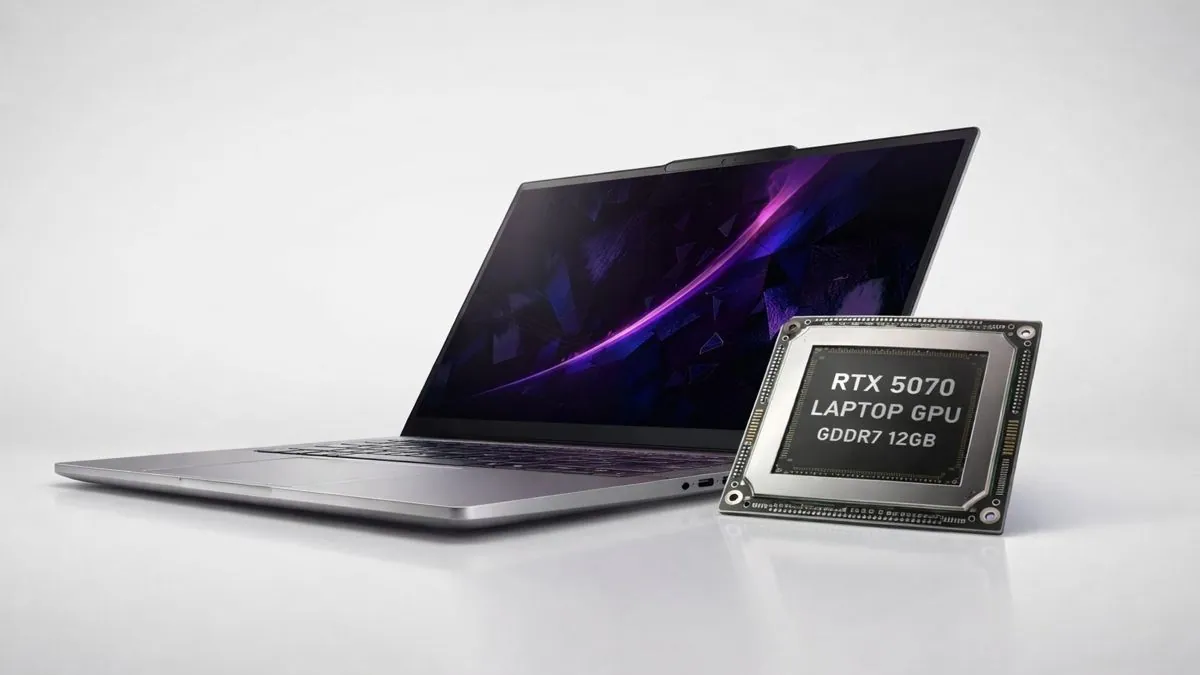
Early retail listings from several laptop manufacturers suggest a possible memory upgrade for Nvidia’s upcoming GeForce RTX 5070 Laptop GPU. While the mobile version of the card is generally expected to ship with 8GB of GDDR7 memory, some retailer pages and OEM specifications have started referencing a 12GB configuration instead.
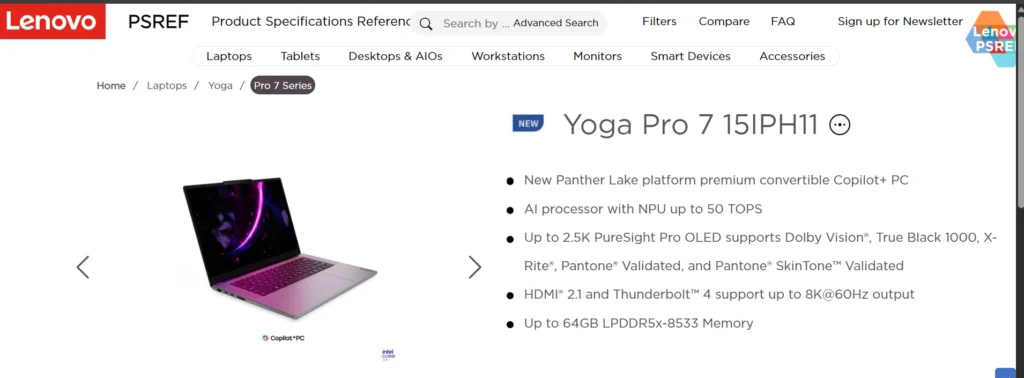
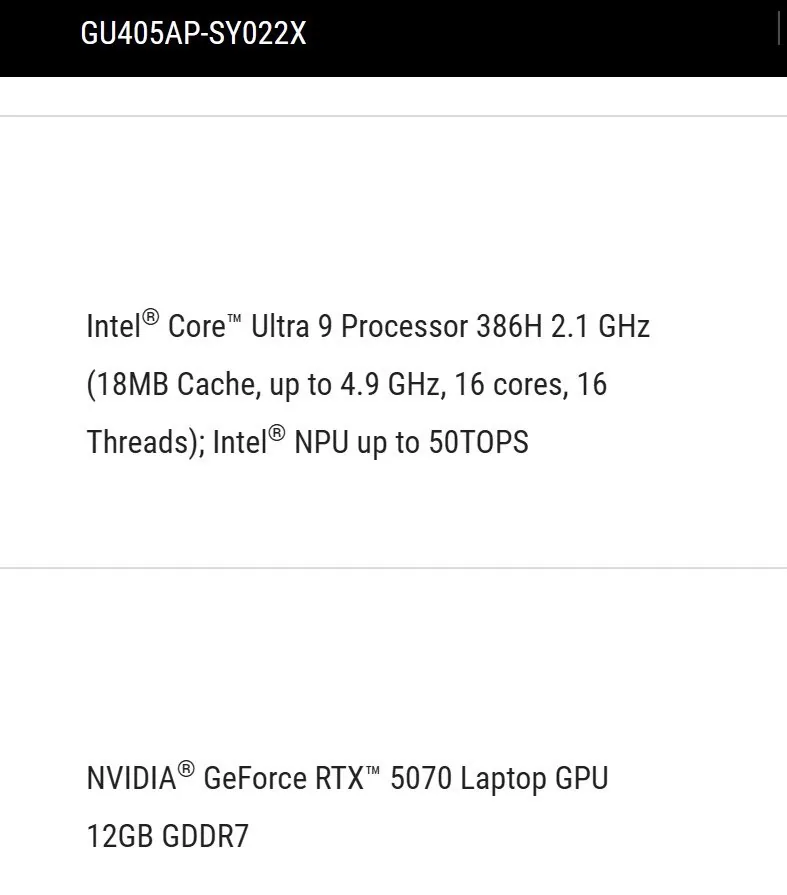
The first signs appeared in specifications tied to upcoming gaming laptops from ASUS and Lenovo. In one example, an ASUS ROG system listing briefly showed an RTX 5070 Laptop GPU paired with 12GB of GDDR7 memory in its graphics section. A similar reference also appeared on Lenovo’s site in connection with a Yoga Pro 7 configuration that mentioned an RTX 5070 with 12GB of GDDR7.
At the same time, some of these product pages contain conflicting information. In certain cases the headline GPU description lists 12GB of video memory, while another field on the same page still shows the more typical 8GB configuration. This inconsistency suggests that manufacturers may still be updating product databases or that the listings were published before final specifications were locked.
The possibility of a larger memory buffer is significant because VRAM capacity has become a growing concern in modern PC games. We also recently see how new AI workloads are influencing hardware design in our MacBook Pro M5 Pro and M5 Max launch coverage.
Recent titles increasingly rely on high-resolution textures, ray tracing data, and larger asset pools that can push an 8GB memory buffer to its limits. Increasing capacity to 12GB would provide additional headroom and help reduce issues such as texture pop-in, streaming delays, or sudden frame pacing drops during heavier scenes.
A memory upgrade does not necessarily mean the GPU itself becomes more powerful. Laptop graphics processors operate within strict power limits compared to desktop cards, and they often use smaller or lower-clocked versions of the same silicon. As a result, even if the RTX 5070 Laptop GPU moves to a 12GB configuration, its overall performance class is likely to remain similar.
The change would mainly improve usability in games that demand more video memory rather than deliver a large jump in raw frame rates. Nvidia is also working on new laptop platforms, including its N1X ARM-based laptop CPU designed for AI-focused systems.
One likely explanation is the use of higher-density GDDR7 modules. Micron recently introduced 24GB GDDR7 memory modules capable of reaching 36Gb/s, which could allow manufacturers to increase VRAM capacity in future GPUs.
By switching to denser memory chips, manufacturers can increase capacity without changing the memory bus width or the general bandwidth profile of the GPU. That approach would allow Nvidia to expand the frame buffer while keeping the underlying architecture largely unchanged.
The RTX 5070 Laptop GPU is expected to use Nvidia’s Blackwell architecture, the company’s next-generation GPU design focused on AI acceleration and improved ray tracing performance.
Industry watchers have also pointed out that the references appeared across multiple independent listings rather than a single isolated page. A leak shared by hardware tracker Huang514613 on social media showed a product specification page mentioning an RTX 5070 Laptop GPU with 12GB GDDR7, adding a second data point to the rumor.
Still, the information remains unconfirmed. Nvidia has not announced a 12GB RTX 5070 Laptop GPU, and laptop vendors have not published final technical breakdowns for these upcoming systems. It is also possible that some listings mistakenly referenced the 12GB configuration associated with higher-tier GPUs in the lineup.
If the configuration turns out to be real, it would address one of the most common criticisms of mid-range laptop GPUs in recent years. Many gaming notebooks have continued shipping with 8GB of VRAM even as game memory requirements have steadily increased. Moving to 12GB would give systems based on the RTX 5070 more flexibility to run future titles at higher texture settings without hitting memory limits.
For now, buyers interested in upcoming RTX 5070 laptops may need to wait for official specifications or final retail listings before confirming which memory configuration their system will ship with.
Reported RTX 5070 Laptop GPU Configuration (Unconfirmed)
| Specification | Reported Value |
|---|---|
| GPU | Nvidia GeForce RTX 5070 Laptop GPU |
| Architecture | Nvidia Blackwell (mobile) |
| Standard Memory | 8GB GDDR7 |
| Possible Configuration | 12GB GDDR7 |
| Platform | Gaming laptops |
| Status | Unconfirmed |
Source: Huang514613 on X, Lenovo