

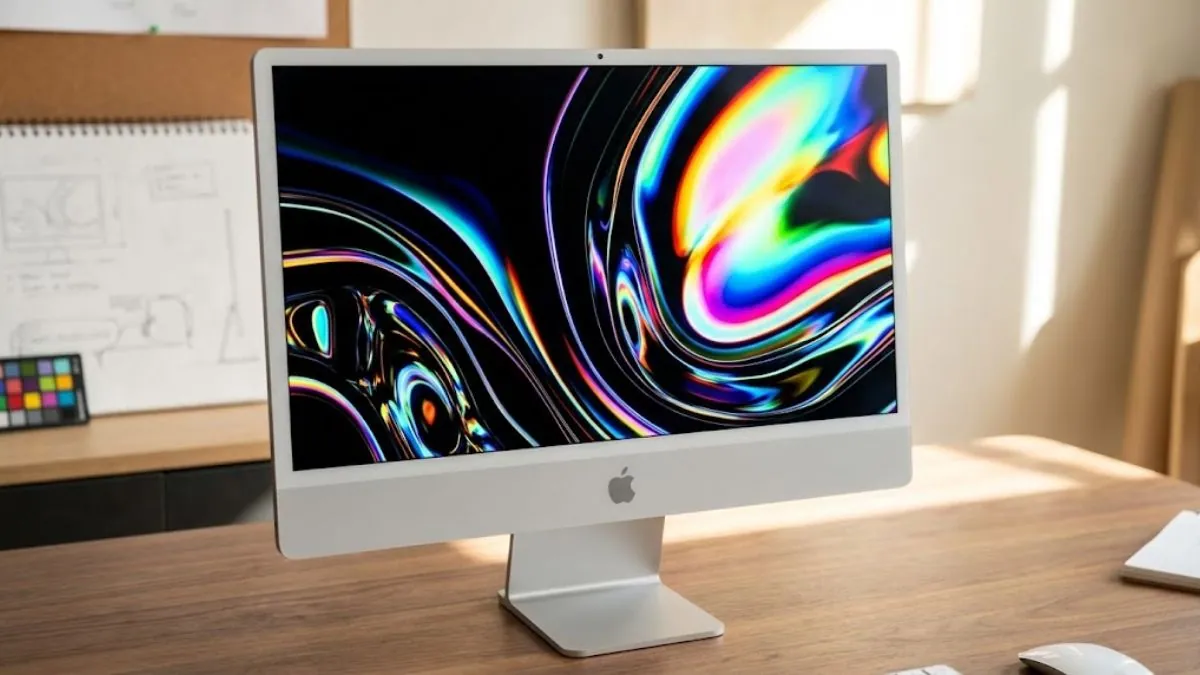
According to industry sources cited by South Korean publication The Elec, Apple has begun initial development work to bring OLED display technology to its iMac lineup. The company has reportedly issued Requests for Information (RFIs) to both Samsung Display and LG Display, indicating the start of technical evaluation rather than an imminent product launch.
This move marks Apple’s first concrete step toward adopting OLED panels in its desktop all-in-one computers, following the company’s broader shift to OLED for iPhones and iPads.
Reported Display Targets: 24-inch, 600 nits, identical pixel density
According to The Elec, Apple’s current OLED iMac request focuses on a 24-inch panel with a peak brightness of 600 nits and a pixel density of 218 pixels per inch (PPI). This specification matches the pixel density and 4480 × 2520 resolution of the current 24-inch LCD iMac, suggesting that Apple aims to maintain existing macOS scaling behavior and software compatibility.
For comparison, the current LCD-based iMac is rated at 500 nits, meaning the proposed OLED panel would offer approximately 20 percent higher brightness, in addition to the inherent contrast and per-pixel lighting advantages of OLED.
OLED iMac vs Current LCD iMac: Key Differences
While Apple has not confirmed final specifications, the reported targets indicate a measured upgrade strategy rather than a radical redesign.
Current 24-inch iMac (LCD):
- 500 nits brightness
- 218 PPI
- IPS LCD with LED backlight
- Fixed contrast limitations inherent to LCD technology
Proposed OLED iMac (in development):
- 600 nits peak brightness (reported)
- 218 PPI (unchanged)
- Self-emissive OLED pixels
- Higher contrast, deeper blacks, improved HDR performance
This approach suggests Apple is prioritizing display quality improvements without altering resolution or panel size, reducing software and UI transition risks.
Panel Technology: QD-OLED vs W-OLED Under Evaluation
According to industry sources, both Samsung Display and LG Display are developing large-format OLED solutions that avoid fine metal mask (FMM) manufacturing, which is currently impractical for mass production of 20- to 30-inch RGB OLED panels.
Samsung Display is expected to introduce a five-stack QD-OLED (BBGBG) panel design. The additional green emissive layer is intended to increase brightness and has already been adopted in Samsung’s latest large OLED products.
Meanwhile, LG Display is reportedly considering a five-stack W-OLED (BGBRG) configuration, moving beyond its current four-stack architecture. LG is also evaluating a potential shift from a back-emitting to a top-emitting panel structure to improve aperture ratio and brightness efficiency.
Apple prefers RGB OLED technology, which produces colors directly at the sub-pixel level. However, sources say that RGB OLED manufacturing for iMac display sizes is not yet ready for mass production.
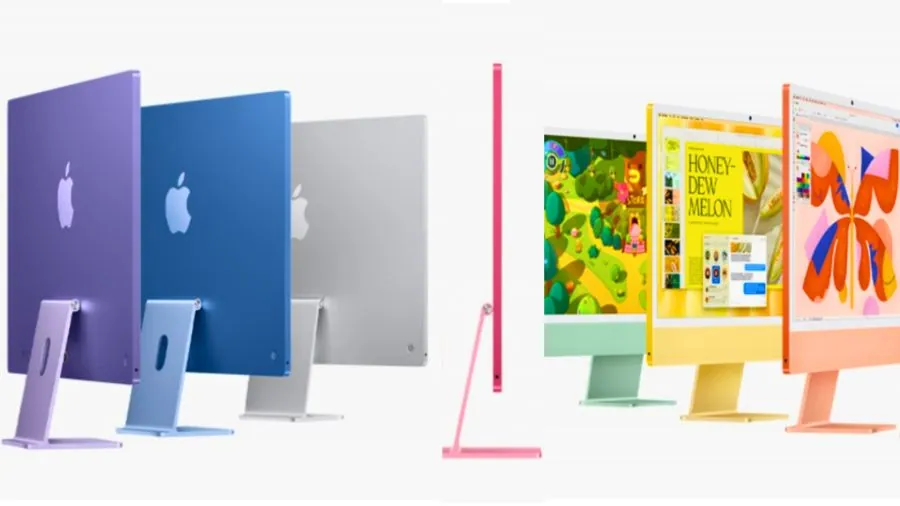
(Credit: Apple)
Timeline Points to Post-2027 Launch Window
According to The Elec, Apple’s internal development targets suggest OLED iMac panel work would not be completed until 2027 or later, with commercial availability expected after that timeframe.
This places the OLED iMac behind Apple’s upcoming MacBook OLED transition, where Samsung Display is expected to begin mass production of 14-inch and 16-inch OLED panels for MacBook models earlier. Those smaller displays require fewer manufacturing changes than a 24-inch desktop panel.
Notebookcheck reports that this timeline also aligns with indications of a nearer-term iMac Pro refresh, potentially powered by an M5 Max chip and arriving before the first OLED iMac. Under this sequencing, an M-series iMac Pro would serve as an interim high-end desktop before OLED reaches the mainstream iMac line.
Position Within Apple’s Broader OLED Roadmap
The OLED iMac project represents Apple’s long-term display transition strategy rather than a short-term product refresh. Large desktop OLED panels are significantly more complex and expensive to manufacture than notebook or tablet displays.
According to reports, LG Display is testing alternative non-FMM OLED processes, including eLeap, although these technologies have not yet been validated for mass production in iMac-class sizes.
Consequently, the OLED iMac is now considered a product for the end of the decade, arriving only when Apple has finalized scalable, cost-effective large-panel OLED manufacturing.
Source(s) The Elec (South Korea) via Notebookcheck