
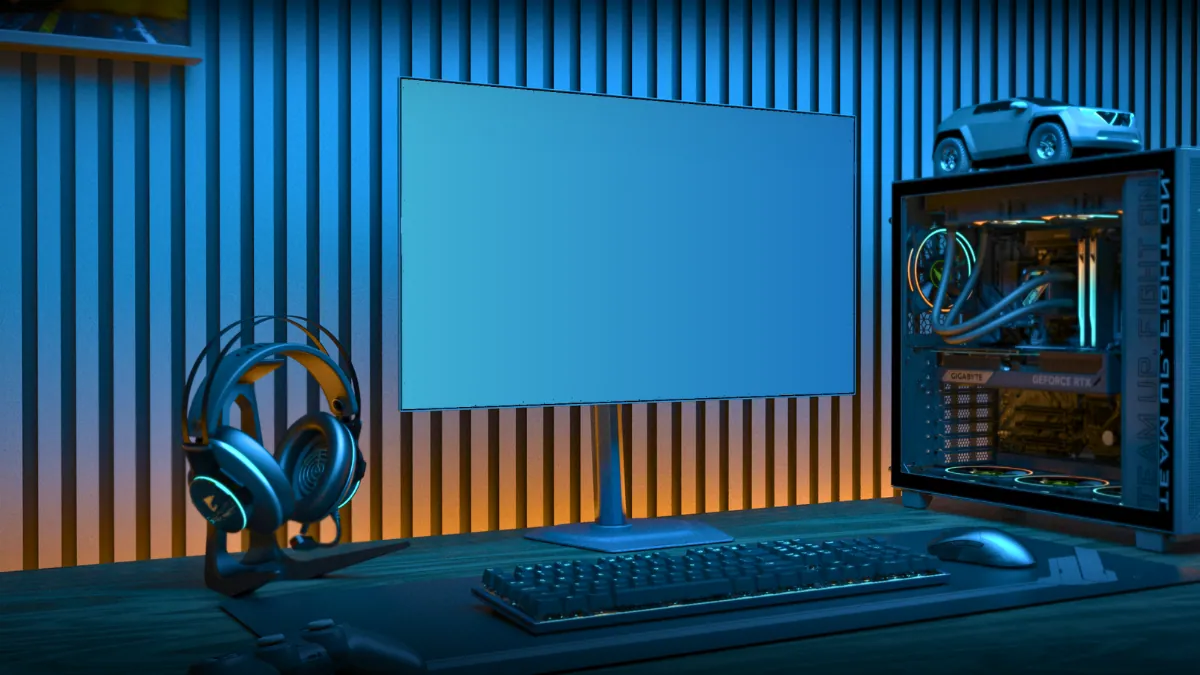
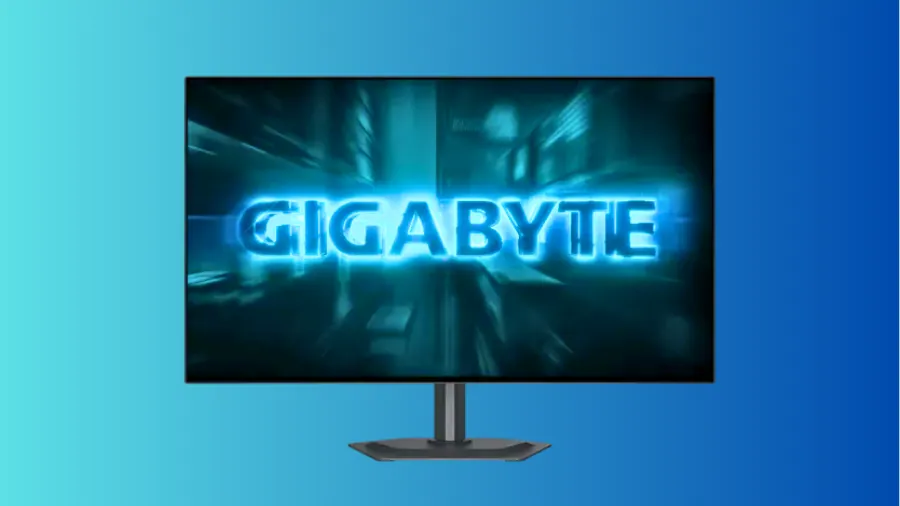
Gigabyte has introduced the GO27Q24G, a 27-inch QHD OLED gaming monitor that combines a glossy panel finish with a 240Hz refresh rate and high peak HDR brightness, expanding competition in the fast-growing 1440p high-refresh OLED category. The model has launched first in China at 2,599 yuan (approximately $376), where it is currently available for preorder, with broader global availability expected. Positioned under the $400 mark in its initial market, the display signals a clear push toward sharper, more contrast-rich OLED gaming monitors in 2026.
The GO27Q24G centers on a 2560 x 1440 WOLED panel built on LG Display’s MLA+ generation, using Gigabyte’s “RealBlack Glossy” anti-reflection surface. With a 240Hz refresh rate and a 0.03ms GTG response time, the display is aimed squarely at competitive players who want OLED-level contrast without moving to 4K, which remains more demanding on graphics hardware.
For GPUs in the RTX 4070 or Radeon RX 7800 XT class, 1440p at high refresh rates remains a practical sweet spot, particularly in esports titles and well-optimized AAA games.
Unlike many matte-coated gaming monitors, Gigabyte has opted for a glossy surface treatment. That choice prioritizes perceived sharpness and richer contrast by avoiding the light diffusion layer found on matte panels. Text edges and fine UI details can appear cleaner, and black levels benefit visually from the absence of haze.
Colors also appear more saturated due to the reduced diffusion layer. The trade-off is greater susceptibility to reflections in brightly lit rooms, making setup positioning more important for users with strong ambient light sources such as windows or overhead lighting.
HDR capability is one of the monitor’s headline features. Gigabyte advertises peak brightness reaching 1,300 nits in HDR highlights (measured at small 1.5% APL windows), alongside 275 nits typical SDR brightness at full-screen APL. The monitor carries VESA DisplayHDR True Black 400 certification and incorporates Gigabyte’s HyperNits technology, which the company claims can boost brightness by up to 30% without clipping highlight detail.
As with most OLED panels, the 1,300-nit figure applies to small specular highlights rather than sustained full-screen brightness. In real-world terms, this translates into punchier highlights in explosions, sunlight effects, and cinematic scenes, while maintaining deep, near-perfect black levels across darker environments.
Color performance is another area where the GO27Q24G aims to compete beyond pure gaming. The panel supports 10-bit color depth (1.07 billion colors) and 99% DCI-P3 coverage, with each unit shipping alongside a factory calibration report. Viewing angles are rated at 178° horizontally and vertically, consistent with OLED’s strong off-axis color stability.
While MLA+ WOLED technology generally offers slightly lower peak color volume at extreme brightness levels compared with some QD-OLED implementations, it typically delivers strong uniformity and reduced color fringing, which may appeal to users sensitive to text clarity. For hybrid users splitting time between gaming and light creative work, this balance may be appealing.
Adaptive sync support further strengthens its gaming credentials. The monitor supports both AMD FreeSync and NVIDIA G-Sync Compatible modes, helping reduce tearing and stutter across a wide range of graphics hardware configurations.
Connectivity reflects modern gaming and hybrid setups. The monitor includes dual HDMI 2.1 ports, DisplayPort 1.4 (HBR3), USB Type-C with 15W Power Delivery, and a 3.5mm headphone jack. HDMI 2.1 ensures compatibility with current-generation consoles at high refresh rates in 1440p modes, while USB-C expands flexibility for gaming laptops and compact desktops.
The 15W Power Delivery is sufficient for ultraportables and productivity laptops, though it is not designed to power high-performance gaming notebooks under load. The absence of integrated speakers reinforces its positioning as a dedicated performance display.
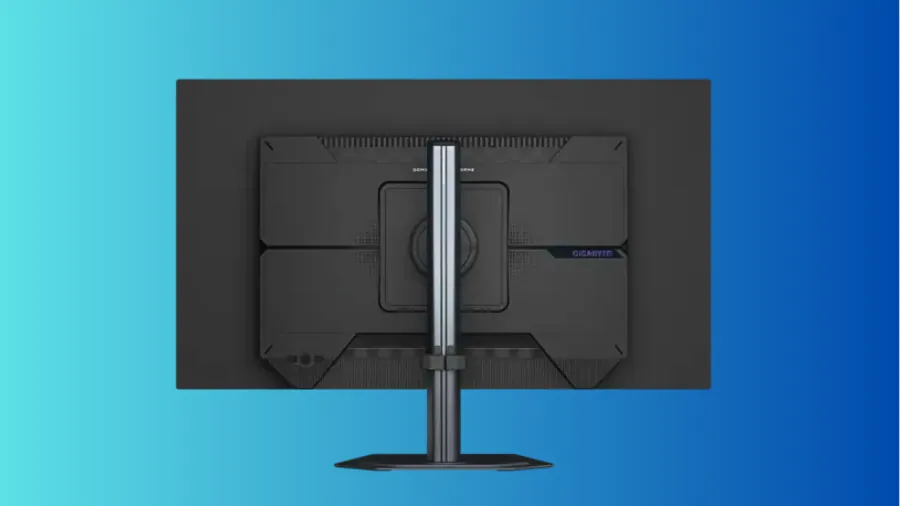
Ergonomics are comprehensive. The stand supports tilt (-5° to +21°), swivel (±15°), pivot (0° to +90° counterclockwise), and up to 130mm of height adjustment. VESA 100 x 100 mm mounting compatibility provides flexibility for multi-monitor arrays or wall-mounted setups. A Kensington lock slot is also included for added security in shared environments.
Physically, the monitor measures 604.4 x 526.5 x 187.5 mm with the stand attached and weighs approximately 5.6 kg. Without the stand, thickness reduces to 54.4 mm and weight drops to around 4.1 kg, supporting cleaner arm-mounted installations. Pixel pitch is specified at 0.2292 mm, aligning with expected clarity levels for a 27-inch 1440p panel.
Power consumption is rated at 36W during typical operation, with power-saving mode below 0.5W and power-off mode under 0.3W. Compared with Mini-LED monitors that rely on complex backlighting systems and numerous local dimming zones, OLED’s self-emissive structure delivers high contrast without large backlight arrays, potentially simplifying thermal behavior and long-term power characteristics.
Also Read: Best Laptops for Multiple Monitors
Key Specifications
| Panel Size | 27-inch |
| Panel Type | MLA+ WOLED (RealBlack Glossy Anti-Reflection Surface) |
| Resolution | 2560 x 1440 (QHD) |
| Pixel Pitch | 0.2292 mm |
| Refresh Rate | 240Hz |
| Response Time | 0.03ms (GTG) |
| HDR Certification | VESA DisplayHDR True Black 400 |
| Peak HDR Brightness | Up to 1,300 nits (1.5% APL) |
| SDR Brightness | 275 nits (typical, 100% APL) |
| Color Depth | 10-bit (1.07 billion colors) |
| Color Gamut | 99% DCI-P3 |
| Viewing Angle | 178° (H) / 178° (V) |
| Contrast Ratio | 1.5M:1 |
| Adaptive Sync | AMD FreeSync, NVIDIA G-Sync Compatible |
| Connectivity | 2x HDMI 2.1, 1x DisplayPort 1.4 (HBR3), 1x USB-C (15W PD), 3.5mm audio |
| Ergonomics | Tilt, Swivel, Pivot, Height Adjustable (130mm) |
| VESA Mount | 100 x 100 mm |
| Power Consumption | 36W (typical), <0.5W standby |
| Dimensions (with stand) | 604.4 x 526.5 x 187.5 mm |
| Weight (with stand) | 5.6 kg |
| Warranty | 3 Years including burn-in coverage |
Gigabyte includes a three-year warranty that explicitly covers panel burn-in. Burn-in remains one of the most persistent concerns around OLED monitors, particularly for desktop users who display static UI elements for extended periods. Including burn-in coverage as standard may help ease hesitation among buyers transitioning from LCD-based gaming monitors, especially as OLED adoption accelerates in the mainstream gaming segment.
The 27-inch 1440p 240Hz category has become a focal point in the gaming display market. As OLED panel production scales and pricing pressure increases, manufacturers are racing to differentiate through coatings, brightness tuning, adaptive sync implementation, warranty coverage, and price positioning rather than resolution alone.
With its RealBlack glossy finish, high refresh rate, HyperNits brightness tuning, and sub-$400 launch pricing in China, the GO27Q24G positions itself as a clarity-first OLED option aimed at competitive gamers who prioritize motion performance and deep contrast without stepping into more expensive 4K territory.
Price and Availability
At 2,599 yuan in China, the GO27Q24G enters the 27-inch 1440p OLED segment at a noticeably lower price than many earlier 240Hz OLED launches. Recent models in this category have often debuted closer to the $700–$900 range before gradual price drops.
International pricing has not yet been finalized. Regional costs will depend on logistics, taxation, and retailer margins once distribution expands beyond China. If Gigabyte maintains aggressive pricing across global markets, the monitor could significantly pressure competing 240Hz OLED offerings in the same size class.
Source: Gigabyte