

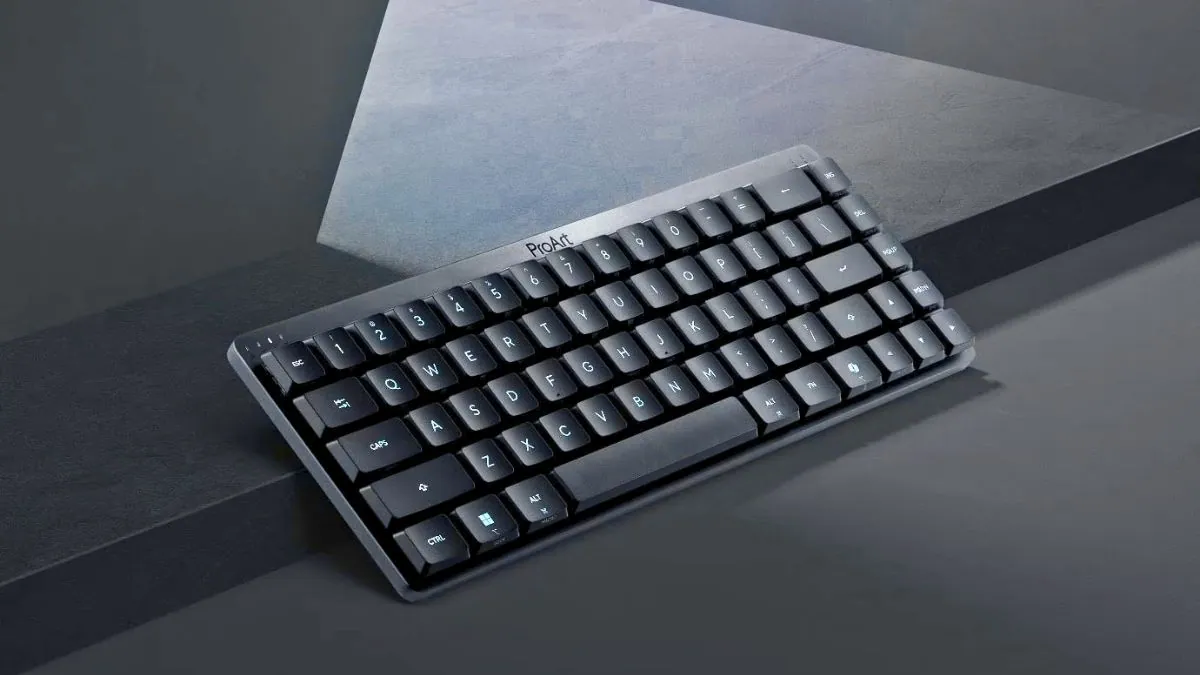
ASUS has launched the ProArt Keyboard KD300, a 65 percent low-profile wireless keyboard built for creative professionals. The new model expands the ProArt lineup beyond displays and laptops, following the recent release of the ProArt Mouse MD301, and focuses on compact design, quiet typing, and multi-device flexibility.
The KD300 is now available in China for 999 yuan, roughly $145 at current exchange rates. Global availability is expected later, though regional pricing has not yet been announced.
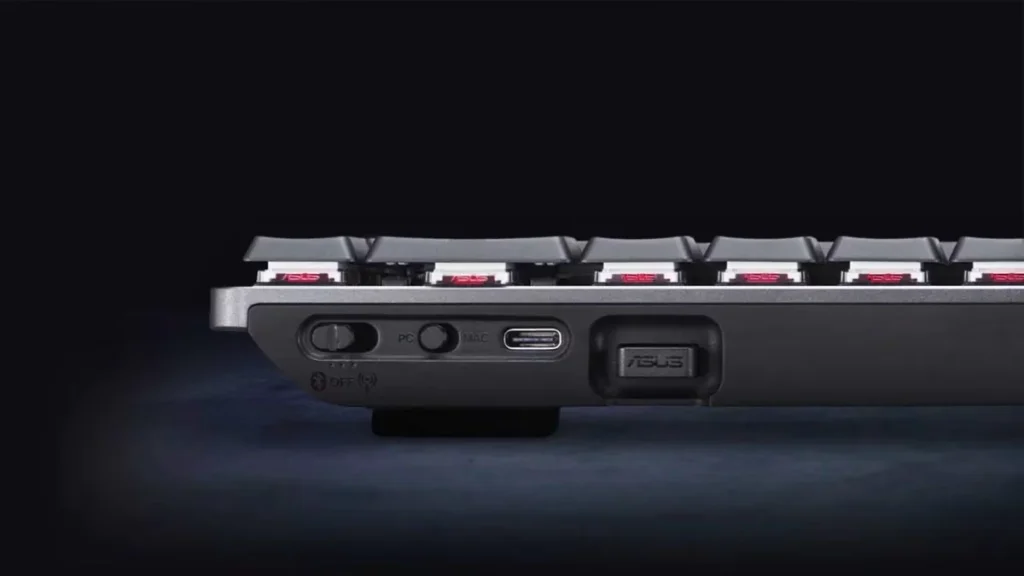
The keyboard uses ASUS RX Red low-profile optical switches with a 1.0 mm actuation point and a linear feel. Actuation force starts at 40 gf and goes up to 55 gf. ASUS rates the switches for up to 100 million keystrokes. Optical switches remove traditional metal contact points, which helps reduce wear over time and keeps keystrokes consistent. For users working with heavy shortcut combinations in apps like Adobe Premiere Pro or Photoshop, the shorter actuation distance can reduce finger movement during long sessions.
The chassis measures 305.6 × 109.0 × 26.8 mm and weighs about 1.32 lbs (600.4 g). At 26.8 mm tall, it sits lower than many traditional mechanical keyboards, which can help reduce wrist strain. Two adjustable tilt angles—approximately 4.5° and 8°—allow users to fine-tune typing posture.
ASUS has paid attention to acoustics. The KD300 uses a gasket-mounted structure along with dual layers of silicone dampening foam to soften keystrokes and reduce echo. Stabilizers and switches come factory-lubricated to smooth out larger keys. The result is a quieter typing profile compared to many compact mechanical boards that are tuned more for gaming sound than studio environments.
Connectivity is one of the KD300’s strongest features. It supports USB-C wired mode, 2.4 GHz wireless with a 1000 Hz polling rate, and Bluetooth with 133 Hz polling. The keyboard can store up to five paired devices and switch between them instantly, although only one device can be active at a time. A physical PC/Mac toggle switch makes it easy to change layouts without adjusting settings in software.
The built-in 4000 mAh battery is rated for up to 16 months in 2.4 GHz mode with RGB lighting turned off. With full-brightness RGB enabled, battery life drops to about 100 days. Over Bluetooth with lighting disabled, ASUS claims up to 9 months of use. A battery indicator mapped across the Esc to 9 keys displays remaining charge in 10 percent increments, and the keys glow red when power drops below 20 percent.
The integrated rear touch panel adds gesture-based controls for volume, media playback, and lighting adjustments. Deeper customization is handled through ASUS Gear Link, a browser-based configuration tool that allows macro recording, key remapping, and lighting profile management. Because it runs through a browser, it may be easier to deploy in managed studio or enterprise environments where installing additional software is restricted.
Also Read: ASUS ExpertBook B5 G2 Arrives With 50 TOPS AI and 19-Hour Battery
When compared with Logitech’s MX Keys Mini, the ProArt KD300 takes a different approach. The MX Keys Mini uses scissor switches, weighs about 1.11 lbs (506 g), and offers around 10 days of battery life with backlighting enabled. It does not offer 1000 Hz wireless polling or mechanical optical switches. The KD300 is heavier, but it delivers mechanical precision, deeper customization, and significantly longer battery life in low-light modes.
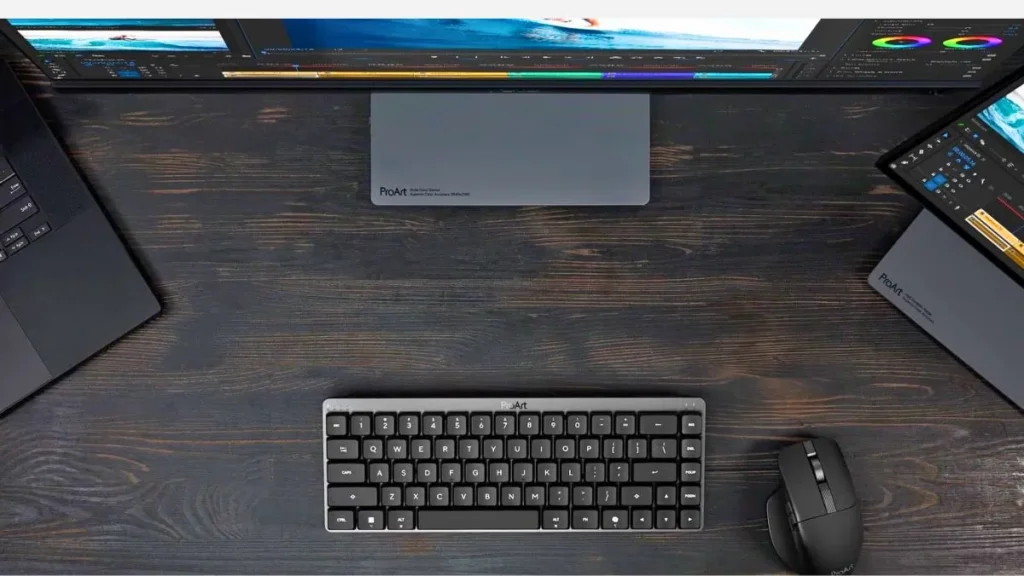
The 65 percent layout includes dedicated navigation keys while keeping the footprint compact. That makes it suitable for desks shared with drawing tablets, audio interfaces, or camera gear. RGB lighting is included, but the overall design is subdued and fits well within the ProArt aesthetic.
Priced at 999 yuan in China, roughly $145 at current exchange rates, the KD300 competes in the premium compact keyboard segment. Global pricing for North America, Europe, and other markets has not yet been announced, though international availability is planned.
With the ProArt Keyboard KD300, ASUS signals that the ProArt brand is expanding into workflow-focused peripherals. By combining optical switch precision, refined acoustics, tri-mode wireless flexibility, and extended battery endurance, the company positions the keyboard as a professional creative tool rather than just another compact input device.
ASUS ProArt Keyboard KD300: Key Specifications
| Layout | 65% Compact Layout with navigation keys |
| Dimensions | 305.6 × 109.0 × 26.8 mm |
| Weight | 1.32 lbs (600.4 g) |
| Switch Type | ASUS RX Red Low-Profile Optical |
| Actuation Point | 1.0 mm |
| Actuation Force | 40 gf initial, up to 55 gf |
| Switch Lifespan | Up to 100 million keystrokes |
| Connectivity | USB-C wired, 2.4 GHz wireless, Bluetooth |
| Device Pairing | Up to 5 devices (1 active at a time) |
| Polling Rate | 1000Hz (USB & 2.4GHz), 133Hz (Bluetooth) |
| Battery | 4000mAh Li-ion |
| Battery Life | Up to 16 months (2.4GHz, RGB off), up to 100 days (full RGB), up to 9 months via Bluetooth (RGB off) |
| Backlighting | RGB |
| Mounting | Gasket mount |
| Sound Dampening | Dual-layer silicone foam |
| Tilt Angles | 4.5° and 8° adjustable |
| OS Support | Windows 11, macOS 15.0.1+ |