
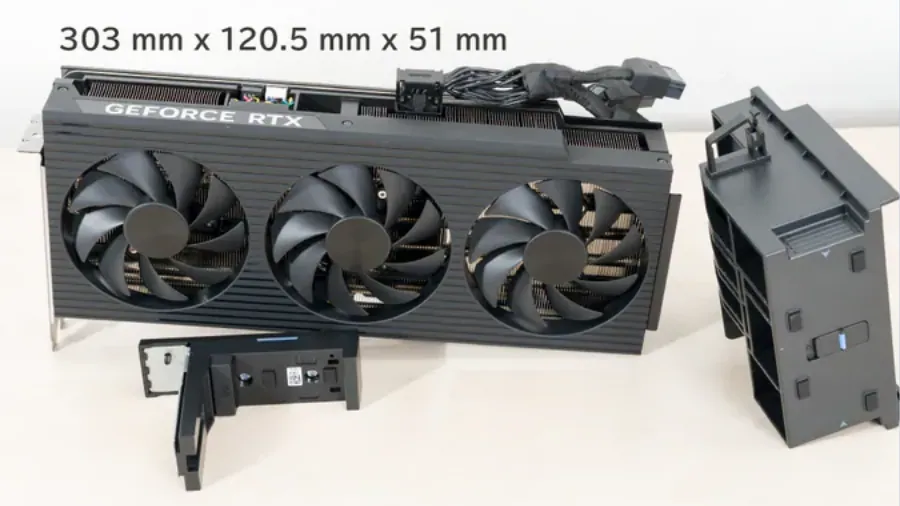
Dell has added a mechanical locking bracket to the 12V-2×6 GPU power connector inside its Tower Plus EBT2250 desktop. The goal is simple: improve connector stability and reduce the risk of partial cable movement that has previously been linked to overheating incidents involving 16-pin GPU power connectors.
The update was first spotted during a Japanese teardown of the system. It aligns with broader industry efforts following the 12VHPWR issues seen in 2022 and 2023, which led to revisions under ATX 3.0 and ATX 3.1 power supply standards. Those updates focused on improving electrical engagement and insertion detection. Dell’s solution, however, focuses on mechanical reinforcement.
Mechanical Stabilization at the Connector Level
Teardown details show that the 12V-2×6 connector is secured using metal fittings from Amphenol, physically bracing the plug against movement after installation. Instead of using a native ATX 3.x 16-pin PSU output, the examined system converts two standard 8-pin PCIe connectors into the 12V-2×6 interface.
The reviewed configuration reportedly includes an RTX 5070 Ti, 32GB of DDR5-5600 memory, and a 1000W 80 Plus Platinum power supply from Lite-On. The PSU does not appear to include a native ATX 3.x 16-pin cable.
The 12V-2×6 connector was introduced as a refinement of the earlier 12VHPWR design. It shortens sense pins and adjusts contact sequencing so that full power delivery only occurs when the connector is properly seated. While this improves electrical detection, it does not fully eliminate mechanical risks such as lateral movement, cable strain, or vibration.
High-power GPU connectors can handle up to roughly 600W. At that level, they rely on consistent contact pressure across multiple terminals. If the connector shifts slightly or is not fully inserted, the effective contact area can decrease. Even small increases in electrical resistance can generate localized heat under heavy current loads.
If heat rises, the connector housing may soften slightly, which can further reduce contact pressure. This creates a feedback cycle where resistance increases, leading to additional heating. Industry analysts have cited this mechanism as a contributing factor in earlier 16-pin connector failures.
Dell’s retention bracket addresses this issue directly by limiting side-to-side movement and helping maintain steady contact pressure across the connector pins.
Modern ATX 3.0 and ATX 3.1 specifications allow GPUs to draw short, high-power transient spikes above their rated sustained power. In certain compliance scenarios, transient spikes can reach up to 200 percent of rated GPU power for extremely brief intervals.
During these spikes, current density increases across the connector pins. If a connector is even slightly loose, localized heating can intensify. Mechanical reinforcement helps ensure stable contact during these transient events.
Unlike PSU-level electrical monitoring systems that adjust current protection logic, Dell’s approach does not change power delivery behavior. Instead, it strengthens the physical interface between the cable and the graphics card.
Prebuilt OEM desktops often go through shipping vibration, warehouse handling, and chassis stress before reaching customers. Over time, vibration and cable tension inside compact towers can introduce minor connector movement.
Securing the 12V-2×6 connector reduces the risk of displacement caused by shipping shock, tight cable bends, or confined airflow layouts common in tower systems.
Across the broader hardware industry, several approaches have emerged to improve 12VHPWR and 12V-2×6 reliability:
- Stronger terminal construction
- Native ATX 3.1 16-pin PSU outputs
- Improved strain relief and thicker cabling
- Enhanced PSU-side electrical monitoring
- Updated PCI-SIG validation procedures
- Mechanical stabilization within OEM chassis designs
Dell’s bracket falls into the final category, reinforcing connector stability at the system level.
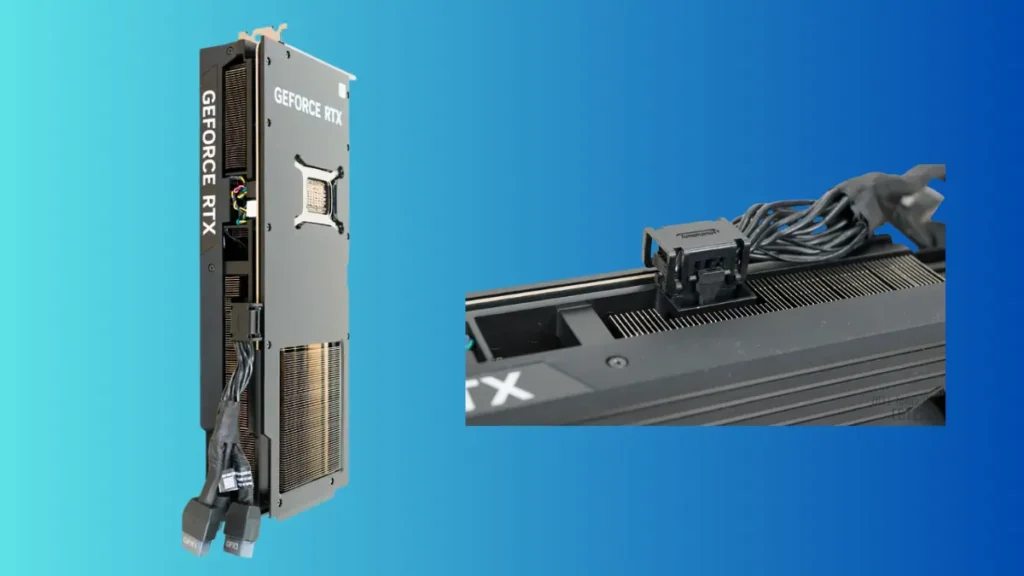
The 12V-2×6 revision enhanced insertion detection logic, but durable long-term engagement also depends on mechanical retention under dynamic stress. Dell’s bracket addresses this stability gap by adding structural reinforcement directly at the GPU connector interface.
Also Read: Aqua Computer Launches Ampinel GPU Power Guard for 12V-2×6 Connectors
Connector Evolution Overview
| Standard / Implementation | Introduced | Key Change | Primary Objective |
|---|---|---|---|
| 12VHPWR (16-pin) | 2022 | Single high-power GPU connector rated up to 600W | Replace multiple 8-pin connectors for higher-wattage RTX GPUs |
| 12V-2×6 | 2023 | Shorter sense pins, revised contact sequencing | Reduce improper insertion risk and improve engagement detection |
| Dell Mechanical Retainer (EBT2250) | 2026 | Physical locking bracket securing 12V-2×6 connector | Minimize lateral movement, shipping stress, and micro-resistance buildup |
Dell has not indicated that the retention system responds to a specific failure or warranty case. It appears to be a precautionary enhancement as GPU power density and transient behavior continue to increase under evolving ATX standards.
As graphics cards push higher current levels and more aggressive transient spikes, manufacturers may increasingly combine electrical safeguards with mechanical reinforcement. Dell’s implementation suggests that long-term connector stability remains a priority as high-power GPU designs continue to evolve.
Source: IThome