
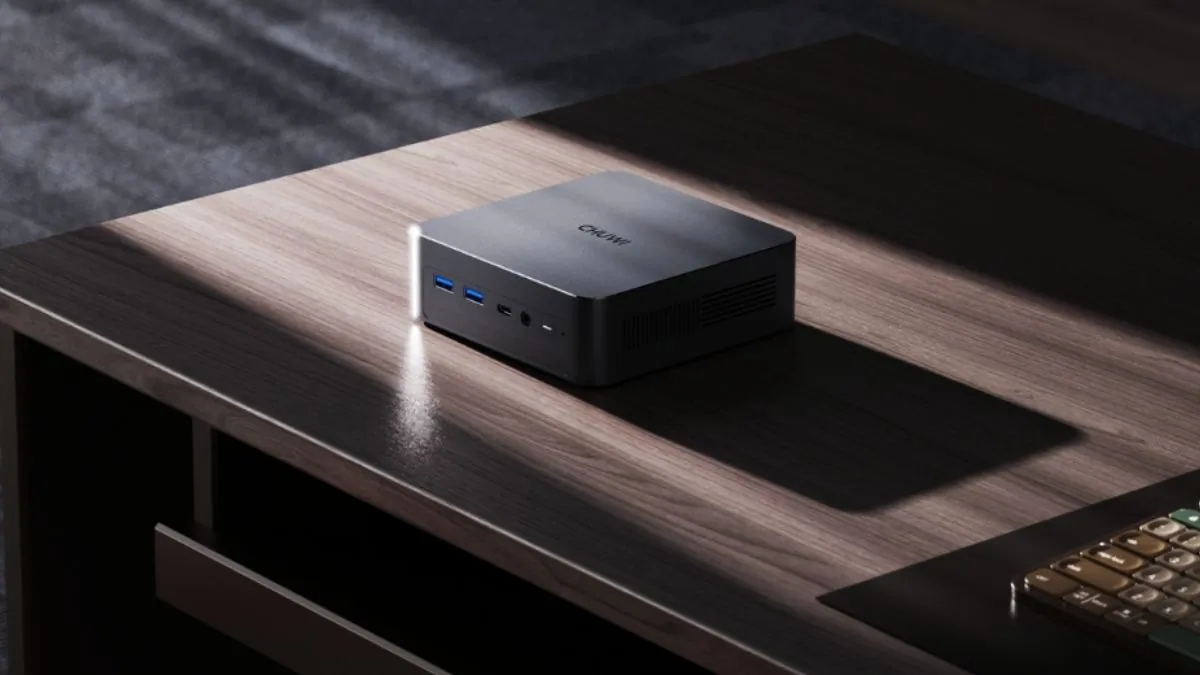
Chuwi has launched a new version of its AuBox X mini PC with the Intel Core Ultra 7 256V processor. This update moves the system to Intel’s Lunar Lake platform and changes what the device is built for. Instead of focusing only on raw speed, this model is designed for better power efficiency, built-in AI features, and improved graphics.
The new model starts at about $759 with a limited-time discount. After the offer ends around May 20, 2026, the price goes up to about $829. This puts it in the premium mini PC category instead of budget systems.
This is not just a simple upgrade from the older Core Ultra 5 226V version. The new chip is built with a different design approach. It focuses more on AI performance and efficiency instead of adding more CPU cores. That is why the core count stays the same, but other areas like graphics and AI processing improve.
| Component | Details |
|---|---|
| CPU | Intel Core Ultra 7 256V (Lunar Lake) |
| Cores / Threads | 8 cores / 8 threads |
| Max Frequency | Up to 4.8 GHz |
| Cache | 12 MB |
| Process | TSMC N3B |
| Power Range | 8W to 37W |
| NPU | Up to 47 TOPS |
| Total AI Performance | Up to about 115 TOPS (CPU + GPU + NPU) |
| GPU | Intel Arc 140V (Xe2 Battlemage, 8 cores) |
| Memory | 16GB LPDDR5X 8533 (not upgradeable) |
| Storage | 1TB PCIe 4.0 SSD |
| Expansion | Dual M.2 (1 PCIe 5.0 + 1 PCIe 4.0) |
| Networking | Wi-Fi 6E, Bluetooth 5.4, 2.5Gb Ethernet |
| Chassis Size | About 0.67 liters |
The system also comes with a wide range of ports for its size.
| Port | Count |
|---|---|
| USB 3.2 Type-A | 5 |
| USB-C (100W charging) | 1 |
| USB4 | 1 |
| HDMI 2.1 | 2 |
| DisplayPort 1.4 | 1 |
| 2.5G Ethernet | 1 |
| Audio Jack | 1 |
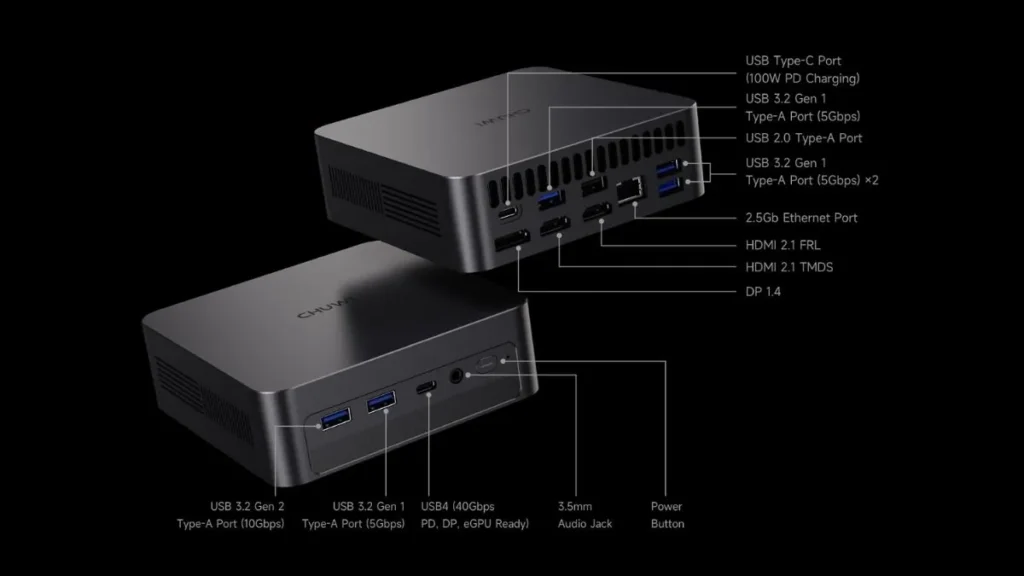
Even with this many ports, the system does not include an OCuLink port. This means external GPUs can be used through USB4, but performance will be limited compared to direct PCIe connections.
The biggest change in this model comes from the Lunar Lake platform. This new design uses memory that is built directly into the processor package. This helps reduce delay and improves power efficiency. It also improves performance for graphics and AI tasks. However, it removes the option to upgrade RAM later. The system behaves more like a tightly integrated device instead of a traditional desktop.
One of the main features of this mini PC is its AI capability. It includes a neural processing unit with up to 47 TOPS. This allows the system to run AI tasks locally without needing the internet. These tasks include voice recognition, image generation, and automation tools. The full platform can reach up to about 115 TOPS when combining CPU, GPU, and NPU performance.
The system is also designed to support new AI features in Windows. These features help with tasks like smart search, content creation, and automation. Since the processing happens on the device, it reduces delay and keeps data private.
In real use, this system is best for people who want to try local AI tools, run lightweight creative software, or build a compact workstation. For example, it can handle basic video editing, coding environments, and multi-screen office setups without issues.
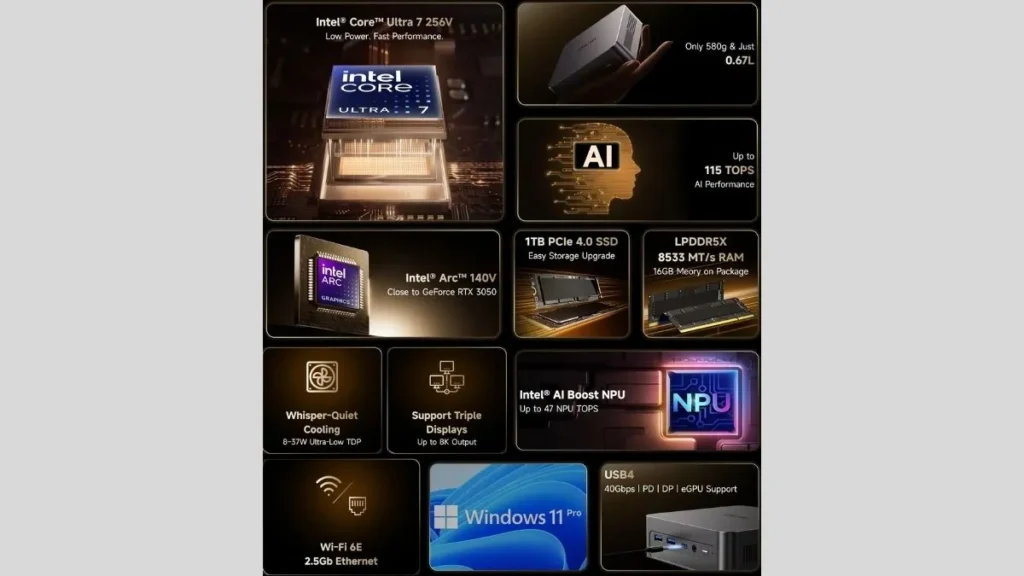
The graphics performance also improves in this model. The Intel Arc 140V GPU is based on the newer Xe2 architecture and comes with 8 cores. It is stronger than the previous Arc 130V. Early performance data shows it can run many modern games at 1080p with low settings at around 30 frames per second. This is good for light gaming but not enough for high-end gaming.
The company compares its graphics to an RTX 3050, but this should be taken carefully. Real performance depends on the game, settings, and cooling. It is better to treat it as entry-level discrete GPU performance.
Users who need more graphics power can connect an external GPU using USB4. This can improve gaming and rendering performance, but it will not match full desktop GPU speeds because of bandwidth limits.
Also Read: Best Gaming Laptop Under $1000: Our Top Pick
The system supports up to three displays at the same time. It can output up to 8K at 60Hz or 4K at 144Hz depending on the port used. This makes it useful for multi-monitor setups, especially in small workspaces.
The compact size of about 0.67 liters means it takes very little space. It can fit easily behind a monitor or on a small desk. This makes it a good choice for users who want a clean and simple setup.
There are also some limits that buyers should understand. The memory cannot be upgraded, which may be a problem for users who need more than 16GB in the future. CPU performance is also not focused on heavy workloads like large video rendering or complex simulations. Long-term performance under heavy load will depend on cooling, which still needs full testing.
This system works best for users who want efficient performance, built-in AI features, and a small form factor. It is not designed for users who need maximum performance or long-term upgrade flexibility.
The new AuBox X shows how mini PCs are changing. Instead of focusing only on speed, newer systems are built to handle AI tasks, save power, and work smoothly in compact spaces. For many users, this shift will be more useful than traditional performance gains.
Source: Chuwi