
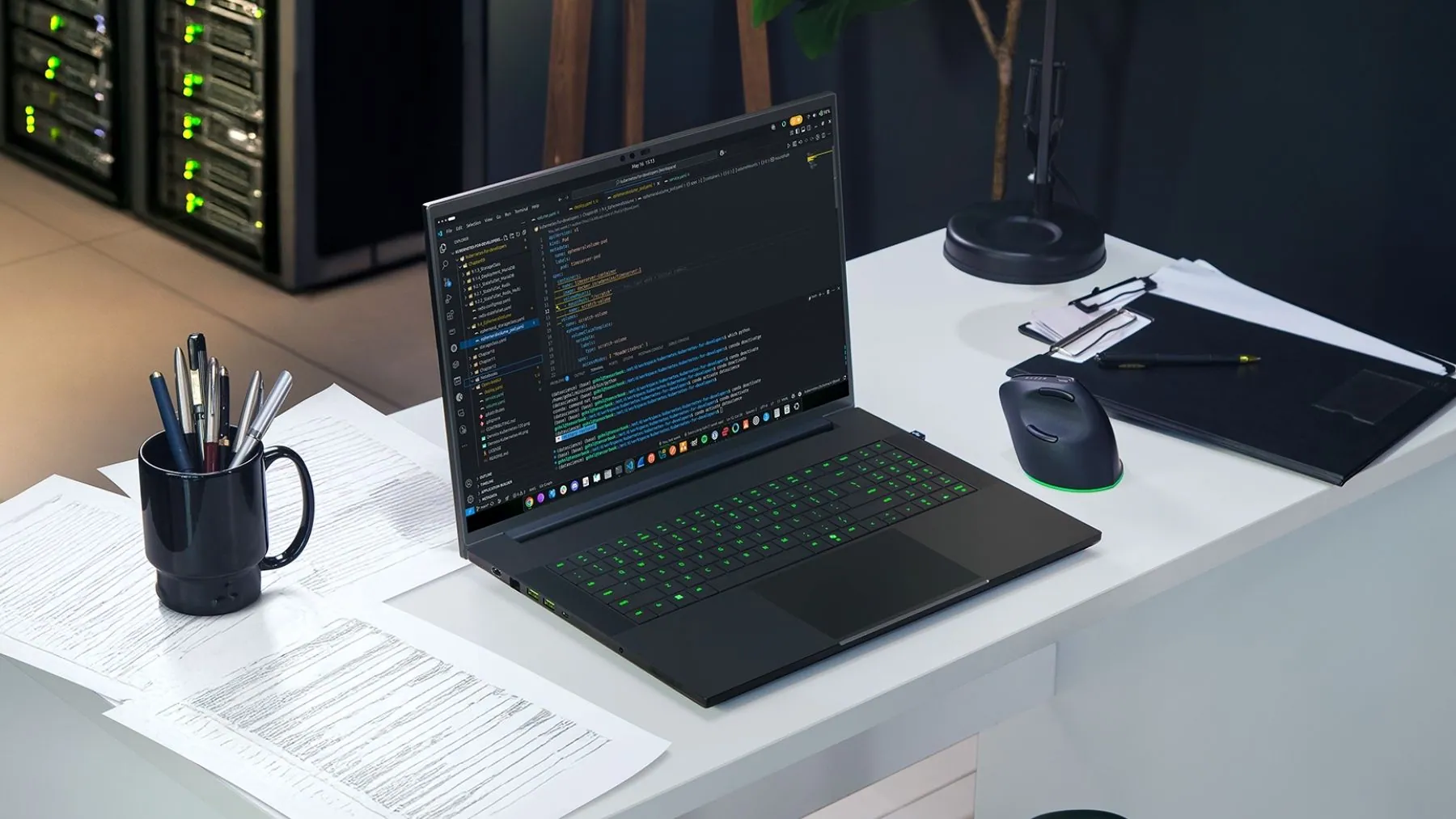
Razer has refreshed its Blade 18 gaming laptop lineup for 2026 with new RTX 50-series configurations aimed at the ultra-premium market as we already mentioned after Razer press release. The top-end Razer Blade 18 configuration now goes up to $6,999, making it one of the most expensive mainstream RTX 5090 gaming laptops currently available in the US.
According to updated pricing the refreshed Blade 18 now with Intel’s Core Ultra 9 290HX Plus processor along with NVIDIA GeForce RTX 50-series Laptop GPUs, joining other RTX 5090 gaming laptops announced this year. Buyers can choose between RTX 5070 Ti, RTX 5080, and RTX 5090 configurations aimed at enthusiast gamers, creators, and AI-focused workloads.
The GeForce RTX 5090 Laptop GPU, 24GB of GDDR7 VRAM, 128GB of DDR5-6400 memory, and a 2TB SSD make up the most expensive setup. According to Razer’s web configurator, the machine is presently priced at $6,999.99, making it one of the priciest desktop-replacement gaming laptops offered by a significant gaming company.
Razer has increased the cost of all lower-end Blade 18 variants. The current starting price for the RTX 5070 Ti model is $3,999.99, while RTX 5080 models can cost up to $5,899, depending on the memory and storage configuration. The 2026 lineup’s enhanced GPU and memory options are now more expensive, according to updated setup pages on Razer’s website.
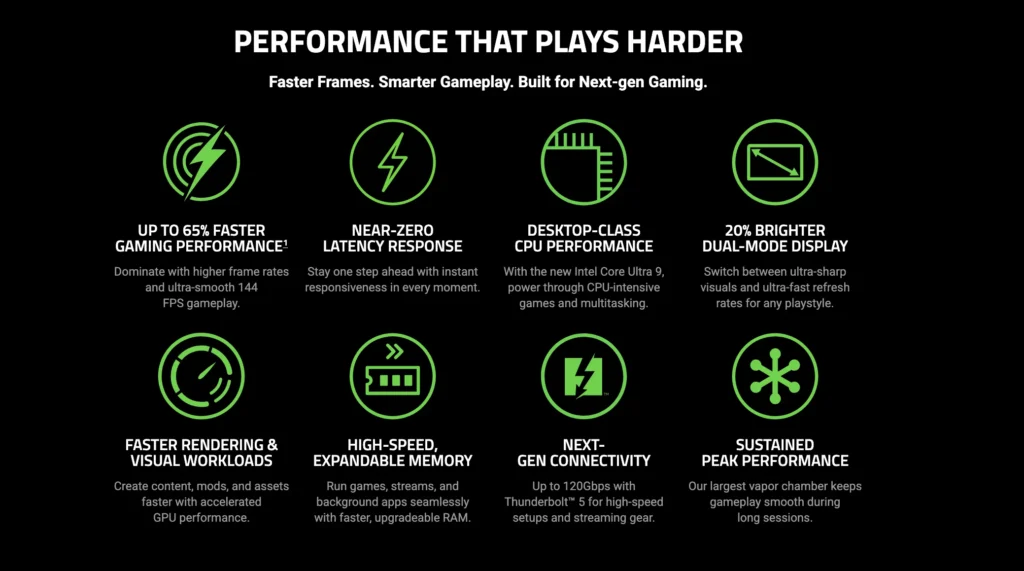
The updated Blade 18 keeps its 18-inch dual-mode display technology, allowing users to switch between a 3840 × 2400 resolution at 240Hz and a 1920 × 1200 esports-focused mode running at up to 440Hz, similar to other 18-inch RTX 5090 systems. Razer has also increased display brightness to 600 nits, up from 500 nits in the previous generation.
The updated Arrow Lake mobile platform from Intel is one of the most significant hardware changes. The Core Ultra 9 290HX Plus CPU, which has 24 cores, boost frequencies up to 5.5GHz, and a 13 TOPS NPU intended for AI-assisted workloads and next-generation AI PC applications, has replaced Razer’s Core Ultra 9 275HX.
Graphics performance continues to focus on high-end mobile gaming and workstation-level workloads. According to Razer, the laptop offers GPU configurations running at up to 175W TGP, targeting users who want desktop-class gaming, 3D rendering, video production, and AI development performance in a portable system.
The Blade 18 continues to use Razer’s CNC-milled aluminum chassis, which remains one of the company’s signature designs in the premium gaming laptop market. Even with its strong gaming focus, Razer is increasingly positioning the Blade lineup as a hybrid platform for gaming, AI development, and professional creative work.
A more general trend in the high-end gaming laptop market is also reflected in the price increase. In 2026, flagship notebook prices will rise dramatically due to premium RTX 5090 laptops, AI-focused processors, greater memory capacity, and high-refresh displays.
The Blade 18 is not the only model getting more expensive this generation, as RTX 50-series laptop pricing continues to rise. Reports suggest the Blade 16 lineup has also seen price increases, reflecting broader trends across the RTX 50-series laptop market as brands continue pushing desktop-replacement gaming laptops closer to workstation-level hardware and pricing.
The launch also shows how flagship gaming laptops are gradually evolving into ultra-premium mobile workstations, combining AI acceleration, large memory capacities, and top-tier NVIDIA Blackwell graphics hardware in increasingly expensive portable systems aimed at creator workloads.
Source: Razer