
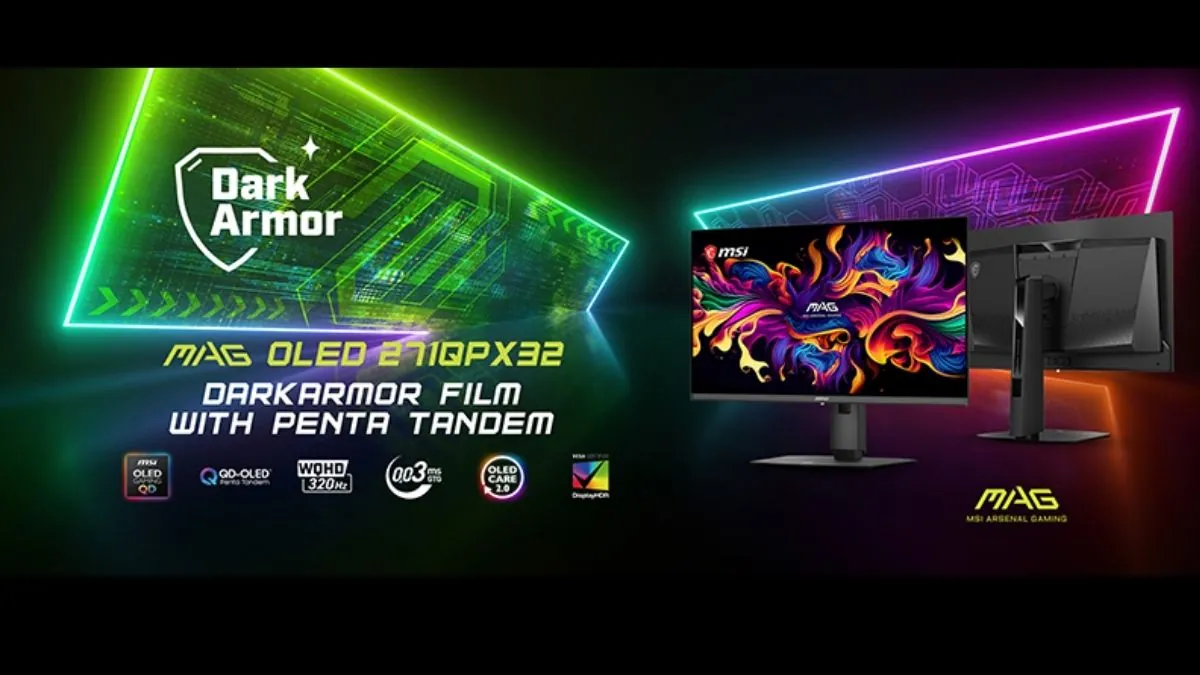
MSI has unveiled the MAG OLED 271QPX32 ahead of Computex 2026, introducing the first 27-inch 1440p gaming monitor based on Samsung Display’s new 4th-generation Penta Tandem QD-OLED panel. The monitor combines a 2560 × 1440 resolution with a 320Hz refresh rate, 0.03ms GtG response time, and a new 5-layer OLED structure designed to improve HDR performance and panel efficiency.
The display targets competitive gamers who want OLED image quality without moving to the heavier GPU demands of 4K 240Hz gaming. While recent OLED launches have pushed toward higher resolutions and extreme refresh rates, MSI is positioning the MAG OLED 271QPX32 as a more practical balance between esports performance and everyday high-end gaming.
Samsung’s new tandem OLED structure is the biggest change here. Earlier 27-inch QD-OLED gaming monitors mainly relied on Samsung’s 3rd-generation panel design, while the new version uses updated EL Gen 3 materials and a 5-layer emitting structure. Instead of pushing a single OLED layer harder, the panel spreads brightness generation across multiple layers to improve efficiency, reduce heat buildup, and maintain more stable HDR performance at high refresh rates.
MSI has not disclosed peak brightness figures yet, but the monitor carries a VESA DisplayHDR True Black 500 certification. Most earlier 27-inch QD-OLED gaming monitors stayed within the True Black 400 tier, making the move to True Black 500 one of the more important upgrades in this generation.
The MAG OLED 271QPX32 also uses a flat 16:9 panel instead of the curved ultrawide format seen on many OLED gaming monitors in recent years. That may make it more appealing for competitive players who prefer traditional esports-style monitor layouts.
MSI is also introducing its new DarkArmor Film coating technology on this model. According to the company, the coating improves black appearance by up to 40% and increases panel surface hardness from 2H to 3H for improved scratch resistance.
The change is mainly aimed at improving black depth under bright lighting conditions. Earlier glossy QD-OLED panels could appear gray or slightly purple in well-lit rooms due to reflections. MSI’s new coating appears designed to reduce that effect and improve contrast perception during daytime use.
The monitor also focuses heavily on VRR gamma stability and shadow detail handling. MSI says the panel avoids the “black crush” effect sometimes seen on OLED monitors when refresh rates shift dynamically with Variable Refresh Rate enabled. QD-OLED panels have typically shown more stable near-black gamma behavior than many WOLED gaming monitors, although final performance will still depend on independent testing.
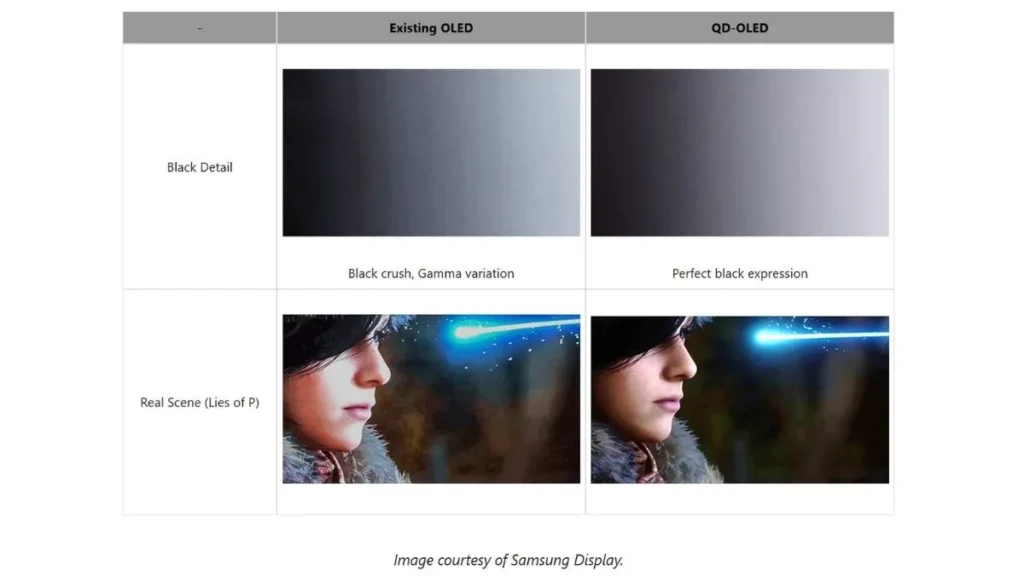
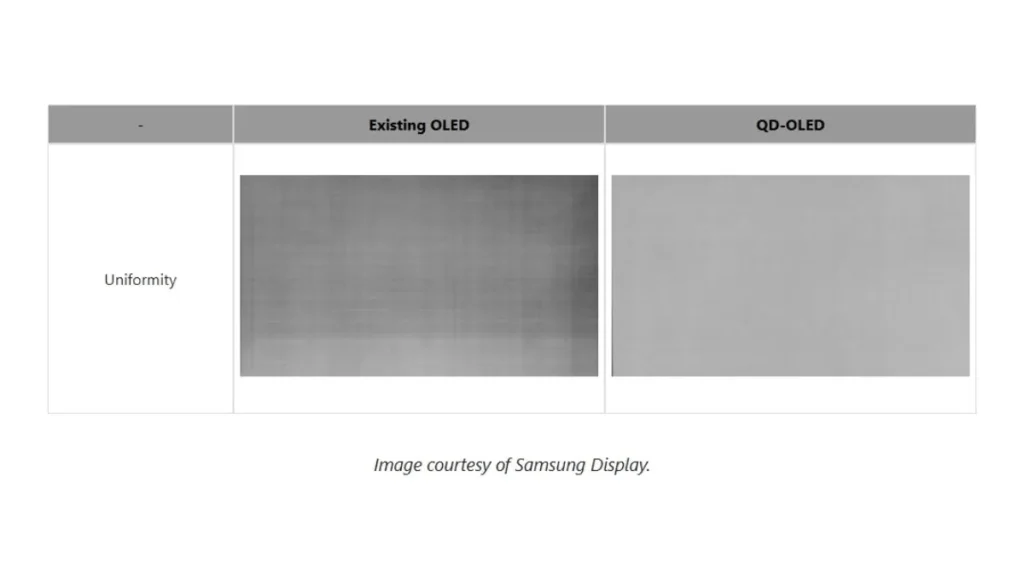
MSI also claims improved panel uniformity and reduced gray banding compared to older OLED implementations. Burn-in protection is handled through MSI OLED Care 2.0, although the monitor does not include the company’s newer AI Care Sensor system.
Connectivity includes two HDMI 2.1 ports, one DisplayPort 1.4a connection, and one USB Type-C port with DisplayPort Alt Mode and 15W power delivery. The continued use of DisplayPort 1.4a instead of DisplayPort 2.1 may disappoint some enthusiasts, especially since 1440p at 320Hz exceeds standard uncompressed DP 1.4 bandwidth limits.
That means the monitor will almost certainly rely on Display Stream Compression, commonly known as DSC. In practice, DSC is visually lossless for gaming and generally does not introduce noticeable latency issues, but many buyers expected newer flagship OLED gaming monitors to begin adopting DisplayPort 2.1 more widely in 2026.
Text clarity may also remain a concern for mixed-use buyers. The panel does not appear to use Samsung’s newer RGB stripe subpixel layout found in some recent ultrawide QD-OLED displays. As a result, fine text rendering may still show slight color fringing compared to LCD panels or RGB stripe OLED layouts.
Also Read: Best Laptops for Multiple Monitors
For gaming, the issue is usually less noticeable. Productivity users working with spreadsheets, coding applications, or long reading sessions may still prefer more traditional subpixel layouts.
The 1440p and 320Hz combination also places the monitor in an interesting position against newer 500Hz esports OLED displays. While 500Hz panels offer even higher motion clarity, they also demand extremely high frame rates to deliver a full benefit. A 320Hz 1440p monitor should be easier to drive than 4K 240Hz gaming on current high-end GPUs while still delivering very high refresh rate performance for competitive titles.
Pricing has not been announced yet, but newer tandem OLED panels are expected to remain premium products during the early stages of adoption. MSI says the MAG OLED 271QPX32 will make its public debut during Computex 2026, where more details about pricing, brightness performance, and availability are expected to be revealed.
MSI MAG OLED 271QPX32 Full Specifications
| Category | Specification |
|---|---|
| Display Size | 26.5-inch |
| Panel Type | Samsung 4th Gen QD-OLED |
| Panel Structure | Penta Tandem 5-layer OLED |
| Screen Type | Flat |
| Resolution | 2560 × 1440 |
| Refresh Rate | 320Hz |
| Response Time | 0.03ms GtG |
| HDR Certification | VESA DisplayHDR True Black 500 |
| Motion Clarity Certification | VESA ClearMR 15000 |
| Coating | DarkArmor Film |
| Surface Hardness | 3H |
| Claimed Black Improvement | Up to 40% |
| Viewing Angle Claim | 83% luminance retention at 60 degrees |
| HDR Features | Uniform Luminance |
| Burn-In Protection | MSI OLED Care 2.0 |
| AI Care Sensor | Not included |
| HDMI | 2 × HDMI 2.1 |
| DisplayPort | 1 × DisplayPort 1.4a |
| USB-C | 1 × USB-C with DP Alt Mode |
| USB-C Power Delivery | 15W |
| Launch Event | Computex 2026 |
| Pricing | Not announced |
The MAG OLED 271QPX32 focuses more on improving earlier QD-OLED weaknesses than changing the overall formula. Samsung’s new tandem panel structure targets better efficiency and HDR stability, while MSI’s coating technology aims to improve black performance in bright rooms.
For players looking for OLED image quality with esports-level refresh rates, the combination of 1440p and 320Hz could become one of the more balanced gaming monitor setups arriving in 2026.
Source: MSI