
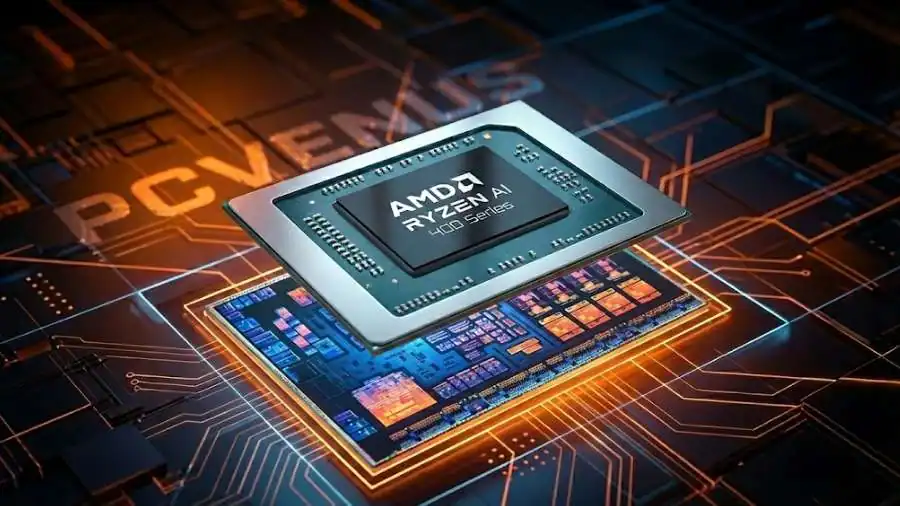
It appears AMD is preparing for its next-generation AI laptop processors, with internal software references pointing to the upcoming Ryzen AI 400 series.
This platform surfaced within AMD’s chipset software infrastructure, a step that typically precedes widespread OEM validation before a public announcement.
The reference was identified in AMD chipset software version 7.10.02.711, where a newly named Platform Management Framework entry indicates early-stage enablement for a new Ryzen AI family. Such additions are usually made when firmware, power management, and system-level tuning are already being aligned for future notebook designs.
Software-level preparation suggests OEM validation is underway.
Unlike benchmark leaks or shipping manifests, chipset and PMF integration is tied to how laptops manage power profiles, boosting behavior, and sustained performance.
The appearance of a dedicated Ryzen AI 400 entry suggests AMD has reached the point where partners can begin validating entire systems rather than just individual silicon samples.
This discovery was highlighted by X user @BuildLabEx, confirming that the platform has moved beyond initial internal testing to a stage where driver support needs to be finalized ahead of launch hardware.
Gorgon Point is expected to further AMD’s current mobile strategy.
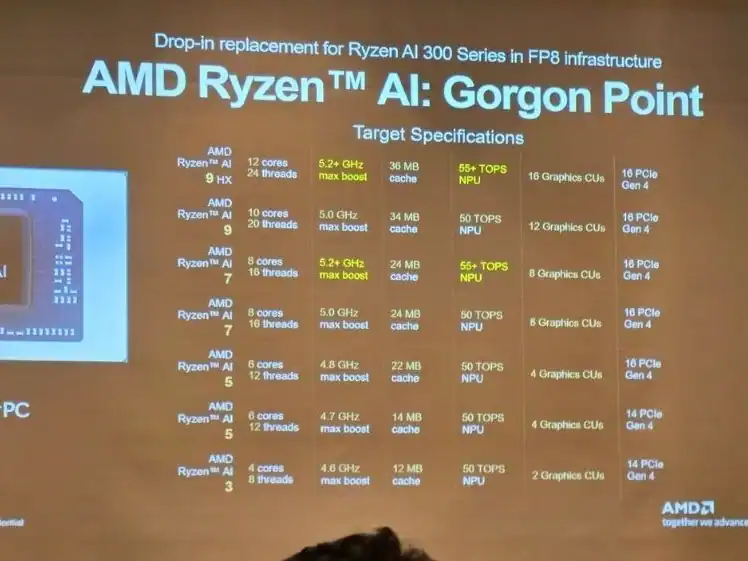
Based on current information, the Ryzen AI 400 processors are expected to have the codename “Gorgon Point” and will be an improved continuation of the Ryzen AI 300 “Strix Point” lineup. Rather than introducing a completely new design, AMD is optimizing its existing mobile architecture to improve availability and consistency across more models. This platform is expected to continue utilizing the following:
- Zen 5 and Zen 5c CPU cores
- RDNA 3.5 integrated graphics
- XDNA 2 neural processing unit
This approach aligns with AMD’s previous mobile refresh cycles, where architectural continuity allows for faster deployment while delivering incremental gains through tuning, clock speeds, and SKU differentiation.
Broad AI Performance Targets Across the Stack
One of the most significant changes expected with Ryzen AI 400 is broader access to high AI compute capabilities. While the Ryzen AI 300 generation concentrated peak NPU performance in a single flagship model, the next lineup is expected to distribute 50+ TOPS of AI performance across multiple SKUs. This shift will allow more laptops to meet upcoming AI PC requirements, particularly for on-device workloads such as background AI services, image processing, and real-time inference, without relying on a separate accelerator.
Designed for the Next Wave of AI-Focused Notebooks
Ryzen AI 400 processors are expected to target thin and light and premium productivity laptops, with configurable power ranges from approximately 15W to 54W. The integrated RDNA 3.5 graphics should continue to support light gaming and creative tasks, while the XDNA 2 NPU will handle dedicated AI workloads more efficiently.
Industry analysts expect these processors to form the backbone of the next generation of Copilot+ and AI-optimized notebooks launching in 2026.
CES 2026 Timing Aligns with AMD’s Software Readiness
Although AMD has not officially announced the Ryzen AI 400 series, the timing of driver-level integration strongly suggests a launch at CES 2026. In the previous cycle, similar references to the chipset and PMF (Power Management Framework) appeared weeks or months before the formal product launch.
For now, the presence of Ryzen AI 400 support in AMD’s software stack is the clearest indication yet that the company’s next mobile AI platform is coming soon.
Source: westlake / @BuildLabEx, Uniko’s Hardware