

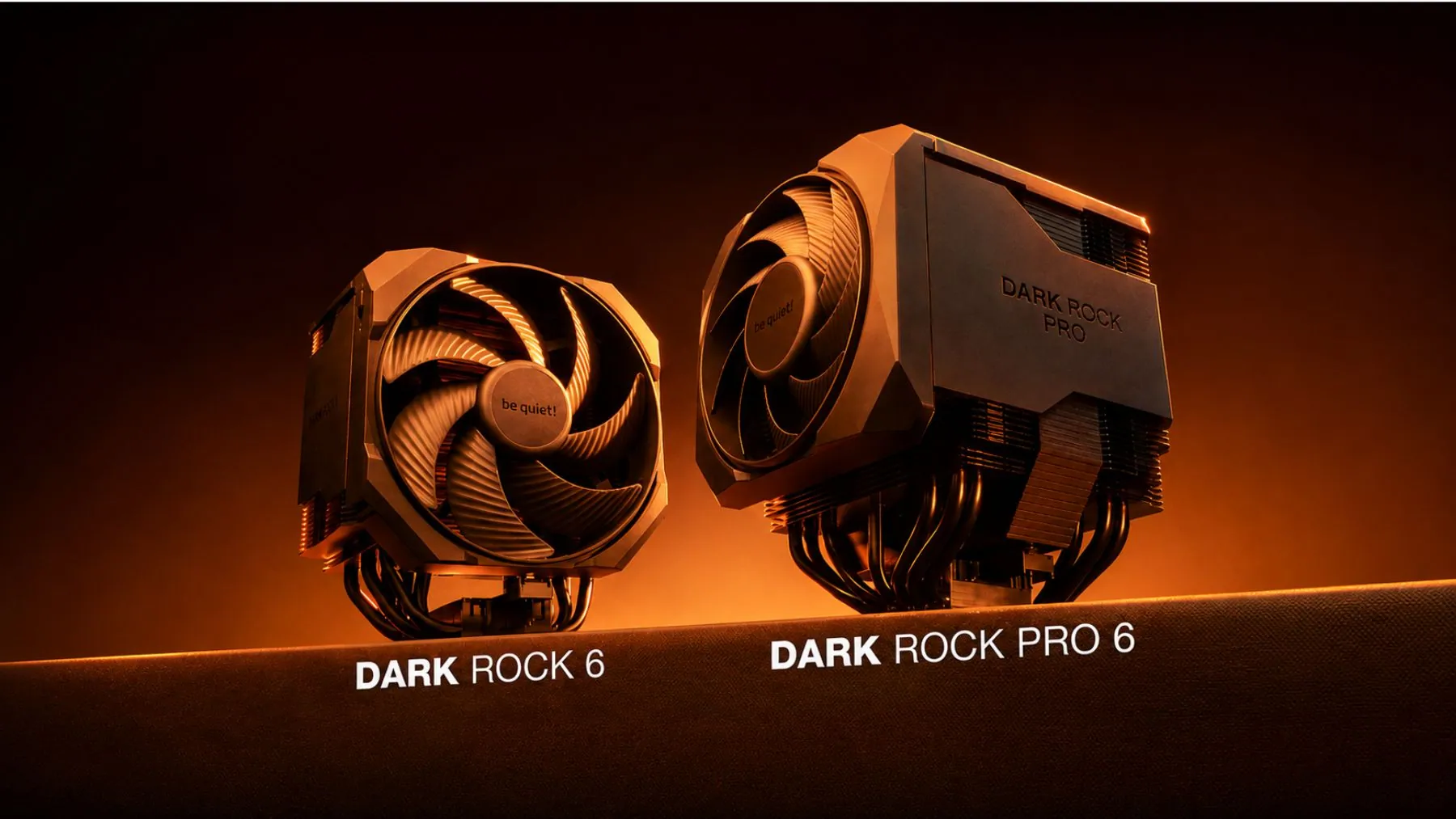
be quiet! is refreshing its Dark Rock air cooler lineup with redesigned heatsinks, updated heat pipe layouts, Silent Wings PWM fans, and a fan-stop mode aimed at quieter high-end desktop builds.
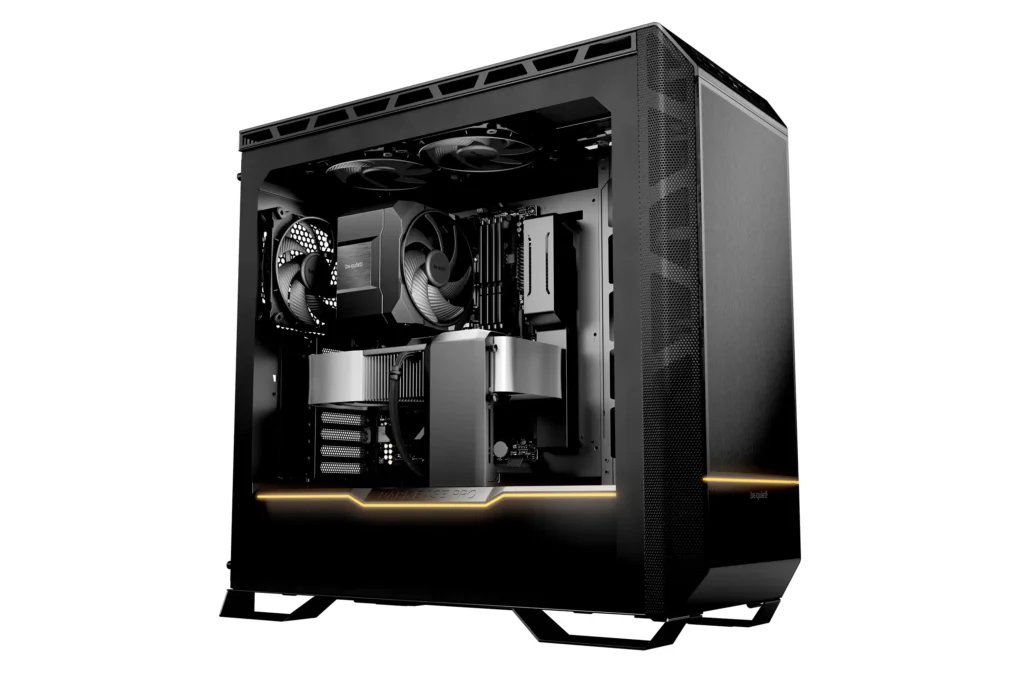
The Dark Rock Pro 6 sits at the top of the range with a large dual-tower layout, seven copper heat pipes, and two Silent Wings PWM fans in 135 mm and 120 mm sizes, targeting the same enthusiast segment as the Thermalright AI Hydronous R1. A physical switch on the cooler allows users to toggle between maximum cooling performance and a quieter profile where the fans stop completely under lighter workloads. According to be quiet!, the semi-passive mode keeps the fans off up to a 40% PWM signal threshold.
Dark Rock 6 takes a different approach with a single-tower design, six heat pipes, and one 135 mm Silent Wings PWM fan, aimed at modern desktop platforms using Gigabyte Z890 Tachyon Duo X Ice. The cooler now features an asymmetrical heatsink shape with deeper cut-outs around the lower fin stack, improving clearance for taller DDR5 memory modules and larger motherboard VRM heatsinks compared to older Dark Rock models.
Both coolers receive revised internal layouts and airflow improvements compared to previous generations, reflecting recent thermal-focused hardware updates across the Intel desktop ecosystem. be quiet! says the redesigned structure improves cooling efficiency for heavily loaded desktop CPUs and workstation builds while keeping noise levels low.
Low-noise performance remains one of the biggest priorities. Official specifications rate sound output below 27.1 dB(A) even at maximum fan speed. The Silent Wings fans include fluid-dynamic bearings, optimized fan blades, and vibration-isolated mounting corners to reduce resonance during long gaming or productivity sessions.
Installation also changes in this generation. be quiet! introduces a simplified mounting layout along with a rail-based fan mounting design that makes fan adjustment easier during installation. The front fan on the Pro model can move upward for additional RAM clearance in high-performance DDR5 builds.
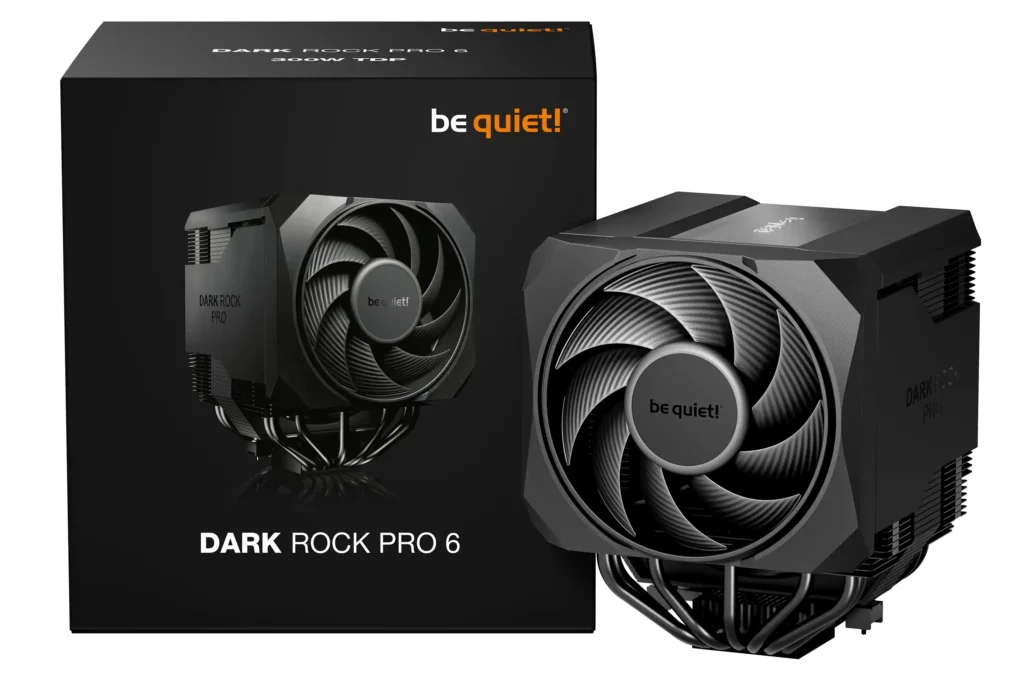
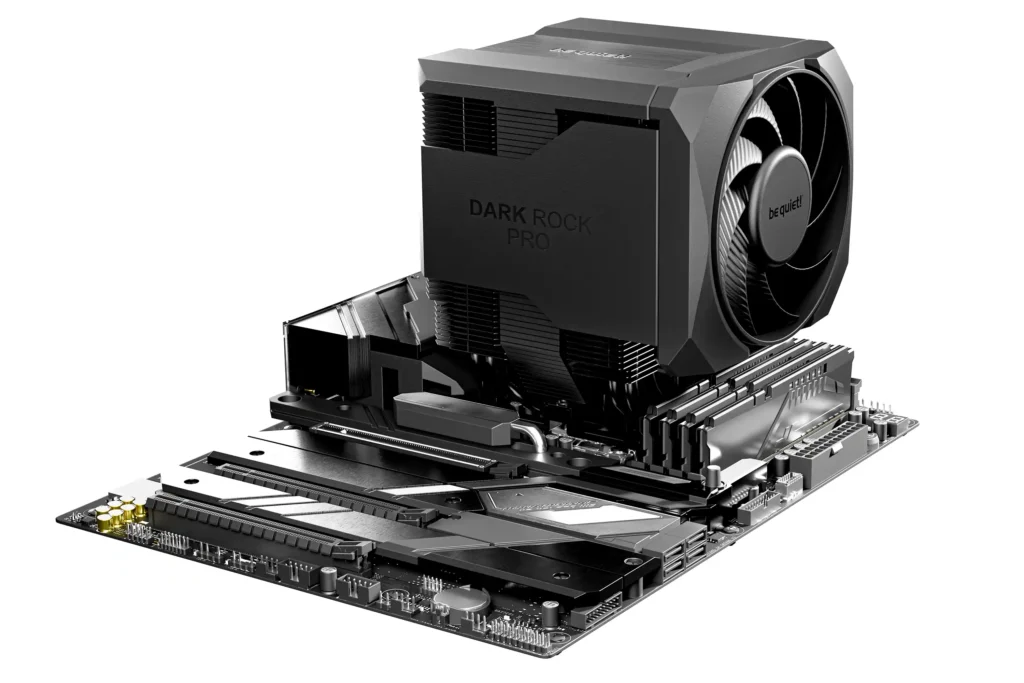
The appearance stays close to the classic Dark Rock style but adds several refinements. Both coolers feature a ceramic-particle black coating intended to improve heat transfer while maintaining the matte black finish the lineup is known for. A magnetic top cover with a brushed aluminum badge gives the cooler a cleaner look once installed inside the case.
Nickel-plated copper bases remain part of the design, allowing compatibility with liquid metal thermal compounds for enthusiasts chasing lower temperatures under sustained heavy loads in systems powered by the Intel Core Ultra 7 251HX.
Dark Rock 6 also replaces both the older Dark Rock Slim and Dark Rock 5, simplifying be quiet!’s premium single-tower lineup. The Pro model continues targeting high-core-count desktop CPUs where large air coolers still compete directly with 360 mm liquid cooling setups.
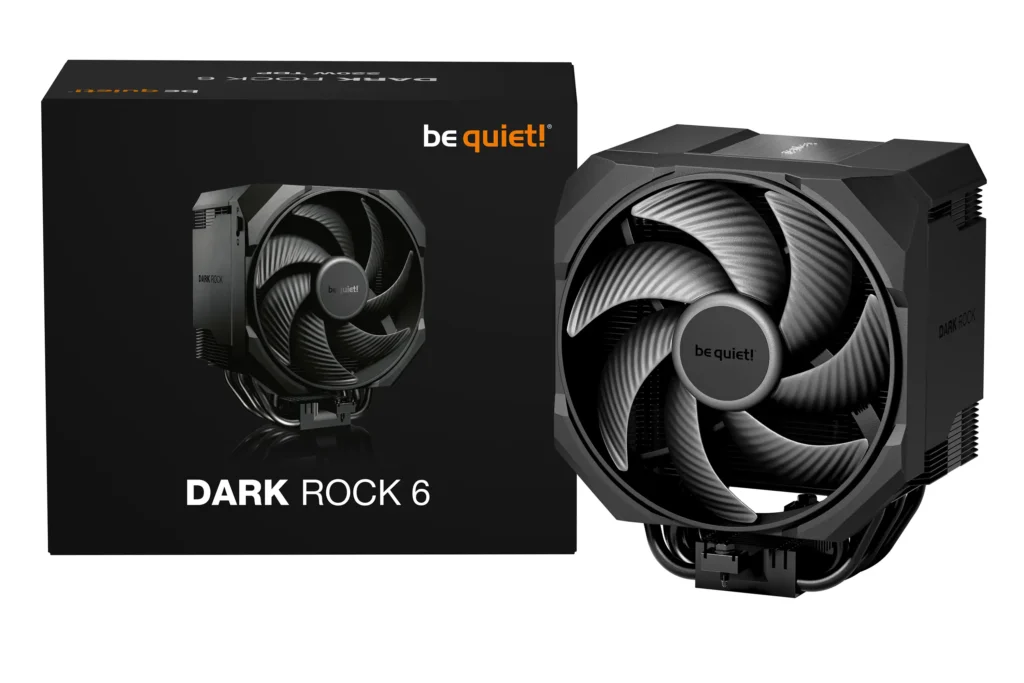
Pricing places both coolers in the premium air-cooling category. Dark Rock Pro 6 is priced at €109.90 / $129.90 / £79.99, while Dark Rock 6 starts at €89.90 / $109.90 / £64.99. Both include a three-year warranty and reach retail on May 19.
Competition in the high-end air cooling market has become much stronger over the last few years, especially from Thermalright, DeepCool, Noctua, and Scythe. With Dark Rock Pro 6 and Dark Rock 6, be quiet! is clearly focusing on quieter operation, easier installation, and better compatibility rather than chasing raw cooling numbers alone.
Source: be quiet