
GIGABYTE has demonstrated the performance capabilities of its new AI TOP ATOM four-node clustering solution for scientific computing applications. As artificial intelligence models and scientific simulations grow larger, single computers are increasingly unable to satisfy heavy memory and processing demands. This demonstration builds on the manufacturer’s display of custom GIGABYTE AI TOP hardware at recent trade shows.
In addition to clustering configurations, companies can also scale local workloads using external expansion hardware like the recently released Aorus RTX 50 Series external AI boxes. Interconnecting multiple computing nodes allows researchers to run memory-intensive programs locally without sending private data to cloud services. This localized setup keeps sensitive intellectual property secure inside a private office or lab network.
Also read: Best Laptops for 3D Modeling and Rendering
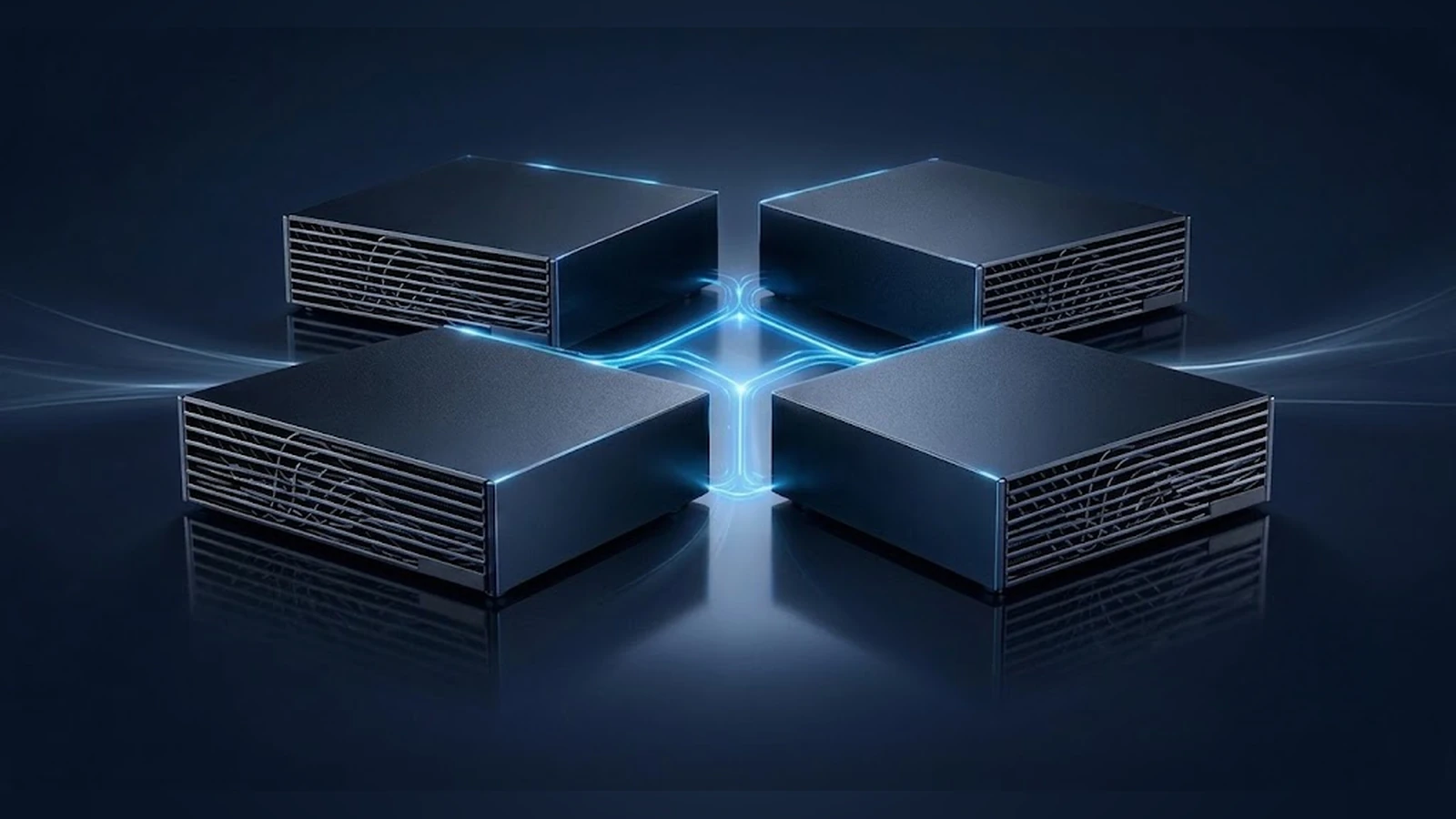
Each individual AI TOP ATOM node has one petaflop (PFLOPS) of FP4 AI processing performance and includes 128GB of unified memory. By connecting four of these nodes using a specialized 200GbE network switch, the cluster aggregates 512GB of total unified memory. The modular layout allows research organizations to scale their hardware infrastructure from a single node up to four nodes as computing demands increase.
The specialized network connection uses remote direct memory access (RoCE) technology to ensure low latency and high bandwidth during clustered operations. This high-speed link helps prevent processing bottlenecks when transferring data across the nodes during complex calculations.
To display the capabilities of the hardware, GIGABYTE collaborated with NVIDIA to run an AI-driven scientific research workflow. The setup uses NVIDIA NemoClaw software blueprints to orchestrate open-source language models for generating scientific hypotheses. Once the AI finishes generating hypotheses, the cluster dispatches GROMACS simulation software to model molecular movements.
During testing, researchers used the workflow to model thermal interface materials (TIM) for advanced integrated circuit packaging. While a standalone computer is typically limited to simulating ten million atoms before running out of memory, the four-node cluster successfully simulated over thirty million atoms. GIGABYTE plans to make these clustering configurations available to commercial research buyers later this quarter.
Source: GIGABYTE