
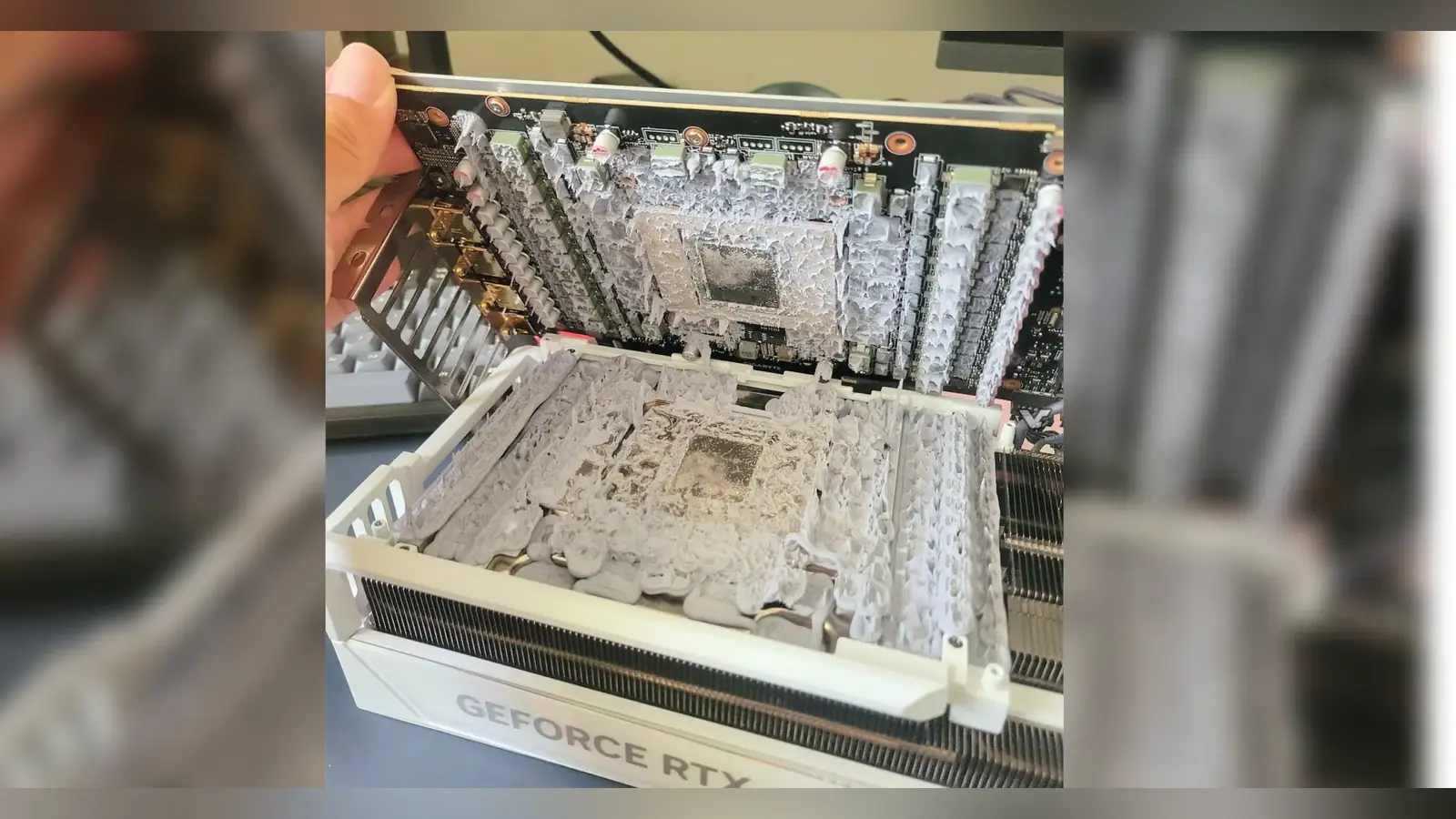
A Gigabyte AORUS GeForce RTX 5090 owner who disassembled their graphics card after a year of use discovered a large pool of excess factory thermal material inside the cooler. The Reddit user, posting under the handle Correct_Difference72, opened the card to investigate why the cooling fans were suddenly ramping up to 2,000 RPM. Although regular GPU temperature sensors reported a stable 76°C during gaming, the owner suspected that hidden hot spots were triggering the high fan speeds.
Upon removing the cooling shroud, the builder found that the thermal gel had pooled on the upper half of the copper vapor chamber. In contrast, the lower half of the GPU core had little to no coverage remaining, indicating a severe case of thermal material pump-out. The owner has since replaced the messy factory thermal application with a Honeywell PTM7950 phase-change pad to ensure even cooling.
Also read: ASUS ProArt GeForce RTX 5090 OC Details
This is not the first time that early buyers of Gigabyte’s RTX 50 series graphics cards have complained about sloppy thermal paste applications. Gigabyte previously acknowledged that some early batches received excess thermal material at the factory, referring to the issue as a harmless cosmetic variance. However, some users who mounted their graphics cards vertically reported that the runnier gel was beginning to slip down toward their motherboard PCIe slots.
The owner suggested that other AORUS card owners check their thermal paste if they have been running their hardware for over a year. Replacing the factory material with high-quality alternatives is a popular way to lower hot spot temperatures on custom desktop builds. Modders regularly perform these custom thermal updates on high-end boards, similar to the ASUS ProArt RTX 5090 Slim, to keep fans running quietly.
Source: Reddit (Removed)