
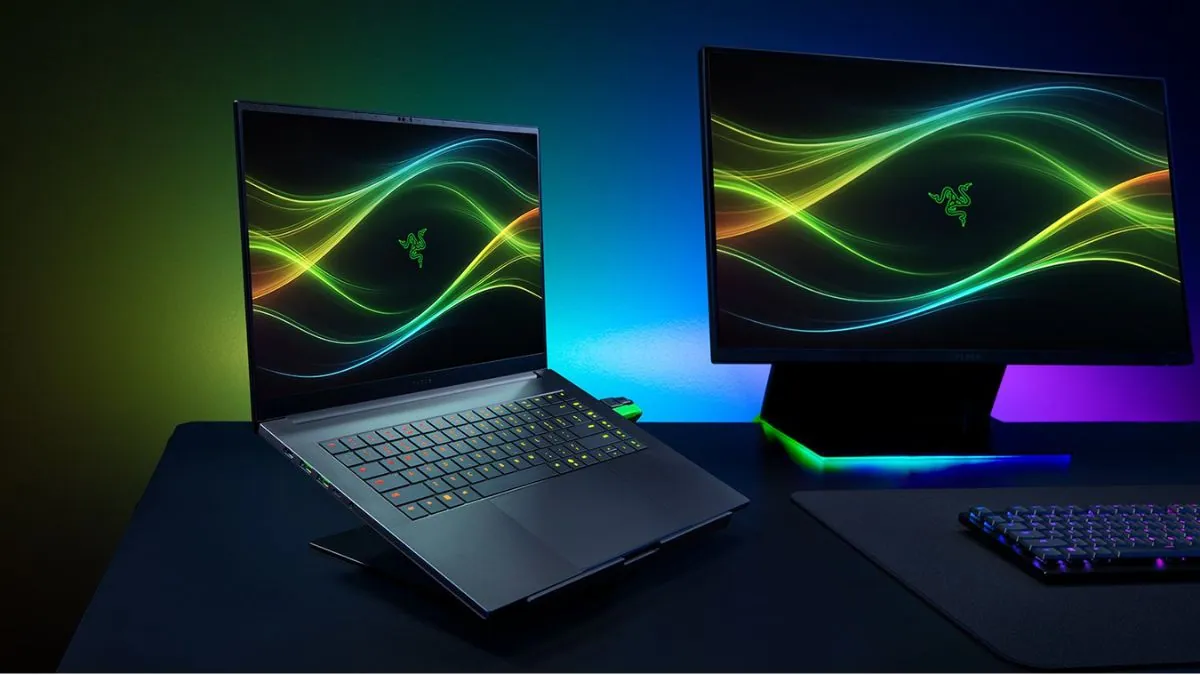
Razer’s Blade 16 (2026) pairs Intel’s Core Ultra 9 386H with LPDDR5X-9600 memory and NVIDIA’s RTX 50-series laptop GPUs, pushing more performance into the same thin 16-inch chassis. The update focuses on faster memory, newer graphics, and expanded connectivity rather than a full redesign.
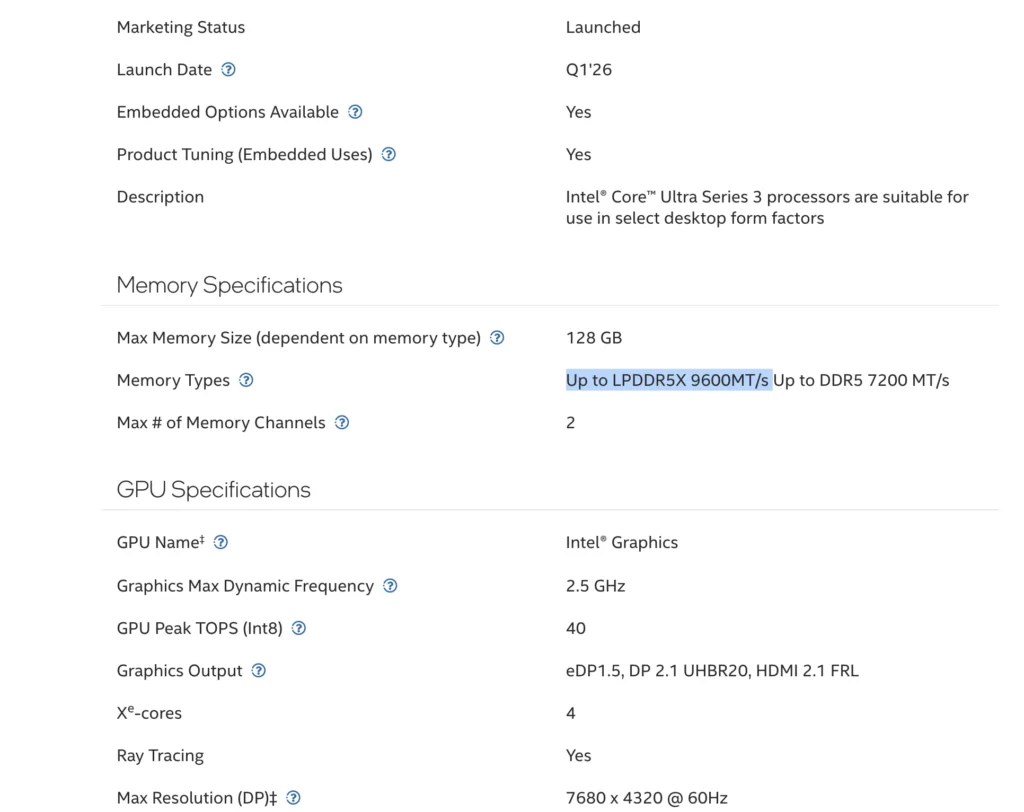
The Core Ultra 9 386H features a 16-core layout and supports higher memory speeds than earlier listings suggested. Intel now confirms LPDDR5X up to 9600 MT/s alongside DDR5-7200, and Razer offers configurations with up to 64GB of onboard memory. Higher bandwidth at this level helps in gaming, content work, and AI tasks where fast data movement matters.
Graphics options include GeForce RTX 5080 and RTX 5090 Laptop GPUs, with broader RTX 50-series availability outlined in RTX 5070 laptop GPU listings. The RTX 5090 configuration carries 24GB of GDDR7 memory, while the RTX 5080 comes with 16GB. The extra memory gives the 5090 more headroom in heavier workloads such as high-resolution gaming, rendering, and AI tasks, though real gains depend on power limits inside the thin chassis.
The display remains a 16-inch OLED panel with a 2560 × 1600 resolution and a 240Hz refresh rate. It supports VESA DisplayHDR True Black 1000 and reaches up to 1100 nits in HDR mode. Color coverage is rated at 100% DCI-P3, and response time is listed at 0.2 ms, keeping motion sharp during fast scenes.
Thermal design continues with a vapor chamber layout, which remains critical in thin high-power designs such as the ASUS ROG Zephyrus G14 (2026) RTX 5080 configuration. Despite the high-end hardware, the laptop remains 14.9 mm at its thinnest point and weighs about 4.71 lbs (2.14 kg), keeping it among the thinner options in this class.
Storage comes with dual M.2 slots with support for expansion up to 8TB, while memory remains fixed. Connectivity includes Thunderbolt 5 and Thunderbolt 4, HDMI 2.1, multiple USB 3.2 Gen 2 Type-A ports, and a UHS-II SD card reader, aligning with current Thunderbolt 5 capabilities and bandwidth improvements. Wireless support includes Wi-Fi 7 and Bluetooth 6.0.
The laptop also includes an NPU rated at up to 50 TOPS, allowing local AI workloads to run directly on the device. A 90Wh battery and 280W power adapter support the higher power demands of the CPU and GPU combination. Audio comes from a six-speaker setup with THX Spatial Audio, adding to its premium build.
Pricing reflects the high-end positioning. The RTX 5080 model with 32GB memory starts at $3,999.99. A 64GB version reaches $4,699.99, while the RTX 5090 configuration with 64GB memory and 2TB storage is listed at $5,599.99.
Compared to competing laptops from ASUS and MSI, many models offer similar GPUs but rely on thicker designs or lower memory speeds, as seen in the MSI Titan 18 Max (2026) RTX 5080. The Blade 16 keeps a thinner profile while pairing RTX 5090 graphics with LPDDR5X-9600, which is still uncommon in this segment.
Razer Blade 16: Key Specifications
| Feature | RTX 5080 Model | RTX 5090 Model |
|---|---|---|
| CPU | Core Ultra 9 386H | Core Ultra 9 386H |
| GPU | RTX 5080 Laptop GPU | RTX 5090 Laptop GPU |
| VRAM | 16GB GDDR7 | 24GB GDDR7 |
| Memory | Up to 64GB LPDDR5X-9600 | Up to 64GB LPDDR5X-9600 |
| Storage | 1TB SSD (expandable) | 2TB SSD (expandable) |
| Display | 16″ OLED, 2560×1600, 240Hz | Same |
| Cooling | Vapor chamber | Vapor chamber |
| Weight | 4.71 lbs (2.14 kg) | Same |
| Starting Price | $3,999.99 | $5,599.99 |
Source: Razer