
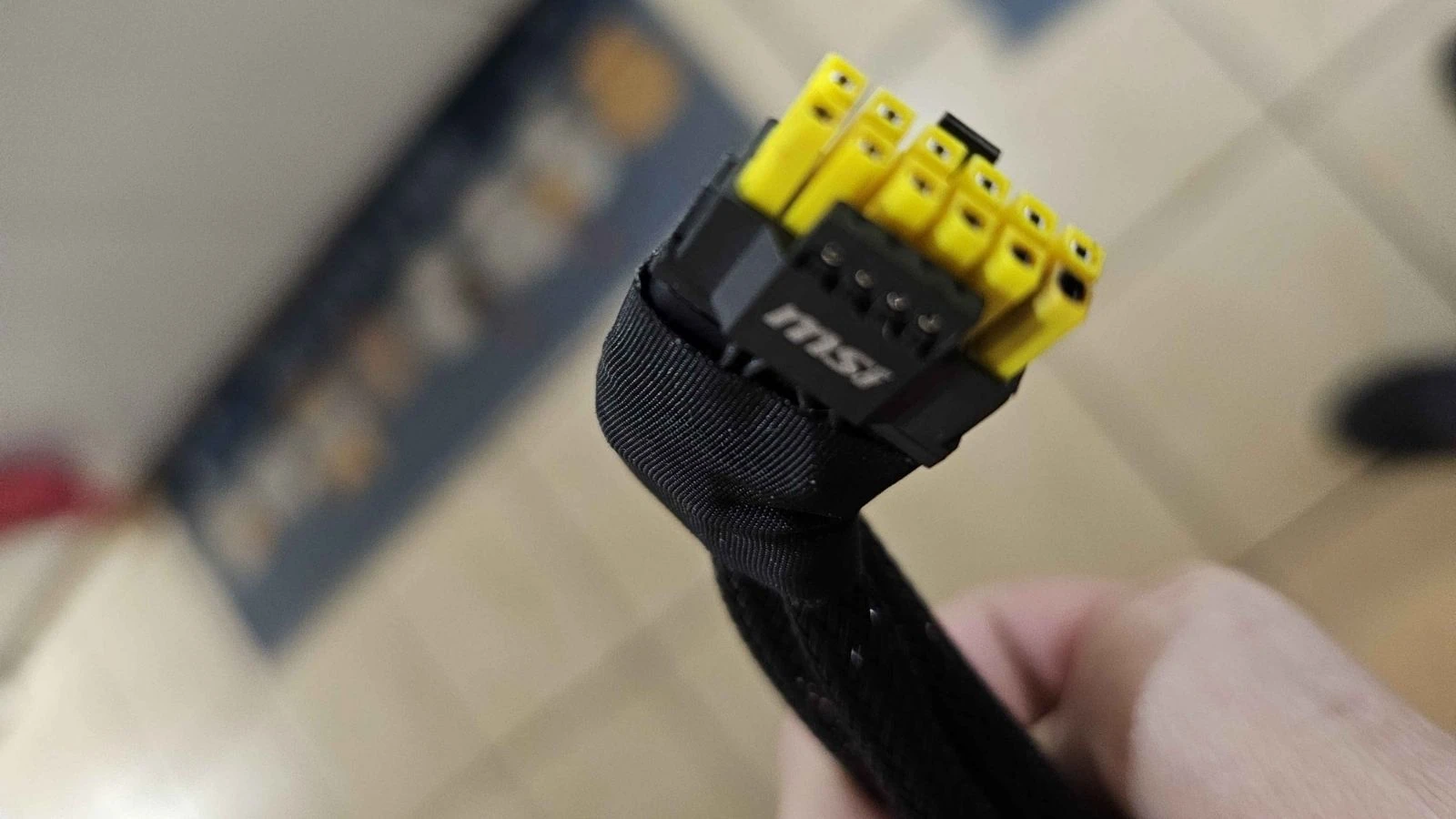
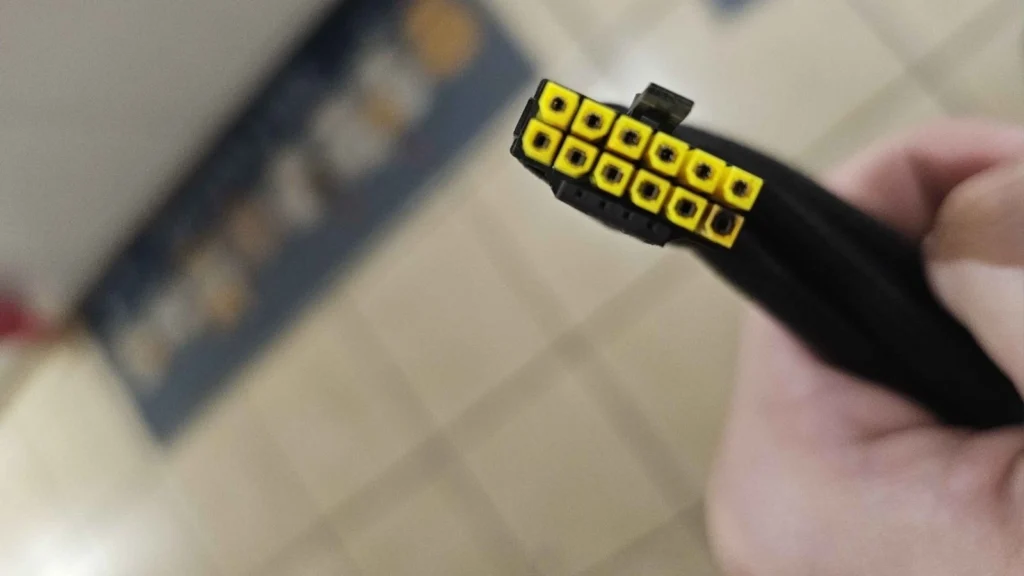
An RTX 5090 owner has shared photos of a melted 16-pin power connector after running the graphics card for months under continuous AI workloads. The report was posted in the Overclock.net RTX 5090 owners thread and involves an MSI GeForce RTX 5090 using the bundled power adapter.
According to the forum post, the card had been operating around the clock at roughly 475W to 500W for AI processing and was rarely used for gaming.
The owner said there were no warning signs before the damage was discovered and only noticed the issue during a routine inspection of the system.
The user wrote:
“I’m running my 5090 24/7 at 475-500W for AI, I didn’t even game on this card, and said to myself ‘my cable is too bent…’ and indeed it was.”
Photos shared in the thread show visible heat damage and deformation around the 16-pin connector. Despite the damage, the owner said the system continued operating normally and had not shown any instability or power-related warnings beforehand.
This is not the first RTX 5090 connector incident reported this month. Earlier, a user reported a melted adapter that allegedly damaged a $3,000 graphics card, while another RTX 5090 owner experienced cable melting on both the GPU and power supply ends despite running a 70% power limit.
The report has drawn attention because the cable appears to be bent close to the connector. Bending near the connection point has been a recurring topic since the first RTX 4090 power connector failures surfaced in late 2022, although the exact cause of any individual incident can vary.
NVIDIA later introduced the revised 12V-2×6 connector design, which uses shorter sense pins and longer power terminals than the original 12VHPWR specification. The changes were intended to improve contact reliability and reduce the risk of improper connector seating. Even so, isolated reports involving both RTX 4090 and RTX 5090 graphics cards continue to appear.
At the time of writing, neither NVIDIA nor MSI has publicly commented on this specific case. The cause of the damage has not been independently verified, and it remains unclear whether connector seating, cable routing, prolonged high-power operation, adapter condition, or another factor contributed to the failure.
The incident is also notable because the card was primarily used for AI workloads rather than gaming. Most earlier high-profile connector failures involved gaming systems, while this report involves a GPU spending most of its time processing AI tasks at nearly 500W.
Also Read: Best RTX 5090 Laptops
As with previous connector incidents, a single forum report does not establish a broader hardware issue. However, the photos add another documented case to the ongoing discussion surrounding high-power GPU connectors and long-term reliability under sustained workloads.
Source: Dansi via Overclock