
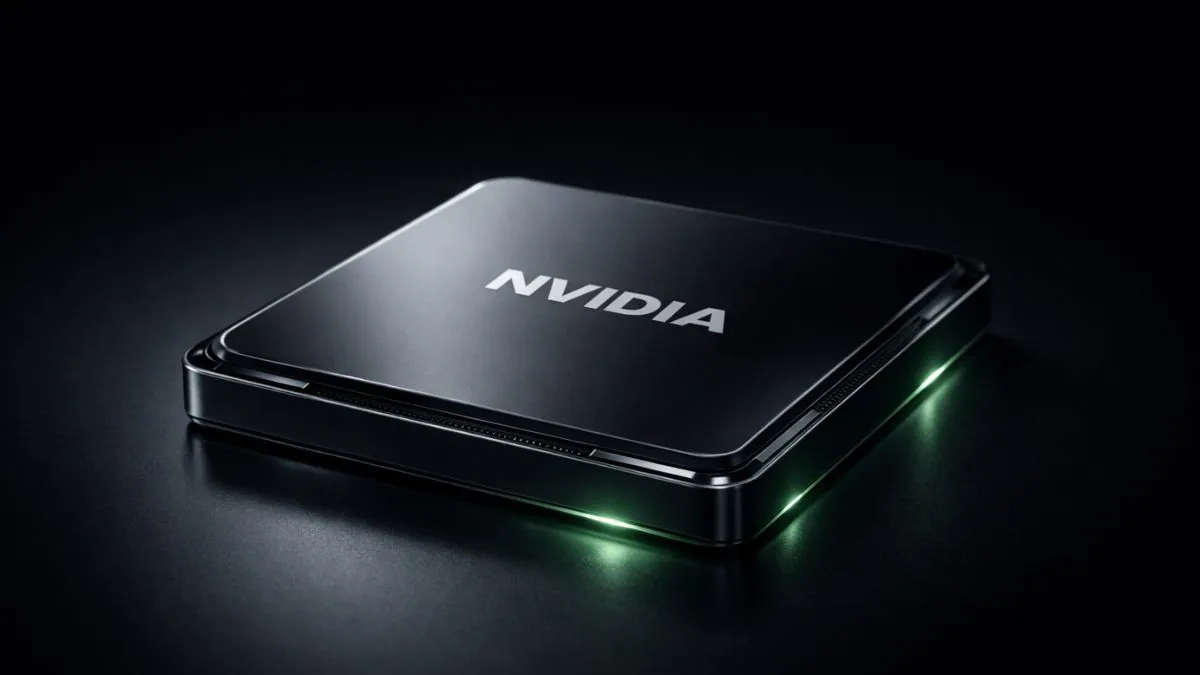
Nvidia’s long-anticipated entry into the Windows-on-ARM laptop market appears to be facing notable delays, with new reports indicating that laptops powered by the company’s upcoming N1X ARM APU are now unlikely to launch before the second quarter or summer of 2026. Rather than hardware limitations or manufacturing constraints, the delay is reportedly linked to ongoing software stability, compatibility, and optimisation challenges within the Windows ecosystem.
The N1X processor is expected to be Nvidia’s first ARM-based APU designed specifically for Windows laptops, marking a significant expansion beyond its traditional focus on discrete GPUs.
Early expectations suggested that Nvidia-powered ARM laptops could debut around CES 2026, followed by a broader rollout in early 2026. However, the absence of official announcements and launch activity now points to a more cautious timeline.
According to information shared by prominent leaker Moore’s Law Is Dead, the N1X platform is currently affected by persistent software bugs, driver issues, and incomplete Windows optimisation. These challenges are said to be substantial enough that laptop manufacturers are reluctant to release products prematurely, even if hardware development is largely complete.
Shipping devices with inconsistent performance or limited application compatibility could risk damaging Nvidia’s reputation in a highly competitive and closely watched segment.
For a first-generation Windows-on-ARM platform, early user perception is considered especially critical. As a result, Nvidia and its partners are reportedly prioritising stability and reliability over speed to market, opting to delay launches rather than risk delivering a subpar experience. This cautious approach reflects the broader reality of the Windows-on-ARM ecosystem, where application compatibility, driver support, and performance tuning continue to evolve.
Despite growing interest in ARM-based laptops, the ecosystem still presents challenges, particularly for new entrants attempting to introduce complex platforms with advanced GPU and AI capabilities.
Windows optimisation across diverse ARM hardware designs remains a work in progress, and platforms such as Nvidia’s N1X require deep system-level integration to fully realise their potential. This environment appears to have contributed to Nvidia’s decision to slow its rollout strategy.
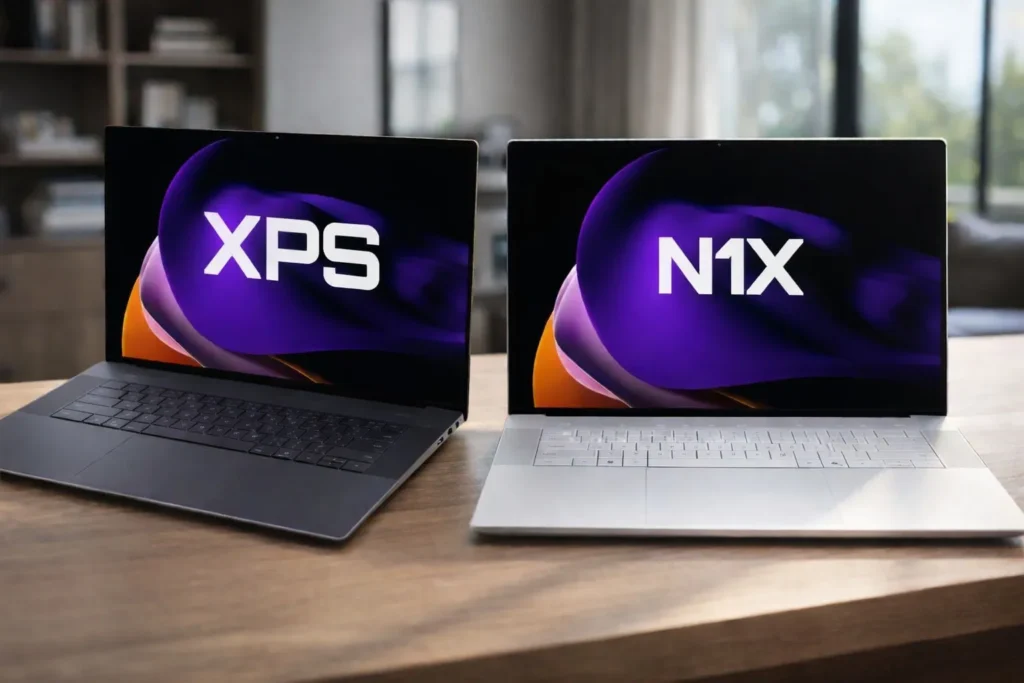
If the revised timeline holds, early N1X-powered laptops are expected to arrive in limited volumes, potentially restricted to premium or showcase models rather than mass-market devices.
Such an approach would allow Nvidia to validate software stability, driver maturity, and real-world performance before expanding availability to a wider range of systems. Wider consumer adoption may only follow once the platform proves consistent across workloads and applications.
The delay could also have broader implications for the rapidly evolving AI PC market. Nvidia’s N1X was widely expected to play a role in accelerating AI-focused and GPU-heavy workloads on Windows laptops, leveraging the company’s expertise in CUDA, graphics processing, and AI acceleration. Its absence from the market in early 2026 may give competing platforms additional time to strengthen their positions.
In contrast, rival ARM solutions such as Qualcomm’s Snapdragon X Elite are already shipping in commercial Windows laptops, highlighting the challenge Nvidia faces in aligning ambitious hardware with a mature software stack. While competing platforms benefit from earlier market presence, Nvidia appears focused on ensuring that its first Windows-on-ARM debut meets higher stability and performance expectations.
Leaked specifications suggest that the N1X APU could be one of the most ambitious ARM laptop platforms to date, reportedly featuring a high-core-count ARM CPU paired with a GeForce-class integrated GPU offering more than 6,000 CUDA cores.
On paper, this positions the chip as a powerful solution for graphics-intensive and AI-accelerated workloads, provided the software ecosystem can fully support its capabilities.
Over recent months, multiple online references and product listings linked to N1X-based laptops from major manufacturers, including Dell and Lenovo, have surfaced across gaming, premium, and mainstream product families. These leaks suggest that device development may be largely complete, reinforcing the view that software readiness, rather than hardware availability, remains the primary bottleneck.
Nvidia has not publicly commented on the reported software challenges or revised launch timelines. As with many pre-release platforms, schedules remain subject to change, and clearer guidance is likely to emerge once the Windows software stack reaches a more production-ready state.
Until then, expectations around Nvidia’s first Windows-on-ARM laptops remain cautious, with the industry closely watching whether the company can successfully align its ambitious hardware vision with the software maturity required for a successful launch.
Source: Moore’s Law Is Dead on YouTube via Notebookcheck